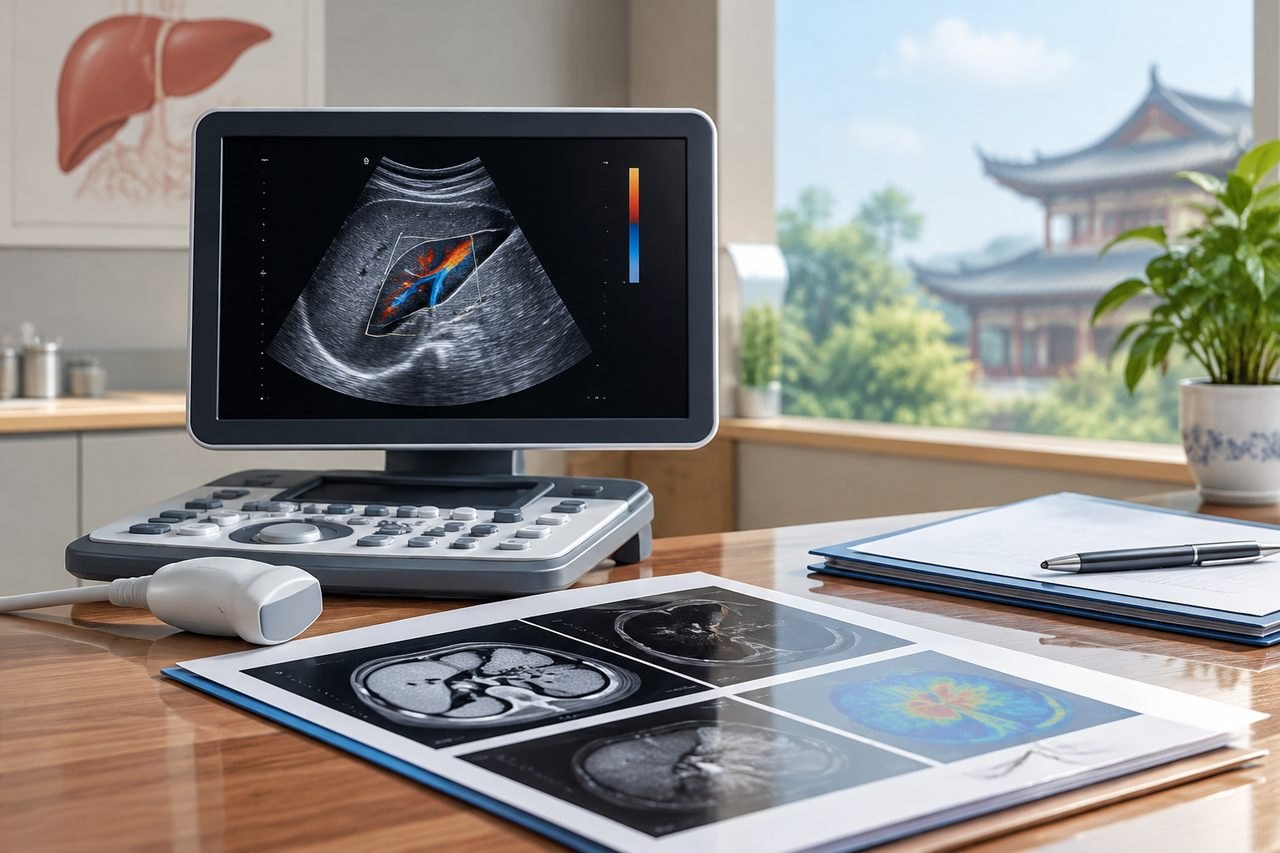
What a liver health assessment in China can include
A liver health assessment is not one single test. Depending on why you are seeking it, a clinician may ask for blood tests, an ultrasound or another imaging study, a review of previous records, or a combination of these. The exact scope is a clinical decision, not a package choice. ChinaSpecialistCare can help you plan a checkup or specialist appointment, but the treating clinician decides which examinations are appropriate for your situation.
This distinction matters for sharing results later. If you do not know what was done and why, your doctor at home cannot interpret the findings in context. Before any assessment, ask the provider to explain the purpose of each proposed test and how the results will be documented. That conversation also gives you a natural moment to say that you will need a complete copy for a clinician in another country.
The boundary between routine screening and assessment of current symptoms is important. If you have pain, jaundice, unexplained fatigue or another active concern, a screening package is not the right route. A specialist consultation is more appropriate, and the clinician will decide what assessment is needed. ChinaSpecialistCare can help arrange that appointment, but it does not provide a diagnosis or decide suitability.
Why your doctor at home needs more than a number
A single liver enzyme value or a one-line imaging conclusion rarely gives your own doctor enough to work with. Clinicians interpret results against your history, your current medicines, previous tests and the reason the assessment was done. Without that context, even a clear result can be misleading or incomplete.
This is why the handover package should include the clinical question that prompted the assessment, the tests that were performed, the full reports rather than summaries, and any written advice or follow-up plan. If imaging was done, your doctor may want the images themselves or a disc, not only the radiologist's report. Ask the provider what formats are available and whether images can be released to you.
Your doctor at home also needs to know what was not done. If a test was considered but not performed, or if a result was borderline and the clinician recommended repeating it later, that information belongs in the handover. A package that only contains normal results can create a false impression of completeness.
Agreeing the handover before the assessment starts
The most reliable way to avoid a fragmented record is to raise the handover at the planning stage. Tell the provider that you will be sharing the results with a doctor in your home country and ask how that is normally done. Specific questions are more useful than a general request. Ask who will compile the final package, what it will contain, whether an English-language summary is available, and how long after the assessment it can be ready.
You can also ask whether the provider can send the records directly to your doctor, or whether you will receive them first. Either route can work, but you need to know which one applies so you can follow up. If the provider uses a patient portal or a release form, ask what you need to sign and whether there is a fee for copies or for translation.
ChinaSpecialistCare can help coordinate appointments and explain practical arrangements, but it does not control hospital record systems or release policies. Those belong to the hospital or clinic. Confirming the process in advance is more useful than assuming it will be straightforward after you leave.
- Ask who compiles the final record package and what it includes.
- Ask whether reports and images can be released to you or sent directly to your doctor.
- Ask whether an English-language summary is available and who prepares it.
- Ask what you need to sign and whether copies or translation carry a separate charge.
What to request in the record package
A useful handover package is more than a folder of paper. It should let your doctor at home reconstruct what happened without needing to contact the hospital in China. That means the referral question, the assessment reports, the imaging reports and, where relevant, the images themselves, plus any written plan or advice given at discharge or at the end of the visit.
If medicines were discussed or changed, your doctor needs the exact names, doses and the reason for the change. Do not rely on memory or on a verbal summary. Ask for the written record. If a follow-up test was recommended, the package should state what test, why it was suggested and what the clinician hoped to learn from it.
It is also worth asking for a short cover note or summary letter that explains the clinical context in plain language. This is not a substitute for the full reports, but it helps your doctor find the relevant information quickly. If the provider does not routinely prepare such a letter, ask whether one can be requested.
Transferring the records safely and completely
Once you have the package, the next step is getting it to your doctor in a form they can use. Ask the provider what formats are available: printed copies, PDF files, image discs or a secure transfer link. If you are carrying records yourself, keep them in hand luggage and make a digital backup before you travel. If the provider is sending them, confirm the address and ask for confirmation when they are dispatched.
Translation is a common gap. A report in Chinese may be readable to your doctor only if an English translation is provided. Ask whether the hospital offers translation, whether it is included or charged separately, and how long it takes. If you arrange your own translation, keep the original alongside it so your doctor can check specific terms if needed.
Your doctor at home may also want to speak with the clinician in China or ask follow-up questions. Ask whether that is possible and what contact route is appropriate. This is not always necessary, but knowing the option exists can prevent delays if your doctor needs clarification.
What your doctor at home can and cannot do with the results
Your doctor at home can review the reports, interpret them alongside your history and decide whether further assessment or a change in management is needed. What they cannot do is confirm that the assessment in China was complete or that no further testing is required. That judgement depends on the clinical question, the quality of the records and whether the right tests were done in the first place.
This is why the handover should include the reasoning behind the assessment, not only the results. If your doctor understands why a particular test was chosen and what the clinician in China was looking for, they are better placed to decide whether the findings are reassuring or whether something needs to be repeated or extended.
If your doctor at home recommends further tests or a change in treatment, that advice takes priority. The assessment in China is one input, not a final answer. Share the full package, ask your doctor what else they need, and follow their guidance on any urgent concerns.
Planning the practical steps
A liver health assessment in China can be a useful part of your care, but its value to your doctor at home depends on how well the results are documented and transferred. The practical steps are straightforward: agree the handover process before the assessment, request a complete record package, confirm translation and transfer arrangements, and give your doctor everything they need to interpret the findings in context.
ChinaSpecialistCare can help you plan a checkup or specialist appointment and explain the coordination options. An initial enquiry is free and does not require buying a proxy consultation. You can start with a brief summary of your situation and the main question you want answered. The hospital decides suitability and the treating clinician decides what assessment is appropriate.
If you have current or worsening symptoms, seek local medical care first. Do not delay urgent assessment for an overseas enquiry. For planning a liver health assessment in China and preparing records for your doctor at home, you can begin with a short enquiry and confirm the practical details with the provider.
Sources & scope of this guide
References and official service information relevant to this guide.
This is general planning information and has not been individually reviewed by a doctor. Medical decisions and personal treatment advice come from your treating clinicians.