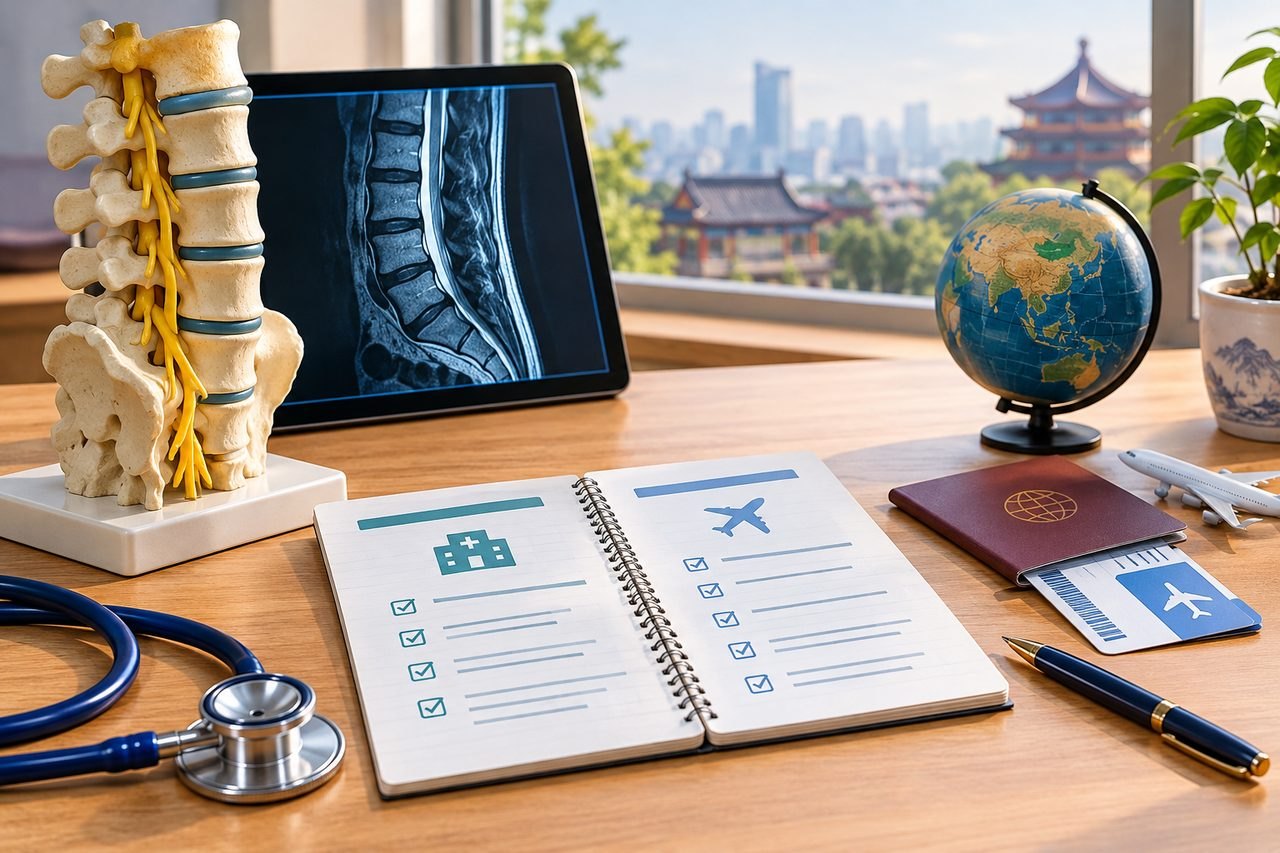
Why the two timelines cannot be merged into one
A common planning mistake is to build a single calendar that starts with a flight date and works backwards to a surgery date. That calendar assumes the clinical stage is already fixed. It is not. Lumbar decompression aims to relieve pressure on lower-spine nerves, and surgery is considered according to symptoms and assessment. Until a specialist has reviewed your imaging and examined you, the number of levels involved, the exact procedure and the sequence of admission, surgery and review remain open.
The travel track depends on the medical track, not the other way round. If the assessment concludes that one level needs decompression, the admission window, the expected mobility after the procedure and the review schedule will differ from a plan involving several levels or an additional stabilising procedure. Booking non-refundable flights before that conclusion is confirmed transfers clinical uncertainty into a financial loss.
This does not mean you cannot plan. It means you plan in two layers: a confirmed clinical layer that the treating team controls, and a provisional travel layer that you can adjust. Keep the provisional layer flexible until the hospital puts the clinical stage in writing.
What the hospital must confirm before any travel is booked
Ask the clinical team to state, in writing, which spinal levels it proposes to treat and on what evidence. This is the single most important item, because it determines the scope of the operation and therefore the recovery and review plan. Ask whether decompression alone is proposed or whether the team is also considering a fusion or another procedure, and ask why. Decompression is not the same as fusion, and the two carry different planning implications.
Ask how the team would assess your symptoms and imaging, and what further tests, if any, it would want before deciding. You are not asking the team to guarantee an outcome. You are asking it to describe the decision it needs to make and the information it needs to make it.
Ask about mobility and later reviews. Specifically: what movement restrictions or weight-bearing instructions would apply after the procedure, how the first follow-up review would be arranged, and whether that review could be done locally or would need to be in China. The answers shape how long you stay and whether a return trip is likely.
Ask what the hospital's own written estimate covers and what remains undecided at the enquiry stage. Request the scope in the provider's own document rather than relying on a verbal summary. If a component is not yet decided, ask for it to be listed as undecided rather than omitted.
- Which spinal levels are proposed for treatment, and based on which imaging and examination findings.
- Whether decompression alone is proposed, or whether fusion or another procedure is also being considered, and the reason.
- What additional assessment the team wants before it can confirm the plan.
- What mobility instructions and review arrangements would follow the procedure.
- What the hospital's written estimate includes, excludes and leaves undecided.
Records that let the clinical team answer those questions
A specialist cannot confirm levels or procedure from a one-line description. The useful starting set is your recent spine imaging with the radiologist's report, any earlier spine imaging for comparison, clinic or consultation notes describing your symptoms and examination findings, and a list of your current medicines and relevant medical history. If you have already had injections, physiotherapy or other treatment, notes on what was tried and what changed are helpful.
Send a short summary first, then share records through a secure route once the team asks for them. Do not send passport numbers, card details or a complete medical archive in an initial message. The first exchange is about identifying the question and the missing information, not about transferring everything at once.
If a record is missing, say so rather than waiting until everything is assembled. The clinical team can tell you whether it needs that item before it can form a view, or whether it can proceed and request it later. That answer directly affects whether your travel planning can move forward.
How to sequence the travel decisions around the clinical ones
Once the hospital confirms the proposed levels, procedure and admission window, you can start making travel decisions with a real anchor. Before that point, keep flights refundable or changeable where possible, and avoid paying for long hotel blocks. Ask the hospital how much notice it would give for an admission date, and whether that date could move after you have arrived.
Plan for the possibility that the assessment changes the plan. A specialist may conclude that the levels involved are different from what you expected, that a different procedure is more appropriate, or that surgery is not indicated at all. Each of those outcomes changes the travel requirement. Building in flexibility is not pessimism; it is the correct response to a clinical decision that has not yet been made.
Consider who travels with you and what their role would be. If you need assistance after the procedure, the treating team's instructions about supervision and transport apply. Ask the hospital what level of support it expects a companion to provide, and confirm that with your companion before booking. Do not assume that a companion can substitute for clinical care.
If you are arranging interpretation or practical support in the hospital, treat it as a separate coordination matter from the clinical plan. It does not change the medical timeline, and it does not replace the hospital's own instructions.
Questions to put to the hospital in writing
A written question list reduces the chance that you book travel against an assumption. Ask the team to reply in writing so you have a record to compare against later messages. Keep the questions specific to your situation rather than asking for general information about the procedure.
Ask which spinal levels need treatment and what evidence supports that. Ask whether another procedure is proposed alongside decompression, and if so, why. Ask how mobility would be managed immediately after the procedure and what the review plan looks like. Ask what would cause the plan to change after you arrive, and what notice you would receive.
Ask the hospital to confirm what its written estimate covers and what is still undecided. Ask whether the admission date is confirmed or provisional. These are administrative questions, but they determine whether your travel bookings are safe to make.
When to pause overseas planning and seek local care
New or worsening severe neurological symptoms need prompt local assessment. That takes priority over any overseas planning. Do not delay urgent local care in order to continue an enquiry, and do not treat an overseas appointment request as a substitute for emergency assessment.
If your symptoms are stable and you are exploring care in China, the practical next step is a short initial enquiry describing your main question, your current diagnosis if you have one, and the records you can share. An initial enquiry is free and does not require buying a proxy consultation. The hospital decides suitability, and a records-based opinion does not establish that you are a candidate for surgery or that the hospital will accept you.
ChinaSpecialistCare can help with records handling, interpretation and specialist appointment requests for lumbar decompression, and can explain how to share records after first contact. Clinical decisions, suitability and the treatment plan remain with the treating hospital and its licensed clinicians.
Sources & scope of this guide
References and official service information relevant to this guide.
This is general planning information and has not been individually reviewed by a doctor. Medical decisions and personal treatment advice come from your treating clinicians.