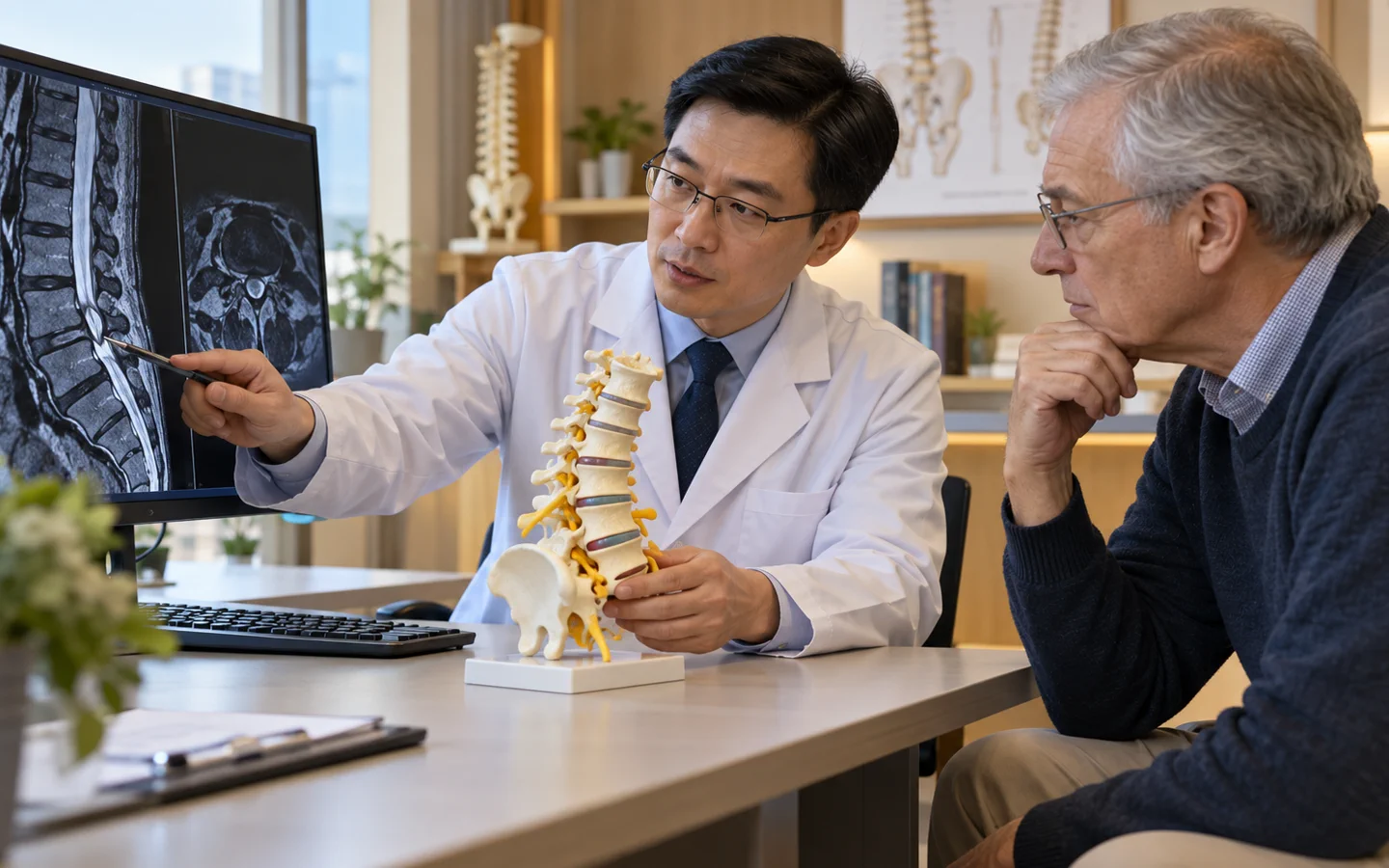
What lumbar decompression treats
Lumbar spinal stenosis narrows the canal or nerve exits in the lower back. It can cause leg pain, numbness, weakness or cramping during standing and walking, sometimes easing with sitting or leaning forward. Decompression removes selected bone, ligament or disc material to give the nerves more room.
A laminectomy removes much of the lamina—the bony roof over the canal. Laminotomy removes a smaller portion, while foraminotomy enlarges the nerve exit. These terms describe access; the important question is which nerves are compressed and how much tissue can be removed without creating instability.
The surgeon should separate walking-related nerve compression from hip, vascular, neuropathy or mechanical back-pain causes before recommending surgery.
Who may be considered?
Surgery may be considered when imaging and symptoms match and there is:.
- Disabling leg pain, numbness or walking limitation from stenosis.
- Progressive weakness or neurological loss.
- Insufficient improvement after appropriate non-surgical treatment.
- Severe compression where delay could risk neurological function.
- A clear discussion of decompression alone versus added fusion.
What the hospital needs to assess
MRI is the main study for canal, discs and nerve compression. Standing X-rays and sometimes flexion-extension images assess alignment and instability; CT helps with bone anatomy. The examination includes strength, sensation, reflexes, pulses, hips and walking pattern to identify competing causes.
Key points for this treatment
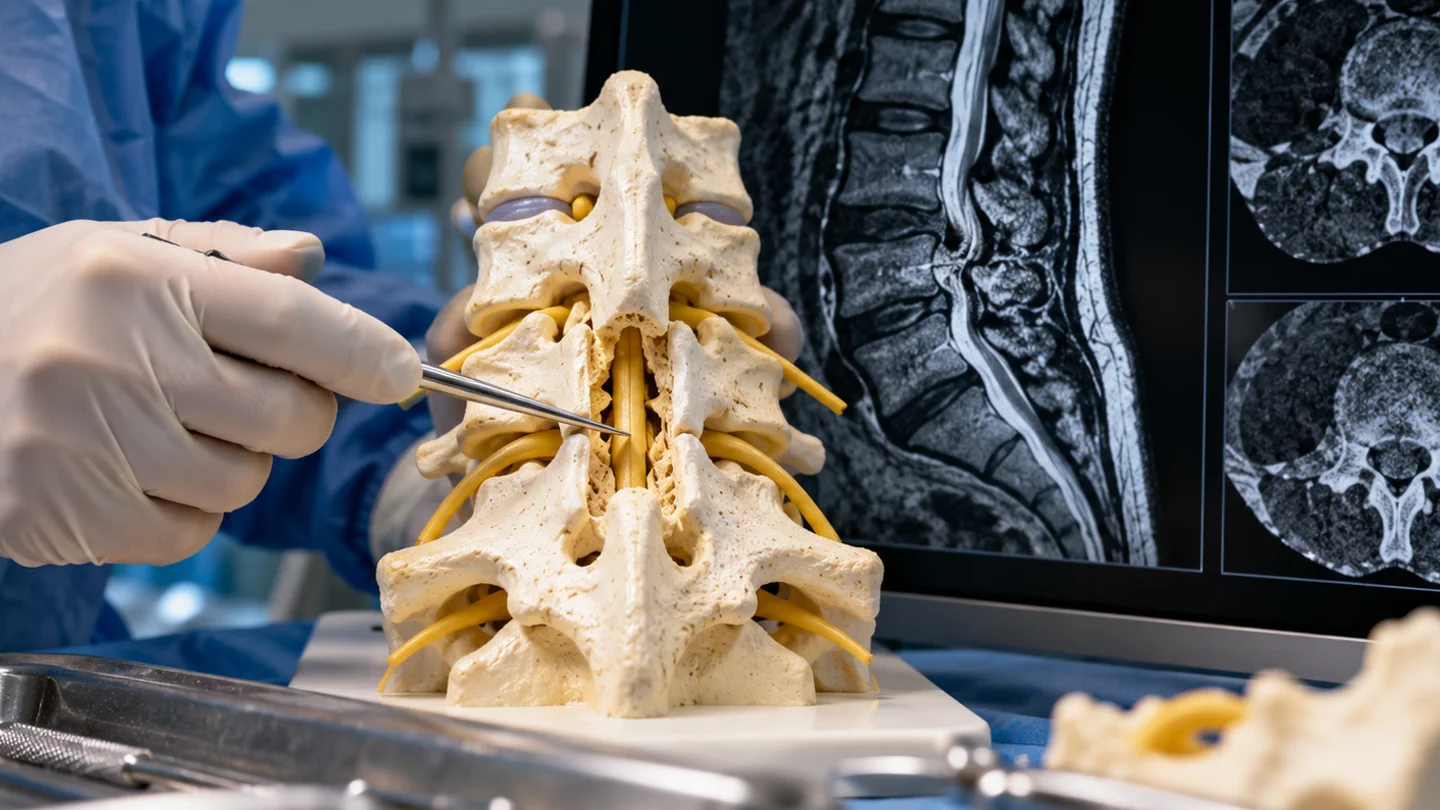
How nerve pressure is relieved
Through an open or smaller-access route, the surgeon removes the planned portion of lamina and thickened ligament. A foraminotomy can enlarge the passage around a nerve root; a discectomy may remove a focal disc fragment. The extent depends on whether stenosis is central, lateral recess or foraminal.
Fusion is added only when there is existing instability, deformity or a reconstruction that would otherwise become unstable. A longer operation and implants should not be presented as automatically necessary for every stenosis case.
Hospital stay and recovery
Walking usually begins soon after surgery, adjusted for weakness, balance and any added fusion. Leg symptoms may improve early, while numbness or weakness from long-standing nerve compression can recover slowly or incompletely.
Wound review, medication, activity restrictions and warning signs must be understood before travel. A decompression-only recovery differs from decompression with multilevel fusion, so generic timelines can mislead.

Risks and realistic expectations
Risks include infection, bleeding, clot, anaesthetic complications, spinal-fluid leak, nerve injury, persistent or recurrent stenosis, instability and the possible need for later fusion. Recurrent symptoms can also come from scar tissue or degeneration at other levels.
New leg weakness, saddle numbness, loss of bladder or bowel control, fever, wound drainage, chest pain or severe rapidly worsening pain requires urgent assessment.