Start with the symptom pattern, not the scan label
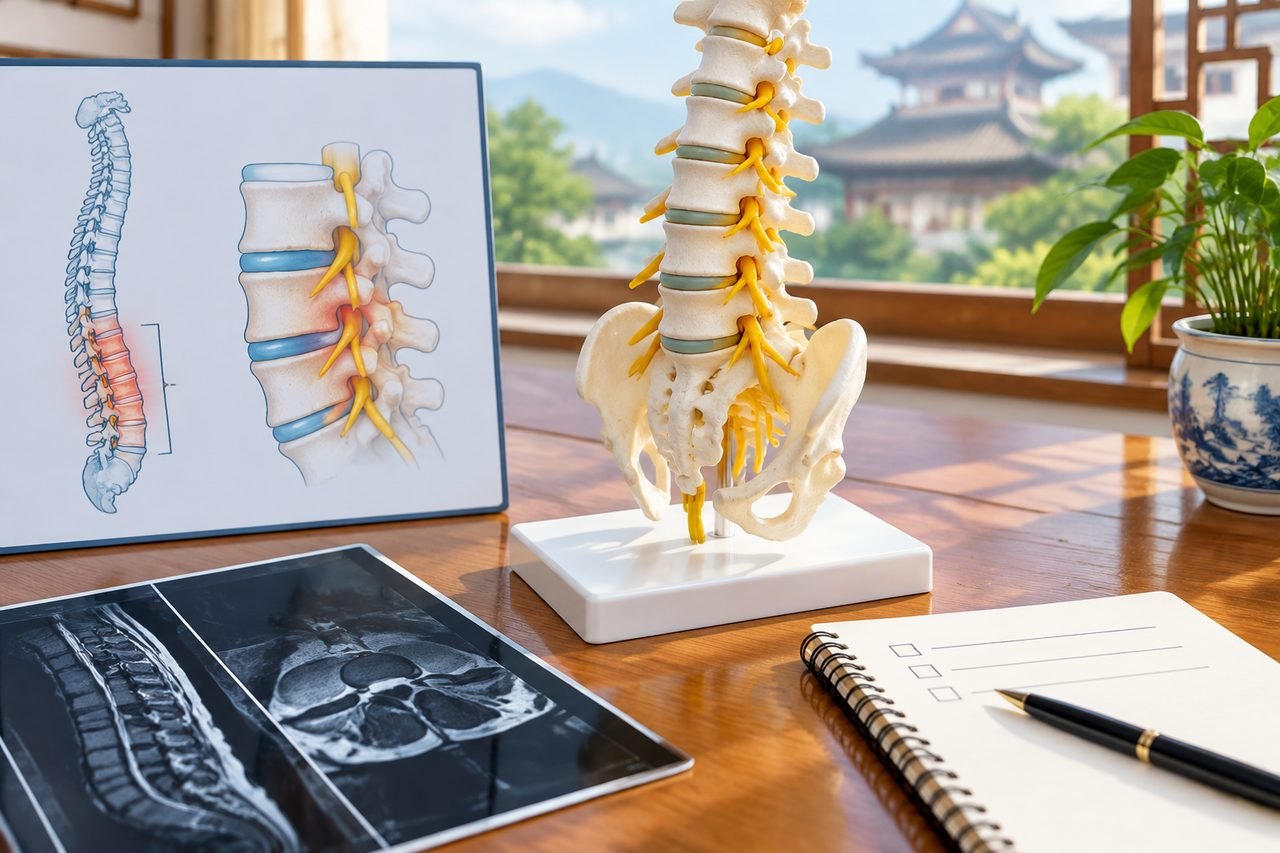
Lumbar decompression aims to relieve pressure on lower-spine nerves, and surgery is considered according to symptoms and assessment. That single sentence carries a practical instruction: the surgeon needs to connect your imaging to what you actually feel. A disc bulge or narrowed canal on an MRI report does not by itself tell the team which level to operate on or whether an operation is appropriate at all.
Before any overseas planning, write down your symptom pattern in plain language. Where does the pain, numbness, tingling or weakness start, and where does it travel? Is it one leg or both? Does it change with sitting, standing, walking or bending? How far can you walk before symptoms force you to stop? How has this changed over recent weeks or months? These details help a clinician match reported symptoms to specific nerve roots and spinal levels.
Also record what you have already tried and what happened: physiotherapy, pain medication, injections, rest, activity changes. A treating team needs to know whether conservative measures were attempted, for how long, and with what effect. You are not expected to decide whether surgery is indicated. Your job is to give an accurate symptom history so the clinician can make that judgement.
If you have new or worsening severe symptoms, especially progressive weakness, numbness in the saddle area, or difficulty controlling bladder or bowel function, seek prompt local medical assessment rather than continuing with overseas planning. That situation takes priority over any appointment or travel arrangement.
Ask which spinal levels are being considered
This is the central question for a decompression decision. The lumbar spine has several levels, and symptoms can arise from one or more of them. A surgeon reviewing your records should be able to say which level or levels are being considered, and why those levels match your symptom pattern.
When you ask, listen for the reasoning, not just the level number. A useful answer connects the imaging finding to the nerve or nerves affected and to the symptoms you described. If the explanation stays general, ask a follow-up: which specific finding on my MRI or other imaging supports treating this level? What symptoms would you expect to improve if this level is decompressed?
It also helps to ask whether the plan addresses one level or several. Multilevel disease may be managed in different ways, and the choice affects the operation's scope, the recovery plan and follow-up. You do not need to select the approach yourself, but you should understand what is being proposed before you commit to travel.
If different clinicians have given different level recommendations, say so directly and ask the reviewing surgeon to comment on the discrepancy. Conflicting opinions are common enough that a treating team should be able to explain how they resolved the question, or what further information would help.
Clarify whether fusion or another procedure is also proposed
Decompression is not fusion. They are different operations with different goals, risks and recovery implications. A decompression removes bone or tissue that is pressing on nerves; a fusion stabilises a spinal segment. Sometimes a surgeon may recommend both, or may discuss alternatives such as a different approach or a more limited procedure.
Ask explicitly: is the plan decompression alone, decompression with fusion, or another procedure? If fusion is proposed, ask why the additional stabilisation is considered necessary in your case. If it is not proposed, ask whether it was considered and why it was set aside. Either way, you should leave the conversation understanding what will actually be done.
This matters for preparation because the two operations differ in anaesthesia time, hospital stay, mobility instructions and later imaging or review. It also matters for how you describe your case to any second reviewer. Saying "lumbar decompression" when fusion is also planned can lead to mismatched advice.
If you are unsure what has been recommended, ask for the plan in writing, including the procedure name, the levels involved and whether any additional procedure is included. A written plan is easier to review carefully and to share with another clinician if you seek a records-based opinion.
Prepare symptom records that a China hospital can actually use
A hospital reviewing an overseas patient works from documents. The clearer your records, the more specific the response can be. Start with a short written summary of your main symptom question, then attach the supporting documents.
Useful items typically include recent MRI or CT images and reports, any X-rays, relevant nerve conduction or electromyography studies if performed, operation notes from any previous spine surgery, a medication list, and a brief note of other significant medical conditions. If your imaging was done some time ago, say when, and mention whether symptoms have changed since.
Ask the receiving clinician which of these they want and in what format. Different hospitals may have different preferences for image files, disc copies or translated reports. Confirm whether reports need translation and who is responsible for arranging it. Do not assume a particular document set is mandatory; ask what this provider requires for your case.
Keep your initial enquiry brief. A short summary of the diagnosis, main symptoms and your specific question is enough to start. More detailed records can be shared after first contact through the channel the team confirms. Avoid sending passport numbers, payment details or a complete medical archive in the first message.
Ask how mobility and later reviews would be planned
Symptom questions do not end at the operating room. How you will move afterwards, what restrictions apply, and how follow-up will work are part of the same decision. These are practical questions for the treating team, and the answers depend on your individual case and the procedure performed.
Ask what mobility instructions you should expect after the operation, including any restrictions on bending, lifting, sitting or walking, and for how long. Ask who will supervise your early mobilisation and whether physiotherapy is part of the plan. Do not assume a fixed timeline; the treating clinician sets these instructions based on your surgery and recovery.
Follow-up is equally important for an overseas patient. Ask how many reviews are anticipated, at what intervals, and whether any can be done remotely or through a local clinician in your home country. Ask what imaging or tests would be needed at those reviews and who would arrange them.
If you plan to return home relatively soon after surgery, raise this early. The treating team needs to confirm whether that fits your clinical situation and what arrangements would be needed before you travel. Fitness to travel is a clinical decision, not a scheduling preference.
How to move from questions to a useful next step
You do not need to resolve every question before making contact. A free initial case review can check the available diagnosis, records and your main question, identify missing information and suggest the relevant next step. This is not a diagnosis and does not promise hospital acceptance.
If you want a records-based opinion before travelling, a proxy consultation is available as an optional step, not a prerequisite for every appointment or operation. The treating hospital decides suitability, and any clinical estimate or treatment decision belongs to the licensed clinicians who assess you.
For the symptom questions in this guide, the most useful preparation is a clear written summary: your main symptom pattern, the levels being considered, whether fusion or another procedure has been proposed, and what you want the reviewing clinician to clarify. Bring that to your first contact, and ask the team which records they need for your specific case.
When you are ready, share a brief summary through the enquiry form, email or WhatsApp. The team will explain how to send records after first contact. Keep any urgent or worsening symptoms with your local clinicians first; overseas planning can follow once that is addressed.
Sources & scope of this guide
References and official service information relevant to this guide.
This is general planning information and has not been individually reviewed by a doctor. Medical decisions and personal treatment advice come from your treating clinicians.