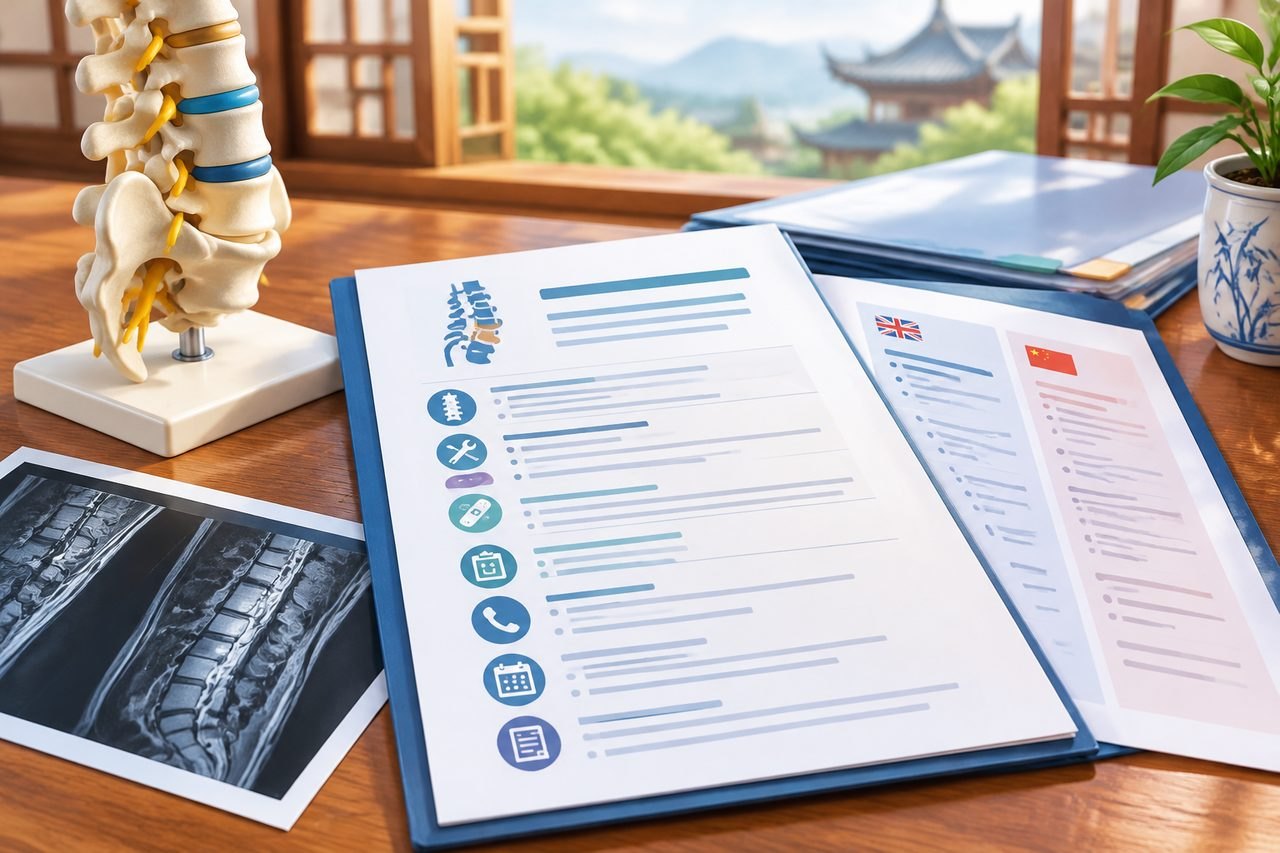
What a written follow-up plan should actually contain
A discharge summary is not the same as a follow-up plan. The summary records what happened. The follow-up plan tells you and your local clinicians what should happen next, who is responsible for each step, and how to reach the right person if something changes. For lumbar decompression, the plan needs enough surgical detail that a clinician who has never seen you can understand the starting point.
Ask the hospital to include the treated spinal levels and the exact procedure performed. Lumbar decompression relieves pressure on lower-spine nerves, and surgery is considered according to symptoms and assessment. Whether one level or several were addressed, whether a fusion was also performed, and whether any instability was noted all change how follow-up is interpreted. If the plan only says 'back surgery', it is not specific enough for another clinician to act on.
The plan should also separate what is expected from what needs urgent attention. Wound care, activity limits, and which symptoms are routine versus concerning belong in writing, in language you can act on at home. Ask the hospital to state what it considers a change that requires immediate local assessment, and what can wait for a scheduled review. Do not rely on memory or a verbal briefing at discharge.
The records you should request before you leave
Ask for a discharge summary, the operative report, and the imaging that was used for planning. These are the documents a local surgeon, neurologist, or physiotherapist will want when you continue care at home. Request them in a format you can share, and ask whether an English translation can be provided or whether you should arrange one. The hospital decides what it can release and in what form; confirm this before discharge rather than after you have left.
If the hospital proposes further imaging or review, ask what the purpose is and what the results would change. A follow-up scan is not automatically required after every decompression, and the timing depends on the clinical situation. Ask the treating team to write down whether imaging is recommended, what it should show, and who should interpret it. If the answer is 'only if symptoms change', that is a useful instruction to have in writing.
Keep a single folder with the discharge summary, operative report, imaging, medication list, and the written follow-up plan. Give a copy to your local clinician at the first appointment. If the local team needs clarification, the fastest route is usually a direct question to the operating hospital, which is why the contact details matter.
Contacts, responsibilities, and how local clinicians reach the team
A follow-up plan is only useful if someone can answer questions. Ask the hospital to name a contact point for clinical questions after discharge, and to state the expected response route. This might be a ward, an outpatient clinic, or a named coordinator. Confirm whether the contact can respond in English, and whether there is a preferred method such as email or a phone number. Do not assume a general hospital switchboard will route a clinical question correctly.
Clarify who is responsible for what. The operating hospital is responsible for the surgical record and for any clinical advice it gives. Your local clinician is responsible for assessment and care in your home country. If rehabilitation is recommended, the local physiotherapist or rehabilitation physician decides the programme, and the operating team can provide information to support that decision. No overseas hospital can direct day-to-day care from another country, so the plan should say what information the local team needs and how to get it.
Ask the hospital to write down what it wants your local clinician to check, and what findings should prompt contact with the operating team. This is more useful than a general instruction to 'follow up'. If the hospital cannot provide a named contact, ask what alternative route it recommends and record that answer.
Questions that change the follow-up plan
Several details determine what follow-up should look like. Ask which spinal levels needed treatment and whether any additional procedure was proposed or performed. Ask whether the plan involves fusion as well as decompression, because that changes activity guidance and review. Ask how mobility and later reviews would be planned, including any restrictions on bending, lifting, or sitting, and when those restrictions might change. These are clinical decisions for the treating team, but you should have the answers in writing.
Ask what the expected course looks like and what would count as a deviation. Some symptoms improve gradually, and some persist. The plan should not promise that all back pain resolves. If the hospital gives a range rather than a fixed date, ask what would make them concerned enough to review earlier. Write down the answer.
If you are considering care in China, the hospital decides suitability after reviewing your records. An enquiry or a records-based opinion does not establish that surgery is appropriate, that a bed is available, or that you should travel. Those are separate questions to confirm with the hospital.
Language, format, and what to do if the plan is incomplete
Ask for the plan in English and Chinese. The Chinese version helps if you need local care in China before you travel home, and the English version helps your clinician at home. If only one language is available, ask which parts are most important to translate and who can do it. Do not sign or accept a plan you cannot read.
Check that the plan includes dates or triggers for review, not just a list of instructions. If a review is recommended, ask where it should happen, who should perform it, and what information should be sent back to the operating hospital. If the plan says 'review in clinic' without specifying which clinic, ask for clarification.
If the plan is incomplete, ask the hospital to add the missing items before you leave. If you have already left, contact the named follow-up route and request a written update. Keep a record of what you asked and when. If you develop new severe neurological symptoms, such as worsening weakness, numbness in the saddle area, or loss of bladder or bowel control, seek prompt local assessment rather than waiting for an overseas reply.
A practical next step
Before you travel for lumbar decompression in China, ask the hospital what its written follow-up plan will include and who will provide it. Put that question in writing, because the answer tells you whether the plan will name treated levels, the procedure performed, wound and symptom instructions, a contact route, and review triggers. If you are still at the enquiry stage, send a brief summary of your diagnosis, main symptoms, and the single question you most need answered. An initial enquiry is free and does not require buying a proxy consultation. The hospital reviews your records and decides whether an appointment or further assessment is appropriate.
Ask the hospital to confirm the contact route in writing, including whether the named contact can respond in English and how your local clinician should reach the team. Confirm which records you will receive, in which language, and in what format, so your local clinician has the operative report, discharge summary, and planning imaging before the first appointment at home. Ask what findings should prompt earlier review rather than waiting for a scheduled date.
If any item is missing, request it in writing before discharge. If you have already left China, use the named follow-up route and ask for a written update, keeping a note of what you asked and when. If you develop new severe neurological symptoms, such as worsening weakness, numbness in the saddle area, or loss of bladder or bowel control, seek prompt local assessment rather than waiting for an overseas reply.
Use the written plan as the handover document between the operating hospital and your local clinician. It should state what the operating team did, what your local clinician should check, and how the two sides exchange information. Confirm the contact route, the records you will receive, and the triggers for earlier review. If any item is missing, ask for it in writing before discharge. That single step prevents most of the confusion that follows surgery abroad.
Sources & scope of this guide
References and official service information relevant to this guide.
This is general planning information and has not been individually reviewed by a doctor. Medical decisions and personal treatment advice come from your treating clinicians.