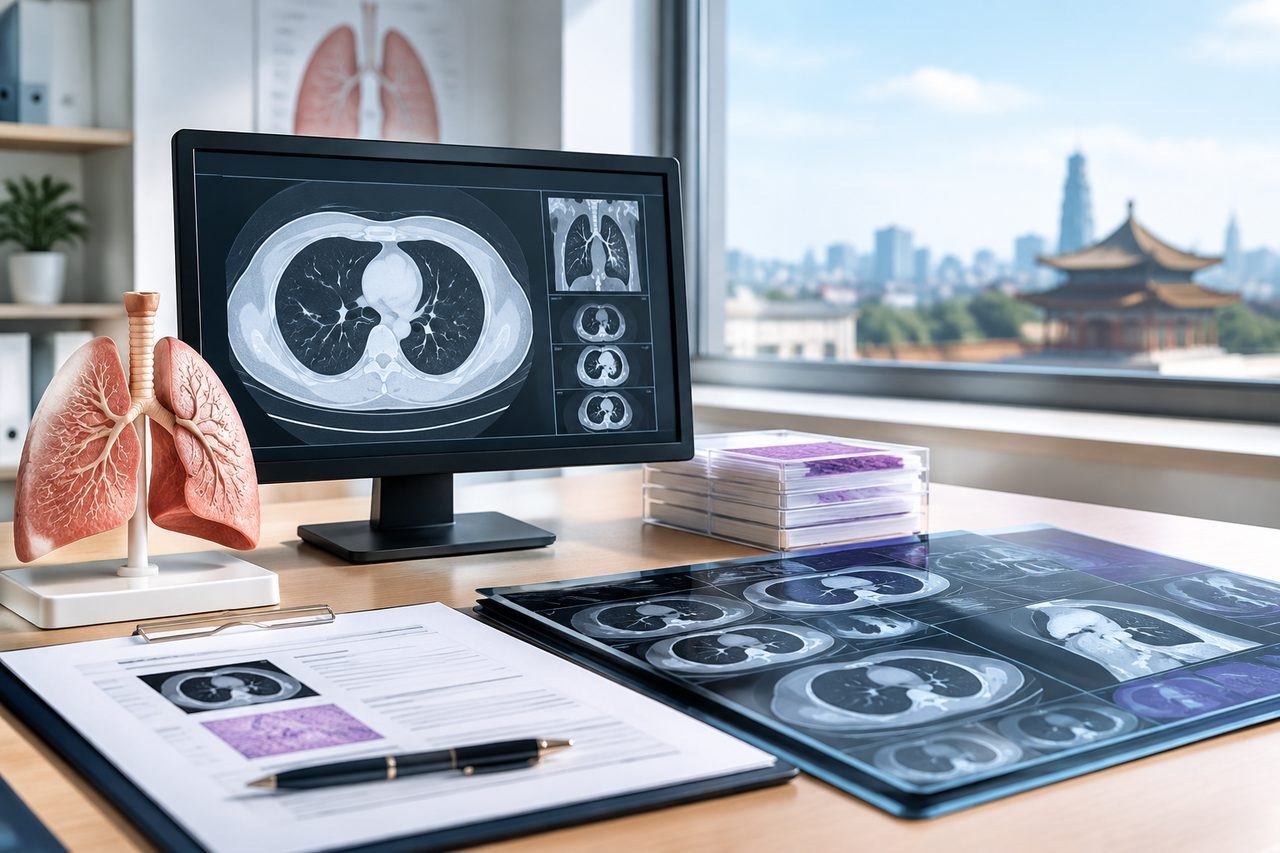
Why chest imaging drives the lobectomy decision
A lung lobectomy removes a single lobe of the lung. That is different from removing an entire lung, and the distinction matters when you are reading your own reports or discussing options with a surgeon. The lobe involved, its position and its relationship to nearby structures all shape what an operation can achieve and how it would be performed.
Chest imaging is the main way a surgical team builds that picture before committing to a plan. It helps the treating clinicians understand the anatomy they are working with, whether the planned removal is technically straightforward or complex, and what needs to be checked further. Imaging does not by itself decide whether surgery is right for you. It informs the discussion that the hospital and its clinicians lead.
For an overseas patient, this means your scans are not just background paperwork. They are part of the clinical conversation. If the imaging is incomplete, outdated or unclear, the team may need more information before it can give you a meaningful opinion. That is a normal part of surgical assessment, not a sign that your case is being rejected.
What your chest imaging actually shows the surgical team
Different imaging studies answer different questions. A chest X-ray gives a broad overview. A CT scan shows lung tissue, the airways and surrounding structures in far more detail. PET imaging is sometimes used to look at activity in tissues, and it is interpreted alongside other scans rather than in isolation. Each of these has a specific role, and the treating team decides which are relevant to your situation.
The surgical team is looking at several things at once. Where is the abnormality? Which lobe does it involve? How close is it to major blood vessels, the airway or the chest wall? Are there features that suggest the problem is confined to one area or that it extends further? These are not questions a patient can answer from a report alone, and they are not questions an editorial article should try to answer for you.
What you can do is make sure the imaging you send is complete and readable. Reports without the actual images are often not enough for a surgical opinion. Ask the imaging centre for the full study on disc or through a secure digital link, including the report and any prior scans for comparison. If you have had imaging at more than one hospital, gather all of it. Comparison over time can be as informative as a single study.
How imaging connects to lung-function assessment and surgical fitness
Imaging shows anatomy. It does not show how well your lungs work. That is why surgical teams also assess lung function, typically through breathing tests and sometimes additional evaluation. The two kinds of information are complementary: imaging tells the team what needs to be removed, and lung-function testing helps them understand what you would have left and whether your body can tolerate the operation.
This is one of the most important questions to raise before travelling. Ask how lung-function assessment would be arranged for your proposed visit, whether it can be done locally beforehand or would be repeated in China, and how the results feed into the surgical decision. The sequencing matters because it affects how many trips you may need and how the hospital structures your assessment.
If you have existing lung-function test results, include them with your imaging. If you do not, ask the hospital whether they would want testing done before or during your visit. Do not assume that one set of tests covers every situation. The treating team decides what is needed for your case, and their requirements may differ from what another hospital asked for.
Pathology, imaging and operation scope: three separate pieces
It helps to separate three things that patients often blend together. Imaging shows structure. Pathology shows what the tissue actually is. Operation scope describes what the surgeon plans to remove and how. Each piece informs the others, but none of them alone tells the full story.
Pathology usually comes from a biopsy or from tissue removed during surgery. If you have a pathology report already, it is a key document for any surgical review. If you do not, the hospital may want to discuss whether a biopsy is needed before surgery, or whether the operation itself will provide the tissue for examination. That is a clinical decision for the treating team, and it depends on your specific imaging findings and history.
Operation scope is where imaging and pathology meet. A lobectomy removes one lobe. Whether that is the right operation, whether a smaller or larger removal is more appropriate, and whether any additional procedures are needed are decisions the surgical team makes after reviewing everything. Your role is to make sure they have the material to make that decision well, and to ask what they still need.
Preparing your imaging records for a China review
The practical work of preparing records is where many overseas enquiries stall. Reports alone are often insufficient. Images on a disc or secure link are usually needed. If your scans were done some time ago, ask whether the hospital would want newer imaging, and if so, whether it can be done locally or would be arranged in China.
Language is another practical point. If your reports are not in English or Chinese, ask whether a translation is needed and who should provide it. Do not send passport numbers, payment details or a complete medical archive in your first message. A short summary of your situation, the main question you want answered, and a list of the imaging and reports you have is enough to start.
It is also worth asking how the hospital handles imaging review for international patients. Some hospitals can review digital images remotely before you travel. Others may prefer to see you in person first. These are administrative questions with different answers at different hospitals, so ask the specific provider rather than assuming a standard process.
- A short summary of your diagnosis or main concern, in plain language.
- A list of your imaging studies with dates and the body area covered.
- Copies of imaging reports, and the images themselves on disc or secure link.
- Any pathology reports, biopsy results or lung-function test results you have.
- The specific question you want the surgical team to address.
Questions to ask before you commit to travelling
The most useful thing you can do before booking anything is to ask the hospital a focused set of questions. These are not questions with universal answers. They are questions whose answers tell you whether the process is clear enough to proceed.
Ask how your existing chest imaging will be reviewed and whether repeat imaging would be required. Ask how lung-function assessment, surgery and any further treatment would be sequenced for the proposed visit. Ask what records the hospital still needs from you and in what format. Ask who will communicate the plan to you and in what language. Ask what would happen if the review concludes that surgery is not the right next step for you.
These questions matter because they shape your decision about travel, timing and cost. They also help you judge whether the hospital's process is transparent. A clear answer to how imaging feeds into surgical planning is a good sign that the team is engaging with your actual case rather than offering a generic response.
ChinaSpecialistCare can help you organise your imaging and reports, identify the relevant hospital route and prepare questions for the surgical team. An initial enquiry is free and does not require buying a proxy consultation. The hospital decides whether your case is suitable for surgery, and no coordination service can promise acceptance or an outcome. You can start with a brief summary through the enquiry form, and we will explain how to share records after first contact.
Sources & scope of this guide
References and official service information relevant to this guide.
This is general planning information and has not been individually reviewed by a doctor. Medical decisions and personal treatment advice come from your treating clinicians.