
Lobectomy removes one lobe while preserving the remaining lung
A lobectomy divides the lobe’s vessels and airway and removes it, commonly with regional lymph-node sampling or dissection for cancer staging.
The decision is not based on lesion size alone. Location, nodal status, pulmonary function, frailty and whether a smaller anatomical resection would provide equivalent cancer control all matter.
Ask which lobe will be removed, how lymph nodes will be assessed and what finding would require a larger operation.
Who may be considered?
Specialist review may help when the diagnosis, symptoms and previous treatment create a focused question about lung lobectomy.
- Early-stage non-small cell lung cancer considered resectable.
- A localized metastasis or benign lesion not safely managed by lesser resection.
- A destroyed or chronically infected lobe in selected patients.
- A patient with sufficient predicted postoperative lung reserve.
What the specialist team must confirm
The team reviews thin-slice CT, PET when indicated, pathology, bronchoscopy or mediastinal staging, pulmonary-function tests, exercise capacity, cardiac risk, smoking status and predicted function after removal of the target lobe.
Key points for this treatment
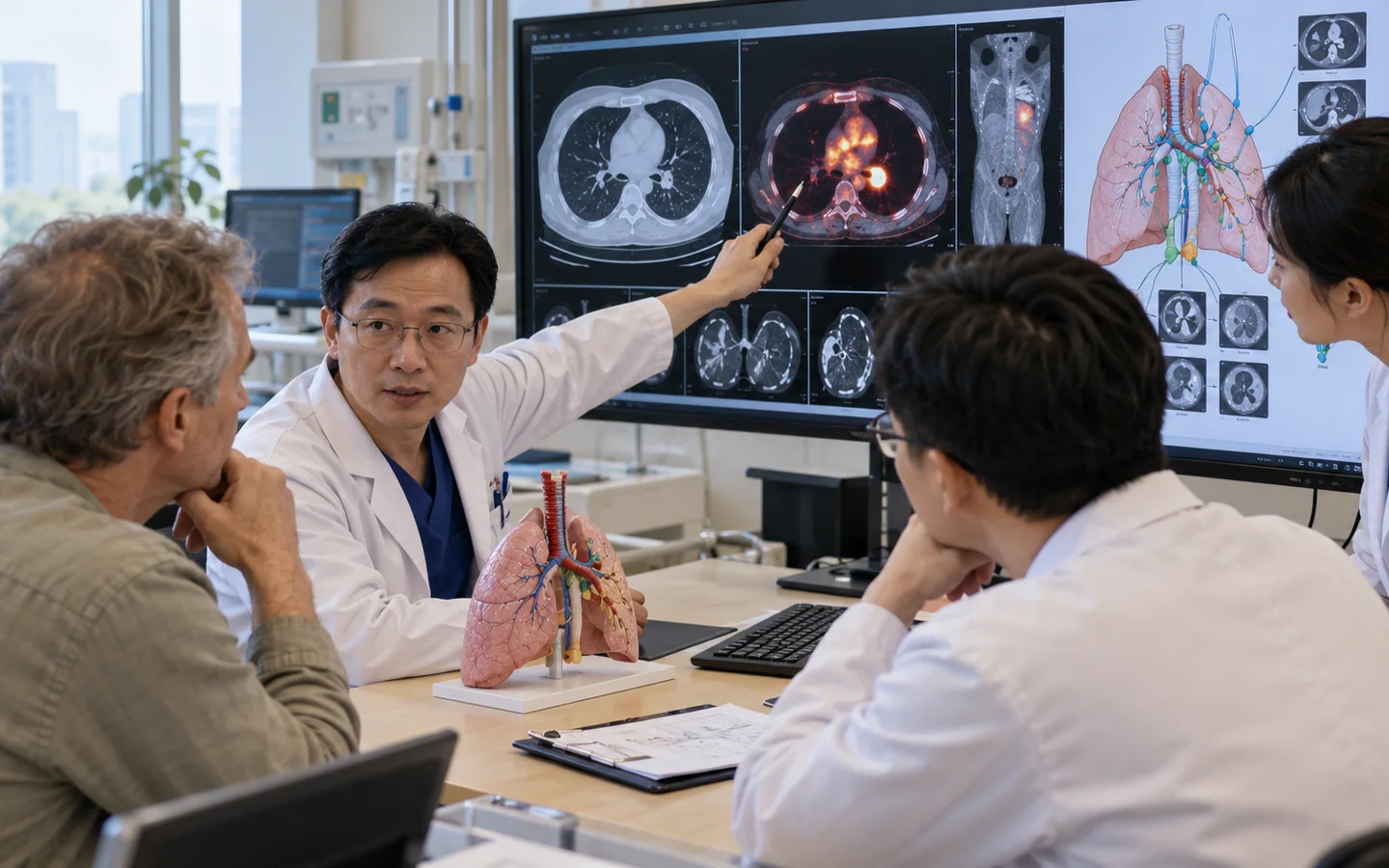
From staging to anatomical resection
The team confirms that lobectomy offers appropriate disease control without removing more functioning lung than necessary.
Air leak and lung expansion guide early recovery
Chest drains monitor air and fluid while pain control, coughing, physiotherapy and early walking support lung expansion. Discharge depends on breathing, imaging and drain status.
Final pathology may change stage and the need for additional oncology treatment. Longer-term follow-up addresses breathlessness, fitness, smoking cessation and surveillance imaging.

Risks, limits and realistic expectations
Risks include bleeding, pneumonia, prolonged air leak, arrhythmia, blood clot, bronchial-stump problem, reduced lung function, conversion to open surgery, cancer recurrence and death.
Sudden breathlessness, coughing blood, high fever, fainting, increasing chest pain or wound drainage requires urgent local care.