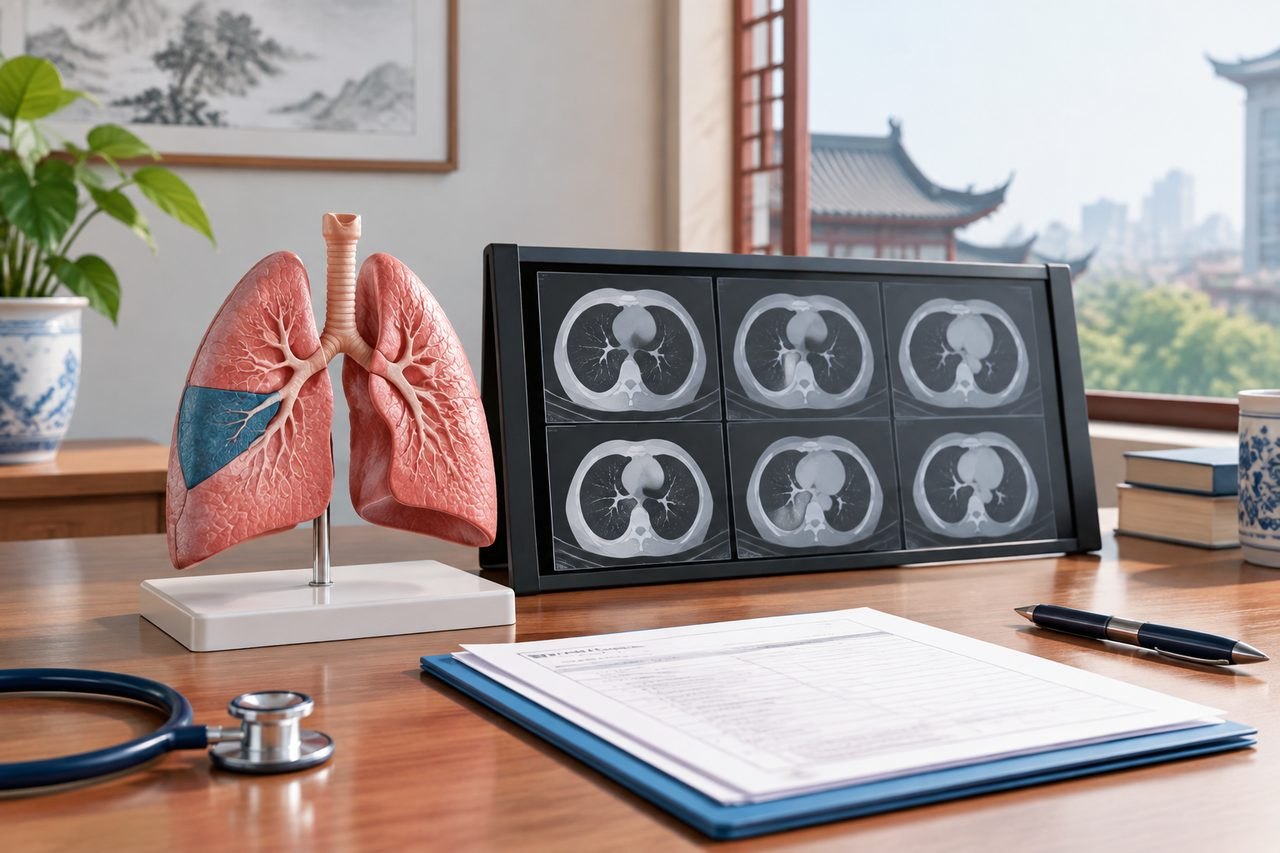
Why the surgical team may be considering a segmentectomy
A segmentectomy is a lung operation that removes a bronchopulmonary segment, which is a smaller anatomical unit than a lobe. The question of whether this is the right operation for you is not settled by the name of the procedure alone. The treating team needs to assess the lesion, its location, and the condition of the rest of your lung before recommending a resection scope.
When you contact a hospital in China, the first useful question is not simply whether they offer segmentectomy. It is why this operation is being considered for your case rather than a lobectomy, a wedge resection, or another approach. That answer should come from a thoracic surgeon who has reviewed your imaging and clinical history, not from a general enquiry or a website description.
The practical reason this matters is that the extent of surgery affects both the tissue removed and what remains. A segmentectomy preserves more lung tissue than a lobectomy in principle, but it is not automatically the right choice for every lesion. The suitable extent of surgery requires individual assessment, and that assessment belongs to the treating clinical team.
What lung assessment records the team will need to review
A records-based review is only as good as the records supplied. For a lung segmentectomy question, the surgical team will typically want to see the imaging that shows the lesion and its relationship to nearby structures, along with any previous imaging for comparison. They will also need to understand your general lung function and any other medical conditions that affect surgical risk.
You do not need to send a complete medical archive at the first contact. A brief summary of the diagnosis or suspected diagnosis, the main question you want answered, and a list of available records is enough to start. After that, the coordination team can explain how to share imaging files, pathology reports, lung function results, and other documents securely.
If some records are missing, that does not mean the clinical assessment must stop. It means the team should tell you what is missing and what they can and cannot conclude without it. Ask specifically which imaging format they accept, whether they need the original discs or can review digital files, and whether any reports need translation.
- Imaging that shows the lesion and its location within the lung.
- Previous imaging for comparison, if available.
- Lung function test results, if they have been done.
- Pathology or biopsy reports, if a tissue diagnosis exists.
- A short summary of other medical conditions and current medications.
How the team would confirm the surgical scope
The surgical scope is not decided from a single image or a single measurement. The team will consider where the lesion sits, how it relates to the segment boundaries, and what can be removed while leaving safe margins. They will also consider how much lung function you have and whether you can tolerate the planned resection.
A useful question to ask is how the team plans to confirm the segment during surgery. Some operations use preoperative planning and intraoperative findings together. The exact method depends on the hospital, the surgeon, and your anatomy. Rather than assuming a particular technique, ask the surgical team to explain their approach for your case.
Another question is what would change the plan. If the lesion is found to be more extensive than expected, or if the frozen section suggests a different diagnosis, the team may need to adjust the resection. Ask how that decision would be made and who would discuss it with you or your family. This is a consent conversation, not a logistics detail.
Questions about lung function and the remaining lung
A segmentectomy removes less tissue than a lobectomy, but it still removes part of your lung. The effect on your breathing depends on your baseline lung function, the size of the segment removed, and other factors. The treating team should assess this individually rather than applying a general rule.
Ask what lung function tests they require before surgery and how the results affect their recommendation. If you have existing lung disease, such as COPD or asthma, that should be part of the assessment. The team should also explain what to expect after surgery in terms of breathing, activity, and any support you may need.
Do not assume that a smaller operation automatically means preserved lung function or a simpler recovery. The clinical team is responsible for explaining the expected benefits and risks for your situation. If you do not understand the explanation, ask for it in writing or with an interpreter present.
What to ask about surveillance and follow-up after surgery
The operation is one part of a longer plan. After a segmentectomy, the treating team should explain what surveillance they would recommend for your situation, how often they would want to review the remaining lung, and what type of imaging they would use. The schedule depends on the diagnosis, what the pathology from the removed segment shows, and the treating team's own protocol. Ask them to state their plan for your case rather than describing a general approach.
A specific question worth putting in writing is what the pathology report from the operation is expected to show and how that result would change the surveillance plan. If the margins are clear and the diagnosis matches what was expected before surgery, the follow-up may look different from a case where the pathology raises a new question. The team should tell you who reviews that report with you and when.
Before you travel, ask how follow-up would be arranged if you return home. Some patients continue surveillance with their local team; others return to the treating hospital for specific reviews. There is no single rule that applies to everyone, so ask what this hospital recommends and what information they would send to your local doctor. Ask whether they would provide a written surveillance plan that your local clinician can follow, and what imaging or test results they would need sent back to them.
It is also reasonable to ask what symptoms should prompt earlier review and who to contact if something changes. This is not a substitute for local emergency care. If you develop urgent or worsening symptoms, seek care where you are rather than waiting for an overseas appointment. Ask the treating team to distinguish between symptoms that need urgent local attention and changes that can wait for a scheduled review.
Practical preparation and a records-based next step
Planning a lung segmentectomy in China starts with a clear question and a usable set of records. You can begin with a short summary through the enquiry form, email, or WhatsApp. The initial case review is free and non-clinical: it checks what you have, identifies missing information, and suggests the relevant next step.
If you want a specialist's records-based opinion before travelling, a proxy consultation can be arranged. It is optional, not a prerequisite for every appointment or operation. Hospital consultation fees, tests, treatment, and rooms are paid to the hospital or relevant provider, while coordination fees are separate. Ask for a written estimate that states what is included, excluded, and still undecided.
For a segmentectomy question, the most useful next step is to ask the thoracic surgical team two things in writing: why this resection scope is being considered for your lesion, and how they would confirm the plan and surveillance after surgery. Those answers will tell you more than a general statement about the procedure.
You can start by sharing a brief summary and asking what records the hospital needs. No outcome or acceptance is guaranteed, and the hospital decides suitability after reviewing your case.
Sources & scope of this guide
References and official service information relevant to this guide.
This is general planning information and has not been individually reviewed by a doctor. Medical decisions and personal treatment advice come from your treating clinicians.