Why a personal goal and a clinical goal are not the same thing
A macular hole affects the central retina, the part of the eye that handles detailed vision. That single sentence already explains why patients and surgeons often describe the same problem in different languages. You may say: I want to read again. The surgeon may say: the hole is full-thickness, the OCT shows traction, and the retina needs to be closed. Both statements are about the same eye, but they are not the same kind of goal.
A personal goal is what you want your daily life to look like after care. It can include reading, recognising faces, driving, returning to work, or simply preventing further loss. A clinical goal is what the treating retinal team can evaluate from your records and examination: whether the hole can be closed, whether the macula can be reattached, whether the eye is stable enough for surgery, and what post-procedure care will involve. The hospital decides suitability. Your job before travel is to make your personal goal visible and to ask which parts of it the clinical team can actually assess.
This distinction matters because a personal goal can be completely reasonable and still not be something a surgeon can promise. No responsible team should guarantee a specific level of restored vision. What they can do is explain what they see on your imaging, what the proposed procedure is intended to achieve, and what they need you to understand before consent.
What the treating team needs before they can assess your goal
The most useful thing you can send is not a long letter about how much you want your vision back. It is a clear set of eye records that lets a retinal specialist form an opinion. The exact list depends on your eye and on the hospital, so treat the following as items to ask the receiving clinician about, not as universal prerequisites.
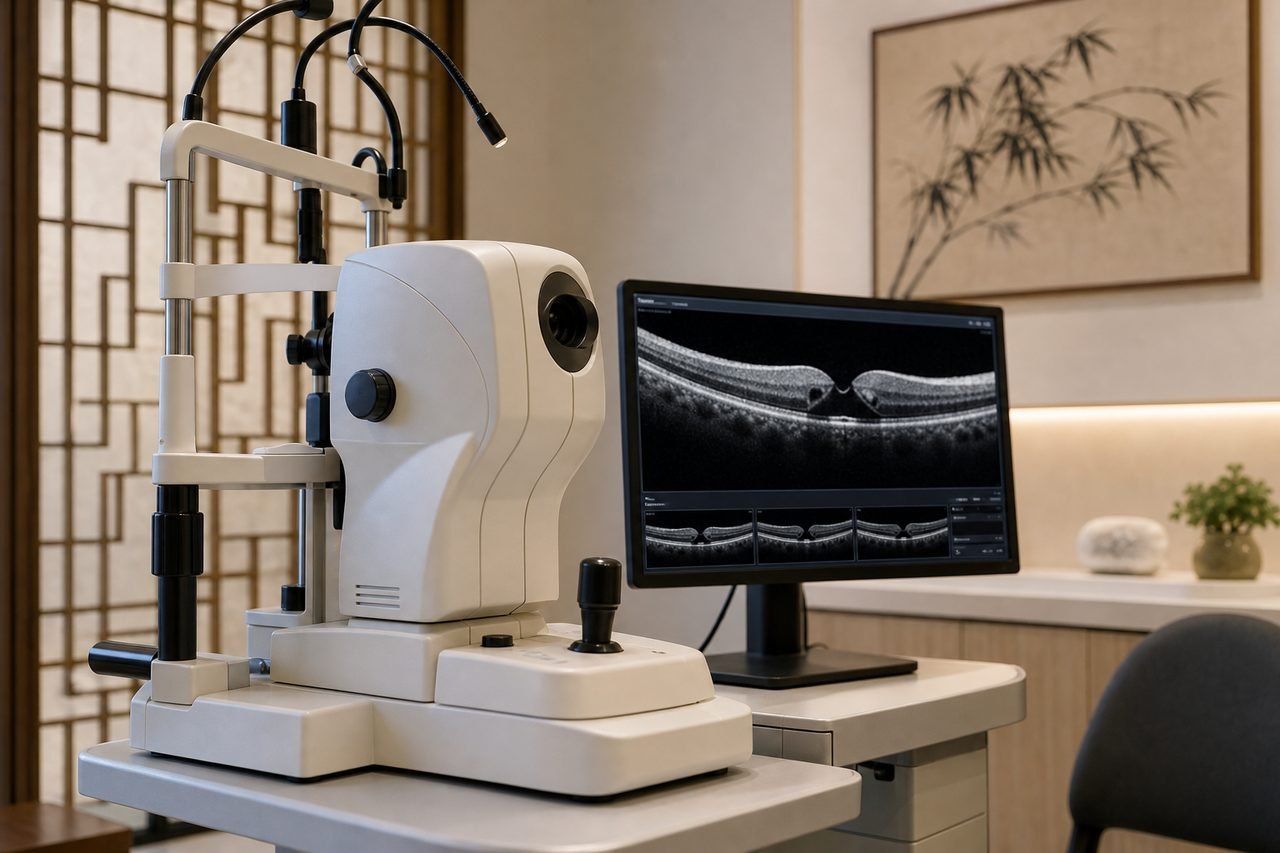
Optical coherence tomography (OCT) is central to macular hole assessment. It shows the retinal layers and the hole itself. If you have had more than one OCT, sending the most recent one plus an earlier one can help the team understand whether the hole is stable or changing. Colour fundus photography, if available, may also be useful. Your refraction, visual acuity and any history of prior eye procedures matter because previous surgery or laser can change what is possible.
You should also be ready to describe your symptoms in plain terms: when the distortion or central blur started, whether it is stable or worsening, and how it affects daily tasks. If you have a condition affecting the other eye, say so. If you take blood thinners or have other medical conditions, the treating team will need that information for their own assessment.
A practical way to organise this is a short cover note with three headings: my diagnosis and when it was made; my main personal goal; my question for the retinal team. Attach the records separately. This keeps the clinical question visible without turning the first contact into a full medical archive.
The gas bubble question changes travel and post-procedure care
Macular hole surgery may involve an eye gas bubble. If a gas bubble is used, flying is prohibited while that bubble remains. This is not a travel preference; it is a safety restriction connected to the bubble and pressure changes. The treating team must give any clearance about flying, and they will base it on the specific gas used and their own post-procedure instructions.
This is where a personal goal can collide with practical reality. If your goal is to fly home soon after surgery, the gas bubble may make that impossible for a period the surgeon determines. You should not assume a fixed number of days or weeks. Ask the treating team directly: if a gas bubble is used, when can I fly, and what does that mean for my return travel? If no gas bubble is used, the answer may be different, but that is a clinical decision for the team.
Post-procedure care also matters. Positioning instructions, follow-up imaging and medication are set by the treating clinician. Do not copy a positioning routine from another patient or another country. Ask what your own instructions will be, who will check your eye, and how follow-up will work if you travel home. A plan that ignores the gas bubble or the follow-up schedule is not a plan.
Turning your personal goal into questions the surgeon can answer
The most productive conversation happens when you translate your goal into a question about your eye. Instead of asking, will I be able to read again, you can ask: based on my OCT and the stage of the hole, what is the intended effect of surgery on my central vision, and what will you be able to tell me after the procedure? That is a question a retinal specialist can address within the limits of their assessment.
You can also ask what the alternatives are, including observation if that is appropriate for your situation. Ask what happens if the hole is not treated, and what the risks of surgery are for your eye specifically. Ask whether previous eye procedures change the plan. Ask what the follow-up schedule will look like and who will provide it.
Write these questions down before the appointment. If you are communicating remotely first, send them in writing. A records-based opinion can help clarify whether travel for an in-person assessment is reasonable, but it does not establish final eligibility or hospital acceptance. The hospital decides suitability after its own evaluation.
One more question is worth asking: what would make you advise against surgery for my eye? The answer can reveal the boundaries of what the team can assess and help you understand where your personal goal and the clinical picture may not align.
What an initial enquiry can and cannot do
An initial enquiry is free. It is a non-clinical intake step: our team checks the available diagnosis, records and your main question, identifies missing information and suggests a relevant next step. It is not a diagnosis, a clinical second opinion or a promise of acceptance. You do not need to buy a proxy consultation to make an initial enquiry.
If you want a records-based opinion from a relevant hospital specialist while you remain at home, that is a separate optional service. It is not a prerequisite for every appointment or operation. The scope and any fee are agreed first. Hospital consultation fees, tests, treatment and medicines are paid to the hospital or relevant provider, and our coordination fees are separate.
For a macular hole case, the useful first message is short: your age, the diagnosis and when it was made, your main personal goal, your most recent OCT report if available, any prior eye procedures, and your main question for the retinal team. Do not send passport numbers, card details or a complete medical archive at this stage. If you have sudden new symptoms or worsening vision, seek local urgent care rather than waiting for an overseas enquiry.
A practical way to prepare your goal statement
Before you contact any hospital or coordination service, spend ten minutes writing two short lists. The first list is your personal goals, in your own words. The second list is the clinical facts you already have: diagnosis, date, OCT findings, prior eye procedures, current symptoms and any other eye conditions. Keep both lists to one page.
Then write one sentence that connects them: My main goal is [personal goal]. I understand the treating retinal team must assess whether this is realistic based on my OCT, the hole stage, my prior eye procedures and the post-procedure care plan, including any gas bubble and flying restriction. This sentence does two things. It states what matters to you, and it accepts that the clinical assessment belongs to the treating team.
When you are ready, you can start with a brief summary through the enquiry form, email or WhatsApp. Explain how to share records after first contact. The next step is not to book surgery; it is to ask the retinal team what they can assess from your records and what they need to see in person. That answer will tell you whether care in China is a realistic route for your eye.
Sources & scope of this guide
References and official service information relevant to this guide.
This is general planning information and has not been individually reviewed by a doctor. Medical decisions and personal treatment advice come from your treating clinicians.