Start with the specific macular problem, not the whole category
"Macular surgery" is a broad label. It can describe operations for a macular hole, epiretinal membrane, vitreomacular traction or other conditions affecting the central retina. Those are different problems with different surgical aims, and a plan written for one does not automatically describe another. Before comparing hospitals or asking about cost, ask which diagnosis the surgeon is treating and what the operation is intended to change.
A macular hole affects the central retina, the area responsible for detailed vision. This guide concerns macular hole surgery. Other macular diagnoses need their own assessment, so state the diagnosis in your report before asking about the proposed operation. If your records mention a different macular condition, the same conversation still applies, but the surgeon must confirm the diagnosis and the appropriate operation for your eye rather than assuming a hole repair.
This matters for an overseas decision because the scope of the operation determines almost everything else: which imaging is relevant, whether a gas bubble is likely, what you can and cannot do afterwards, and how soon you could reasonably travel home. A vague answer such as "macular surgery" is not enough to plan around.
Ask what the operation itself will include
The most useful question is concrete: what will be done inside the eye during this procedure? For a macular hole, surgery may involve a gas bubble placed in the eye to support the retina while it heals. Whether a bubble is used, and what kind, is a clinical decision for the surgeon based on your eye, not something a coordination service can determine.
Ask the team to explain, in plain terms, the steps they plan and the reason for each one. You do not need to approve a technique you cannot evaluate, but you should understand whether the plan is a single operation, whether a combined procedure is proposed, and whether any part of the plan depends on findings during surgery. If the answer changes depending on what the surgeon sees, ask what the alternatives would be.
It also helps to ask what the operation is not intended to do. Surgery for a macular hole aims to close the hole and may improve vision, but no outcome is guaranteed, and the final visual result depends on factors the surgeon must assess for your individual eye. A clear statement of uncertainty is more useful than a confident promise.
Clarify the imaging and records the surgeon needs
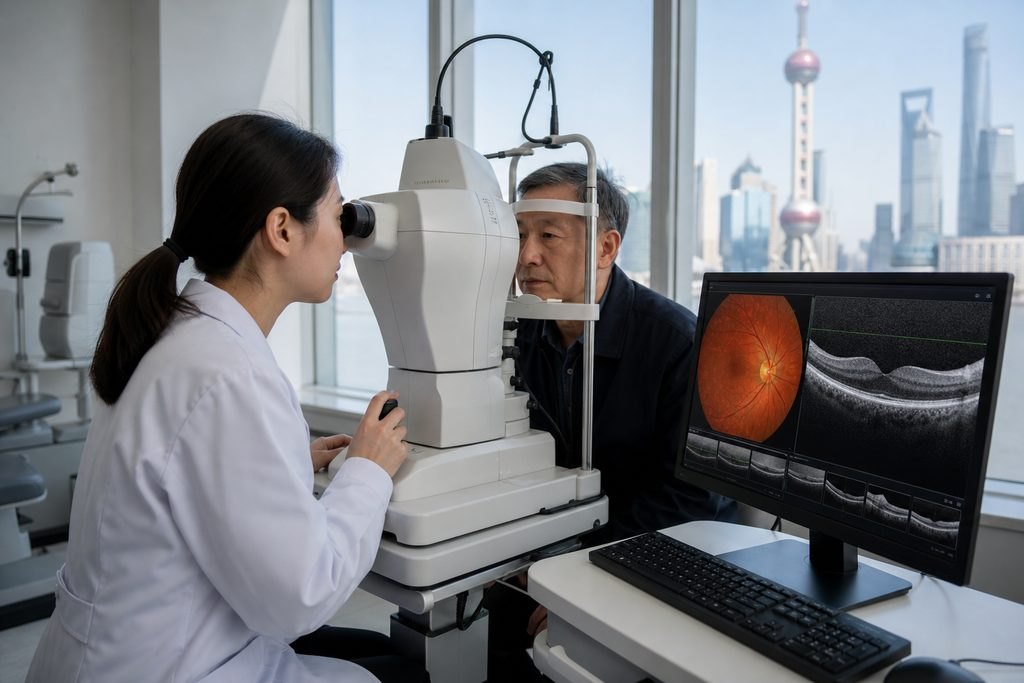
Retinal imaging is central to planning macular hole surgery. The surgeon will want to see the actual images, not only a written report, because the appearance and stage of the hole influence the decision. Ask your current eye clinic which scans and images exist and how they can be shared securely with a hospital in China.
Useful records typically include the retinal imaging itself, any clinical notes describing the diagnosis, the duration of symptoms, previous eye treatments or operations, and your current glasses or contact lens prescription. If you have diabetes, high blood pressure or another condition that affects the eye, include that information as well. The receiving team will tell you what it still needs; you do not have to assemble a complete archive before making an initial enquiry.
A practical point: image files are often large and may not survive email compression. Ask the provider how it prefers to receive imaging, and confirm whether a records-based review is possible before you travel. A remote review can help the surgeon comment on the likely scope, but it does not replace an in-person examination and does not confirm that the hospital will accept your case.
The gas bubble question changes your travel planning
If a gas bubble is used, flying is prohibited while that bubble remains in the eye. This is a safety rule, not a scheduling preference. The bubble can expand at altitude and cause serious pressure problems inside the eye. The surgeon must tell you when the bubble is expected to resolve enough for air travel, and that instruction overrides any flight you have already booked.
Because of this, do not buy a return ticket on the assumption that you will fly home a fixed number of days after surgery. Ask the surgical team directly: is a gas bubble planned, and if so, what is the rule for flying in my case? The answer depends on the gas used and your eye, and only the treating surgeon can give it. If no bubble is used, the travel advice may be different, but you still need the surgeon's clearance before flying.
The same conversation should cover postoperative positioning. Some macular hole operations require the patient to maintain a particular head position for a period after surgery. The duration and exact position are clinical instructions for your eye, so ask the team to explain them before the operation, while you are still able to plan your accommodation and any companion support.
Confirm follow-up reviews and who provides them
Postoperative eye reviews are part of the surgical scope, not an optional extra. Ask how many reviews are planned, when they occur, what each one checks, and whether any of them must happen at the operating hospital. If some reviews can be done closer to home, ask what information the local eye doctor would need to send back.
This is where overseas planning can go wrong. A patient may assume that follow-up can be arranged anywhere, then discover that the surgeon wants to see the eye personally at specific points. Equally, a patient may assume that all reviews must be in China when part of the care could be shared. The only reliable answer comes from the treating team, so ask for the plan in writing before you travel.
Also ask what you should do if a problem appears after you return home: who to contact, what symptoms warrant urgent local assessment, and which records should be sent back to the surgical team. Worsening vision, pain or new flashes and floaters after eye surgery need prompt local assessment rather than waiting for a scheduled overseas review.
Get the scope in writing before you commit to travel
Once the clinical questions are answered, ask the hospital for a written outline of the proposed surgical scope. It should state the diagnosis being treated, the planned operation, whether a gas bubble is anticipated, the follow-up plan, and what remains to be confirmed after an in-person examination. Ask the hospital how its written estimate is structured and what it includes, excludes or leaves undecided; the hospital, not a coordination service, is the source for its own fees and clinical plan.
For international patients, ChinaSpecialistCare can help with non-clinical coordination: sharing your records with a suitable hospital, arranging an appointment, and supporting interpretation and practical arrangements if you travel. Suitability for surgery, the operative plan and follow-up instructions belong to the treating hospital and its licensed clinicians. An initial enquiry is free and does not require buying a proxy consultation; you can start with a short summary of your diagnosis and main question.
A useful next step is to gather your retinal imaging, clinical notes and current medication list, then ask the hospital team the questions above in one message. If you would like help identifying a suitable eye department and preparing those records, you can begin with the free initial review through the enquiry form on this page.
Sources & scope of this guide
References and official service information relevant to this guide.
This is general planning information and has not been individually reviewed by a doctor. Medical decisions and personal treatment advice come from your treating clinicians.