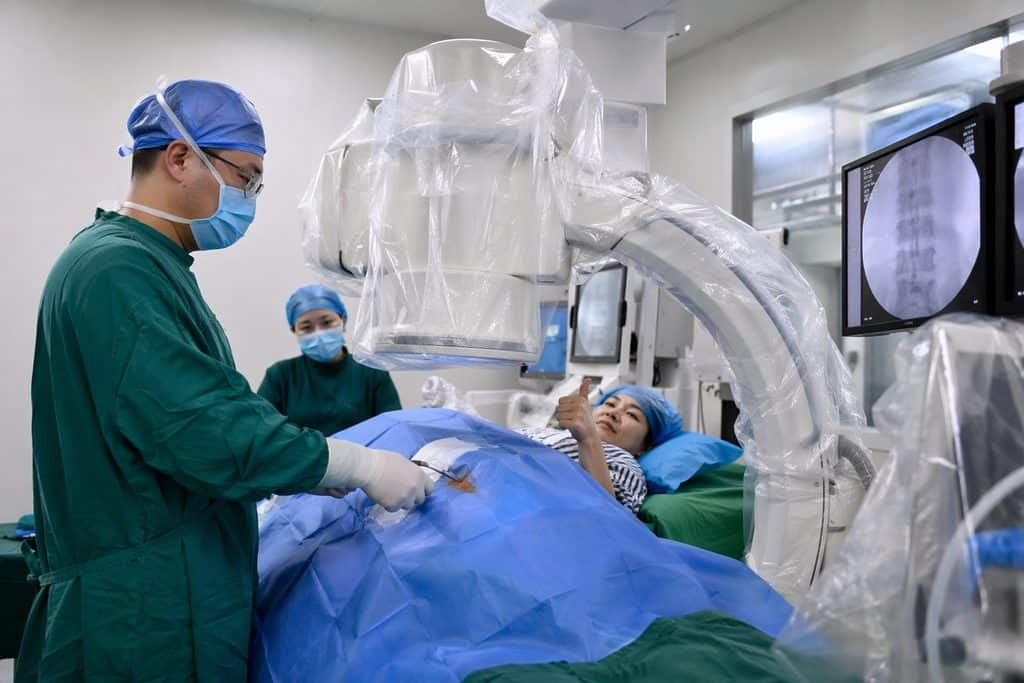
Why the operation name and levels must come before the follow-up plan
Minimally invasive describes an approach, not one single operation. The same approach can be used for different spinal procedures, including decompression or fusion. That matters for your follow-up plan because a decompression and a fusion can have different review needs, different imaging questions and different rehabilitation instructions. If the written plan only says 'minimally invasive spine surgery', it is too vague to guide anyone.
Before discussing follow-up, ask the surgical team to state in writing the exact proposed operation, the spinal levels involved and whether fusion is part of the plan. If the levels or the procedure are still being decided, the follow-up section cannot be finalised either. You can ask for a provisional plan that clearly says which parts depend on the final decision.
This is also where you confirm that the plan is for you, not a general description. A written plan that names your procedure and levels is easier for your local doctor to act on later.
What a written follow-up plan should actually contain
A useful written follow-up plan answers practical questions in plain language. It should identify who is responsible for your follow-up after discharge, how that person or team can be contacted, and what they expect to review. It should also say what you are expected to do and what your local clinician is expected to do.
Ask for the plan to cover these points in writing: the exact operation and levels; the name of the responsible follow-up contact or department; the contact route the hospital uses for overseas patients; which records or images should be sent and in what format; the review points the surgical team wants; and what symptoms or changes should prompt earlier contact. If the hospital cannot confirm a point yet, ask them to write 'to be confirmed' rather than leaving it out.
The plan should also state its limits. A follow-up plan is not a guarantee of a particular outcome, and it does not replace local emergency care. Ask the team to write down what you should do if you develop new or worsening symptoms after you leave China, and who should assess you first.
Records, images and who sends what
Follow-up across countries usually depends on records moving between clinicians. Ask the hospital which documents it wants after you return home, and who is responsible for sending them. This is not only an administrative detail: if nobody is named, records may sit unsent and the review may not happen.
Ask specifically about imaging. For spinal surgery, the follow-up team may want postoperative imaging, but the type and timing depend on the procedure and the clinical question. Do not assume a particular scan is required. Ask the surgical team to state in writing which imaging, if any, they want, and whether they need the images themselves or only the report.
Also ask how records should be transferred and whether the hospital can receive them in your language. If translation is needed, confirm who arranges it and who checks it. Keep your own copy of everything you send, including dates.
A practical checklist you can request from the hospital: the operation note and discharge summary; the levels treated; any implants used and their documentation; imaging reports and image files if requested; the written follow-up plan; and the contact details for the follow-up team. Ask the hospital to confirm which of these it will provide and when.
Contact routes and responsibility after you leave China
Unclear responsibility is a frequent weak point in overseas follow-up. A patient may have a phone number but no named clinician, or a clinician may expect the local doctor to lead without that being agreed. Ask the hospital to write down who is responsible for what.
Useful questions include: Who reviews my records after I return home? How do I contact that person or team, and during which hours? If I cannot reach them, what is the alternative? Who decides whether I need to return to China, and who decides whether local assessment is enough? What should my local doctor send, and to whom?
Ask the hospital to confirm these points in the written plan rather than in conversation only. If the hospital uses an international department or a coordinator, ask what that role covers and what it does not cover. Coordination support is not clinical care, and the treating hospital and licensed clinicians remain responsible for diagnosis, suitability and treatment decisions.
If you are working with a coordination service, ask it to record what it will pass on, to whom and how quickly, and to confirm that it does not make clinical decisions. Keep the hospital's own written instructions as the primary document.
Rehabilitation and review expectations: ask, do not assume
Rehabilitation after spinal surgery is not identical for every patient or every procedure. The written plan should say what the surgical team expects in general terms and what must be confirmed by the clinician who examines you. Ask whether the team wants you to see a physiotherapist, when that should start and what the therapist should know about your operation.
Do not treat a general rehabilitation description as your prescription. The receiving physiotherapist or clinician will assess you and make their own judgement. Ask the surgical team to write down any specific restrictions or precautions they want communicated, and ask them to state clearly which decisions are left to the local clinician.
Review timing is another area where assumptions cause problems. Ask the hospital to write down the review points it wants and what each review is for. If the hospital gives a range rather than a fixed date, record that range and ask what would change it. Do not rely on a verbal 'come back in a few months' without a written note.
If you are considering surgery in China, the relevant procedure reference is Minimally Invasive Spine Surgery. Use it to understand the approach, then ask the hospital how follow-up is documented for your specific operation.
How to get the plan in writing before you travel
Ask for the written follow-up plan before you leave China, and ideally before you confirm travel. If the hospital cannot provide a complete plan at that stage, ask for a written outline that states what is confirmed and what remains to be decided. That outline is still useful because it shows what is missing.
When you receive the plan, read it as a set of instructions for two clinicians: the team in China and the clinician who will see you at home. If either role is unclear, ask for it to be clarified in writing. If a contact route is a phone number only, ask whether there is a written channel as well.
Keep the plan with your discharge documents and give a copy to your local doctor. Ask your local doctor to confirm what they can and cannot do, and pass that back to the hospital if the hospital has asked for it.
An initial enquiry with ChinaSpecialistCare is free and can help you identify what information is missing before you approach a hospital. You do not need to buy a proxy consultation to ask a question. The hospital decides suitability, and no outcome is guaranteed.
Sources & scope of this guide
References and official service information relevant to this guide.
This is general planning information and has not been individually reviewed by a doctor. Medical decisions and personal treatment advice come from your treating clinicians.