Why Some Sleep Apnea Questions Cannot Be Answered From Records Alone
A sleep study produces numbers: apneas, hypopneas, oxygen desaturation, sleep stages. Those numbers tell a clinician how often breathing pauses occur and how severely oxygen levels drop. They do not show the shape of the upper airway, how much the soft palate collapses, whether the nose is blocked by a deviated septum, or how a mask sits on a particular face. Those are physical findings.
This distinction matters for an overseas patient deciding whether to travel. A records-based opinion can review your diagnosis, your previous treatments and your current symptoms. It can explain what options exist in principle. It cannot confirm that a specific mask will seal, that a particular surgical approach fits your anatomy, or that you will tolerate a device. Those answers require the treating clinician to examine you.
The NHS notes that sleep apnoea treatment can include CPAP or other approaches, and that surgery is suitable only in selected circumstances. That selection depends on individual anatomy and history, which is why an in-person assessment is often necessary before a definitive recommendation.
Questions a Records-Based Review Can Usually Address
If you have a confirmed diagnosis of obstructive sleep apnea and a sleep-study report, several questions can be reviewed without travelling. A clinician can look at your apnea-hypopnea index, oxygen desaturation events and sleep architecture to understand severity. They can review your CPAP history: what pressure was tried, what mask types were used, what problems led to discontinuation. They can discuss whether alternative approaches exist and what further information would be needed.
A records review can also clarify whether your current diagnosis is complete. Sometimes a sleep study is older than the symptoms, or the report lacks positional data, or the CPAP trial was never properly titrated. Identifying a missing record is useful because it tells you what to obtain before any appointment, whether in China or elsewhere.
What a records review cannot do is confirm that a specific treatment will work for you. It cannot replace a physical examination of the nose, throat and jaw. It cannot determine mask fit. It cannot decide surgical suitability. Those questions need the clinician to see you.
Questions That Need an In-Person Examination
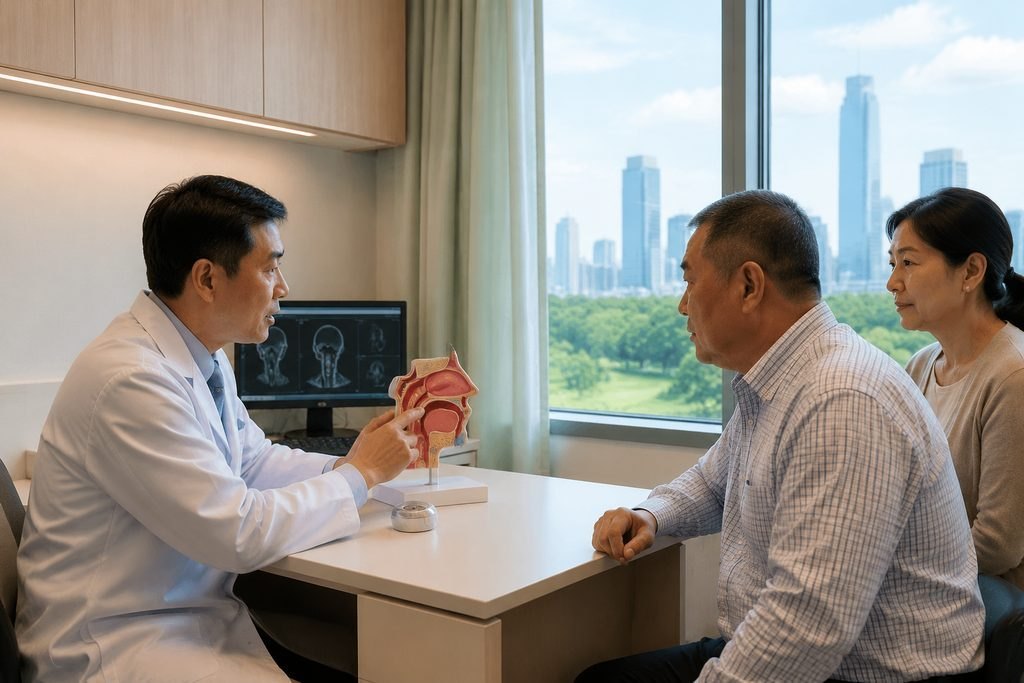
Several categories of questions require physical assessment. The first is airway anatomy. A clinician needs to examine the nasal passages, the soft palate, the tonsils, the tongue base and the jaw structure. Sleep-study numbers do not show where the obstruction occurs or how much each site contributes. Without that examination, any discussion of surgery remains theoretical.
The second category is device fitting and tolerance. CPAP masks come in different shapes and sizes. Whether a particular mask seals, whether you can breathe comfortably through your nose with it, and whether pressure settings need adjustment are practical questions that require trying the equipment. A clinician or technician can assess this only in person.
The third category is surgical candidacy. The NHS source states that surgery is suitable only in selected circumstances. Selection depends on the site of obstruction, your overall health, your willingness to undergo a procedure and your understanding of risks and alternatives. A records-based opinion can explain what types of surgery exist, but it cannot confirm that you are a candidate. That decision belongs to the treating surgical team after examination and discussion.
The fourth category is treatment response. If you have tried CPAP and stopped, or if symptoms persist despite treatment, the reason may be anatomical, behavioural or equipment-related. Sorting that out usually requires a consultation where the clinician can examine you, review your device data and discuss your experience directly.
What Records to Prepare Before Asking About Care in China
Before contacting a hospital or coordination service in China, gather the records that let a clinician understand your case. The most important is your sleep-study report. This should include the type of study performed, the apnea-hypopnea index, oxygen desaturation data, sleep stage information and any positional findings. If you have had more than one study, include all of them so the clinician can see how your condition has changed.
Next, prepare a clear CPAP history. Note the machine model, the pressure settings tried, the mask types used, how long you used it, what problems you experienced and why you stopped if you did. If you have tried other treatments such as oral appliances, positional therapy or weight management, include those details. If you have had any upper-airway surgery before, include the operative reports.
Also prepare a current symptom summary. Describe your daytime sleepiness, morning headaches, witnessed apneas, nocturia, concentration problems and any impact on work or driving. List your current medications and other medical conditions. This information helps the clinician understand your situation before any appointment.
Do not send passport numbers, payment details or a complete medical archive in your first message. A brief summary is enough to start. The hospital will tell you what else it needs.
How to Ask the Hospital Which Questions Need a Physical Visit
When you contact a hospital in China, be specific about what you want to know. Instead of asking generally whether they can help, ask which of your questions can be answered from records and which require an in-person assessment. For example: Can you review my sleep study and CPAP history and tell me whether surgery is worth considering? If so, what would you need to examine in person before making a recommendation?
Ask whether a preliminary records review is possible before you travel. Some hospitals may offer this; others may not. Ask what records they need and whether they can provide a written summary of what can and cannot be determined remotely. This helps you decide whether a trip is worthwhile.
Ask about the appointment itself. Will you see a sleep specialist, an ENT surgeon, or both? Will any tests be performed during the visit? How long should you allow for the appointment? These are practical questions that affect your planning. The hospital's answers will be specific to its own processes, so ask rather than assume.
If you are considering surgery, ask directly what the assessment involves. Will the surgeon examine your airway in the clinic? Will imaging be needed? What tests are required before a decision can be made? The NHS source notes that surgery is suitable only in selected circumstances, so understanding the selection process is essential.
What to Confirm Before You Travel and How to Take the Next Step
Before booking travel, confirm several things with the hospital. First, confirm that the hospital has received your records and that a clinician has reviewed them. Second, confirm what the in-person assessment will include and how long it will take. Third, confirm whether any follow-up appointments or tests will be needed after the initial visit. Fourth, ask for a written summary of what the hospital can and cannot determine before you arrive.
Do not stop using CPAP or any other prescribed treatment while waiting for an appointment. If your symptoms worsen, seek local medical care. An overseas enquiry should not delay necessary assessment or treatment.
If you want help organising records, requesting a specialist appointment or arranging interpretation during a visit, ChinaSpecialistCare can assist with those practical steps. The hospital and its clinicians decide suitability, diagnosis and treatment. An initial enquiry is free and does not require buying a proxy consultation. You can start by sending a brief summary of your diagnosis, your sleep-study results and your main question.
The next step is to gather your sleep-study report, CPAP history and symptom summary, then ask the hospital which of your questions require an in-person assessment. That answer will tell you whether a trip to China is the right next move for your situation.
Sources & scope of this guide
References and official service information relevant to this guide.
This is general planning information and has not been individually reviewed by a doctor. Medical decisions and personal treatment advice come from your treating clinicians.