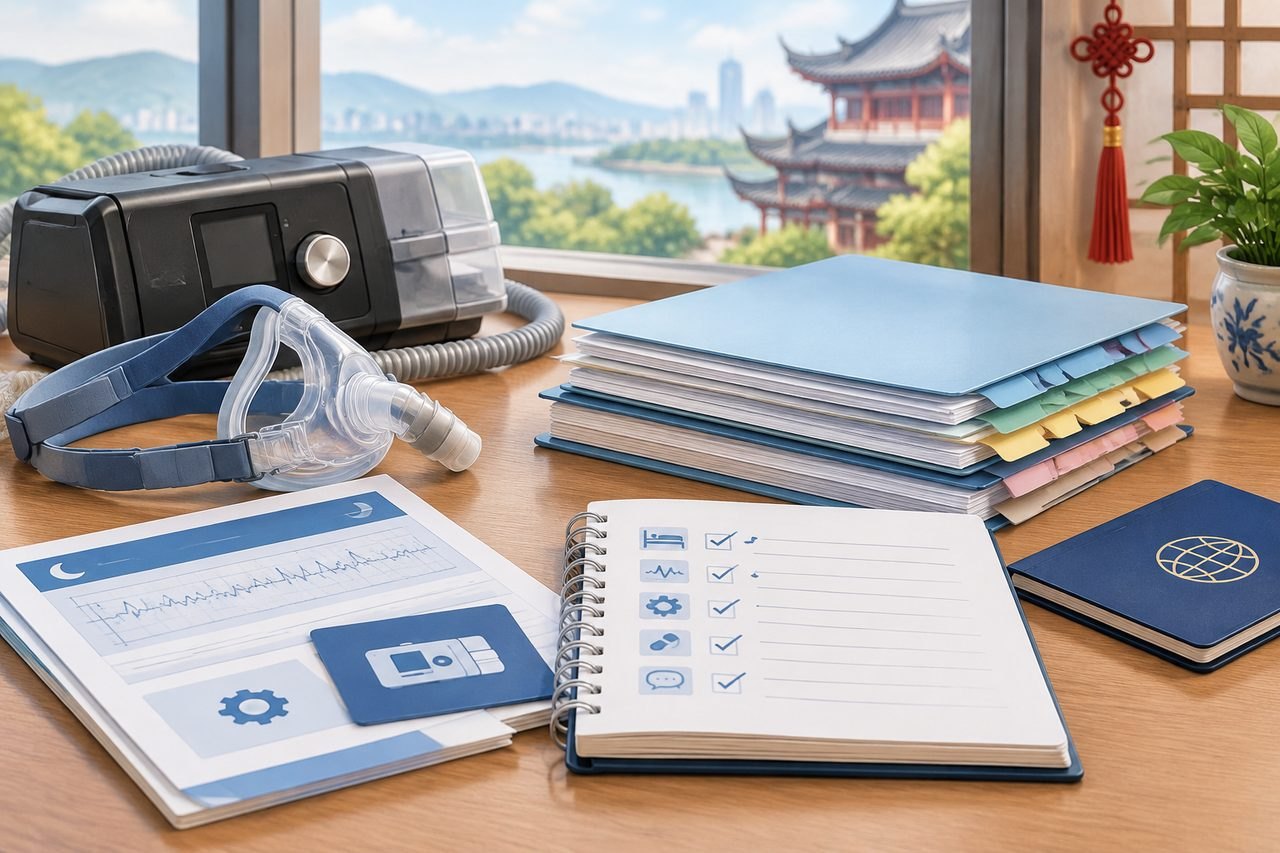
What previous CPAP and other care information matters most
A China specialist assessing obstructive sleep apnea needs to understand your treatment history, not just your diagnosis. The most useful starting point is a clear summary of what has been done, what changed, and what remains unresolved. This is different from a general first-visit guide because the focus is on prior care and its results, not on how to begin an initial workup.
For CPAP specifically, the treating team will want to know the device type, the pressure or mode settings, how often you used it, and any recorded adherence data. They will also want to know whether you experienced mask problems, nasal congestion, aerophagia, or other issues that affected use. These details help the clinician understand whether the prior treatment was adequately trialled and what might be adjusted or reconsidered.
For other care, list any oral appliances, positional therapy, weight-management programmes, medications, or surgical procedures you have had. Include the dates, the provider, and the outcome as you experienced it. If a treatment was stopped, explain why. If it helped partially, describe what improved and what did not. This is not about self-diagnosis; it is about giving the specialist a factual timeline.
Sleep-study results: what to send and what they can and cannot show
Sleep-study results are central to any specialist review. The most useful documents are the full report, not just a one-line summary. This typically includes the study type, the date, the apnoea-hypopnoea index, oxygen saturation data, sleep stages, and any positional or REM-related findings. If you have had more than one study, send all of them so the clinician can see the trend.
A common mistake is to send only the headline number. The AHI alone does not show the pattern of events, the degree of oxygen desaturation, or whether events were concentrated in certain sleep positions or stages. The specialist needs the full report to interpret the severity and pattern. If you do not have the full report, ask the sleep laboratory or your treating clinician for a copy.
It is also important not to infer anatomy from sleep scores. A high AHI does not by itself show where the obstruction occurs or whether surgery would help. The treating team must assess the airway directly and consider the whole clinical picture. If you have imaging or endoscopic findings from a previous ENT or sleep-surgery assessment, include those as well, but do not assume they are sufficient on their own.
Why the reason for seeking care in China changes what you should send
The records you prepare depend on what you are actually asking. If you are seeking a second opinion on whether to continue CPAP, the specialist needs adherence data, comfort issues, and any alternative treatments already tried. If you are asking whether surgery might be suitable, they need the full sleep study, airway assessment, and a clear history of prior surgical or non-surgical care. If you are unsure what you are asking, say so; the initial review can help clarify the question.
This distinction matters because a general first-visit guide would tell you to gather a broad medical history. That is still useful, but it is not the same as a focused review of previous sleep apnea care. The specialist will want to know what has already been ruled out, what has been tried and failed, and what the patient's main concern is now. Without that, the consultation may repeat steps you have already completed.
For an overseas patient, it also helps to explain the practical context. Were you unable to tolerate CPAP? Was the device unavailable or unaffordable? Did you move country and lose access to follow-up? These are not clinical excuses; they are relevant facts that help the treating team understand your situation and plan appropriately.
How to organise the records so the specialist can use them
A chronological summary is more useful than a folder of unsorted PDFs. Start with the date of diagnosis, then list each treatment trial with dates, provider, and outcome. Include the sleep-study reports as separate attachments. If you have a CPAP download or adherence report, include that too. If you have had surgery, include the operation note and any follow-up assessments.
A short cover note in English is helpful. It should state your main question, list the enclosed documents, and note anything you are unsure about. For example: 'I was diagnosed with obstructive sleep apnea in 2021. I used CPAP for eight months but stopped because of mask leak and nasal congestion. I am now considering whether other options might be suitable. I have enclosed two sleep studies and a CPAP adherence report.' This is not a substitute for the clinical assessment; it is a practical way to help the specialist prepare.
Do not send a complete medical archive unless it is specifically requested. The initial enquiry can start with a brief summary and the key sleep-related documents. The team can then advise what else is needed. This keeps the process manageable and respects the specialist's time.
Questions to ask the treating team about prior care and next steps
When you speak with the specialist, ask directly how your previous CPAP trial and other care affect their assessment. Useful questions include: Do you need the full sleep-study report or is the summary sufficient? Are there specific CPAP data points you want to see? How do you assess whether a prior treatment was adequately trialled? What information about previous surgery or oral appliance use would change your approach?
It is also reasonable to ask what the specialist can and cannot determine from records alone. A records-based opinion can review your history and help clarify options, but it does not replace an in-person airway examination or any tests the treating team considers necessary. The specialist should explain what further assessment, if any, they would recommend and why.
Finally, ask about the practical next step. If the specialist thinks a consultation in China is worthwhile, what would that involve? If they think your current care is appropriate, what would they suggest you discuss with your local team? The goal is not to replace your existing care but to give you a clear, informed view of your options.
What the treating team must confirm and how to take the next step
The treating hospital and licensed clinicians decide whether a consultation, further testing, or any treatment is suitable. They will confirm what records they need, what assessments are appropriate, and what options are available. No article or initial enquiry can establish eligibility for surgery or any other treatment. Sleep apnoea treatment can include CPAP or other approaches, and surgery is suitable only in selected circumstances; the treating team must determine whether that applies to you.
If you would like help organising your records and clarifying your question, ChinaSpecialistCare can provide a free initial case review. This is a non-clinical check of the available diagnosis, records, and your main question. It identifies missing information and suggests a relevant next step. It is not a diagnosis or a promise of acceptance. You can start with a brief summary by the enquiry form, email, or WhatsApp, and the team will explain how to share records after first contact.
For more detail on how sleep apnea surgery is assessed in China, see the related procedure reference: Sleep Apnea Surgery.
Sources & scope of this guide
References and official service information relevant to this guide.
This is general planning information and has not been individually reviewed by a doctor. Medical decisions and personal treatment advice come from your treating clinicians.