What a sleep-study report actually contains
A sleep-study result is not one number. It is a structured record of how your breathing, oxygen levels, sleep stages and body position behaved during the study. The headline figure is usually an apnea-hypopnea index or a respiratory event index, but that figure alone does not describe the pattern of events, how long each event lasted, how low oxygen saturation fell, or whether events clustered in one sleeping position.
For an overseas review, the useful document is the full report with the scoring summary and any technologist notes. If you only have a one-line result such as an index value, ask the sleep laboratory for the complete report before you send anything. A clinician cannot interpret a single number in isolation, and a coordinator cannot fill that gap for you.
The report should also state which type of study was performed. A home sleep apnea test and an attended laboratory polysomnography collect different signals and have different limitations. The type of study affects how confidently the result can be interpreted, especially if the index is borderline or if another sleep disorder is suspected.
The details that change the clinical question
Two patients can have the same index value and very different clinical pictures. Oxygen desaturation depth and duration, the proportion of time spent below a saturation threshold, and whether events occur mainly in supine sleep all influence how a clinician thinks about severity and treatment direction. Sleep-stage distribution matters too, because events concentrated in rapid eye movement sleep can behave differently from events spread evenly through the night.
Your current symptoms belong alongside the numbers. Daytime sleepiness, witnessed pauses in breathing, morning headaches, unrefreshing sleep, nocturia and mood or concentration changes are all relevant. So is your cardiovascular and metabolic history, because obstructive sleep apnea is assessed in the context of the whole patient rather than as an isolated laboratory finding.
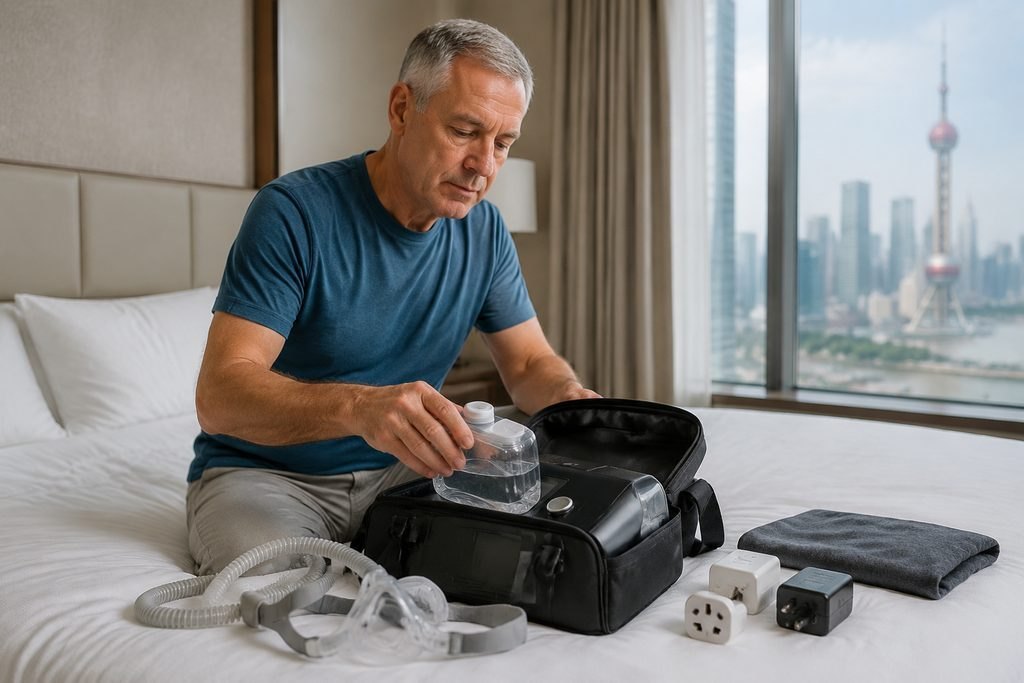
If you have already used CPAP or another therapy, the review needs that history in detail. The device model, the prescribed pressure or pressure range, the mask type, the average nightly usage hours, the residual index on therapy and any comfort problems are all part of the picture. A report showing good adherence with a persistently elevated residual index tells a different story from one showing poor adherence with a well-controlled index.
Why previous CPAP and other care must be documented
Treatment for obstructive sleep apnea can include CPAP or other approaches, and surgery is suitable only in selected circumstances. That means a review in China should start from what has already been tried and what happened. If CPAP was stopped, the reason matters: mask leak, nasal congestion, claustrophobia, pressure intolerance, travel inconvenience or a change in symptoms are different problems with different possible responses.
Do not stop CPAP or any other prescribed therapy in order to prepare for a review. If you are using CPAP, keep using it as prescribed and bring the device data. If you have stopped, say so clearly and explain when and why. The treating clinician needs the real history, not an idealised version.
Other care also belongs in the record. Nasal or sinus treatment, dental appliances, weight and metabolic management, and any prior upper-airway surgery should be listed with dates and outcomes. This is not a generic records list; each item answers a specific question about why previous treatment worked, partly worked or did not work.
What a China review can and cannot settle from records
A records-based review can clarify how your study was scored, whether the reported severity is internally consistent, what treatment options have already been considered, and which additional questions a specialist would want answered. It can identify missing information, such as a full oximetry trace or a device download, that would need to be obtained before a meaningful opinion.
It cannot establish final eligibility for any procedure, confirm that surgery is appropriate for you, or replace an in-person assessment. Examination of the upper airway, imaging where indicated, and a discussion of goals and risks are clinical steps that belong to the treating team. A remote opinion is a starting point for that conversation, not a substitute for it.
If your study was performed some time ago, or if your symptoms have changed since then, say so. A clinician may want to know whether a repeat study is needed, but that decision is theirs to make. Do not arrange repeat testing on your own before the review, and do not assume that an older report is automatically unusable.
Preparing a focused record package
A focused package is more useful than a complete archive. Start with the full sleep-study report, including the scoring summary and any graphs or traces. Add a one-page timeline of your sleep-related history: when symptoms began, when the study was done, what treatment was tried, and what changed. Then add recent relevant records such as clinic letters, medication lists and any cardiac or metabolic results your clinician has mentioned.
Write down your main question in one or two sentences. Examples include whether your current therapy is adequately controlling the condition, whether other options should be discussed, or whether a specialist assessment in China would add anything to your existing care. A clear question helps the reviewing clinician focus on the right part of the record.
Keep the initial enquiry brief. A short summary of the diagnosis, the study date, current treatment and your main question is enough to start. More detailed records can be shared after first contact through the channel the team confirms. Do not send passport numbers, card details or a complete medical archive in the first message.
- Full sleep-study report with scoring summary and traces
- One-page timeline of symptoms, study and treatments tried
- CPAP device model, settings, usage hours and residual index
- Current symptom description and main question
- Recent relevant clinic letters and medication list
Questions to ask before committing to a plan
Ask which specialist will review the records and what that review includes. Ask whether the opinion is based on records alone or whether an in-person assessment is expected. Ask what additional information, if any, would make the review more useful, and whether the treating team would want a repeat study or other testing before discussing treatment.
Ask how the team would describe the role of CPAP and other approaches in your situation, and what the alternatives and their limitations are. Ask about the risks and uncertainties that apply to you specifically, rather than general figures. A clinician can discuss evidence-based risk estimates and the uncertainty around them; what no one can give you is a guarantee of an individual result.
If surgery is mentioned as a possibility, ask what makes a patient suitable in the treating team's judgement, what the assessment involves, and what the expected recovery and follow-up would be. Surgery is suitable only in selected circumstances, so a review that concludes surgery is not appropriate is still a useful outcome.
For practical arrangements, ask the named provider how its written estimate works and what the quoted scope includes, excludes or leaves undecided. Ask about appointment scheduling, interpretation and follow-up directly with the team handling your case. An initial enquiry is free and does not require buying a proxy consultation; the hospital decides suitability after reviewing your information.
Sources & scope of this guide
References and official service information relevant to this guide.
This is general planning information and has not been individually reviewed by a doctor. Medical decisions and personal treatment advice come from your treating clinicians.