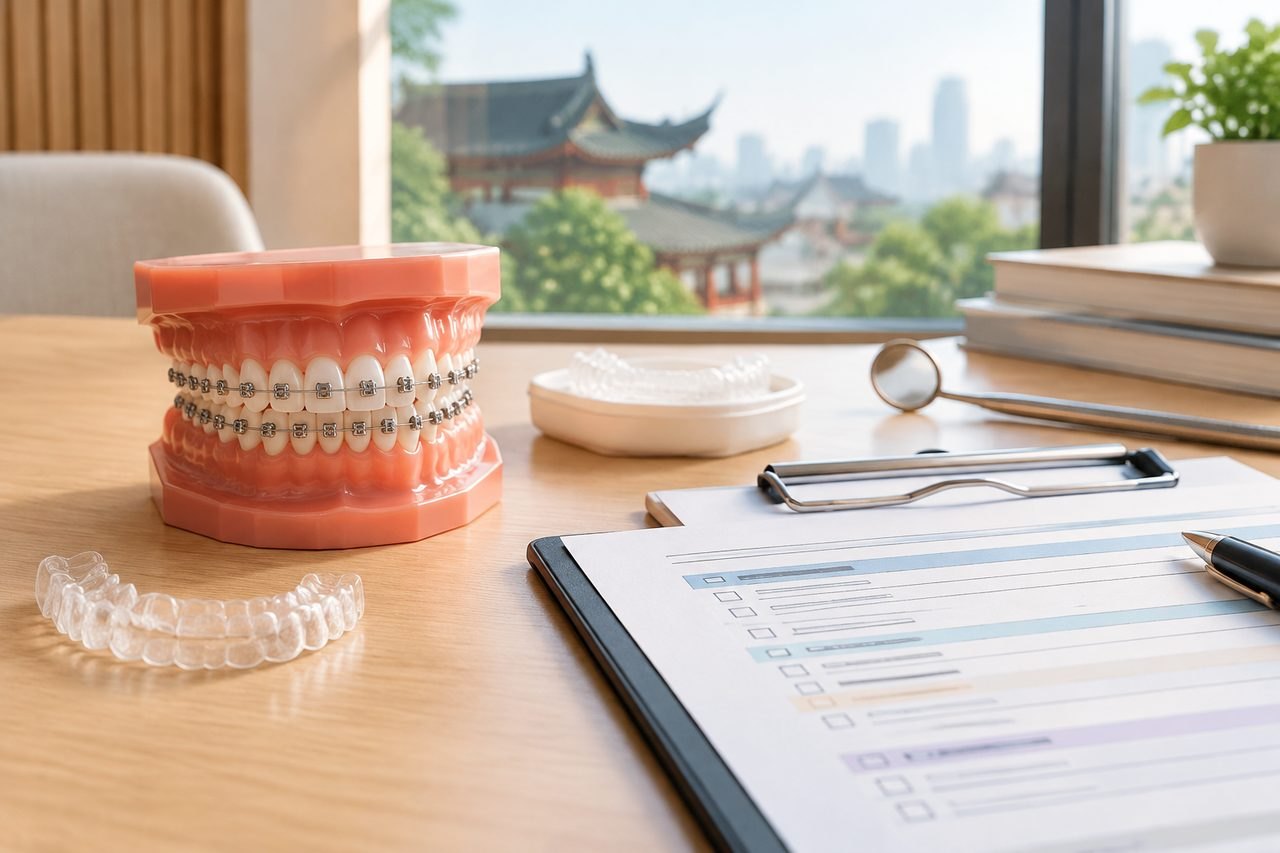
Why an initial estimate may not match the final bill
Orthodontic treatment is not a single event. It begins with assessment of the teeth and jaws, continues through appliance wear and periodic adjustments, and ends with a retention phase. Each stage can generate its own charges, and an initial estimate may address only some of them.
The practical risk is not that a clinic is trying to mislead you. It is that the first figure you receive may be a starting point rather than a complete treatment budget. If the estimate was given before a full assessment, or before the clinician decided on an appliance type, it cannot reliably cover everything that follows.
This is why the useful question is not simply how much treatment costs. It is what the written estimate includes, what it excludes, and what remains undecided until the clinician has examined you and agreed a plan.
Items that commonly sit outside a first figure
The exact scope depends on the clinic and your case, so treat the following as questions to ask rather than a list of guaranteed exclusions.
Assessment and records. Ask whether the initial consultation, diagnostic records, photographs, radiographs or study models are included in the quoted figure or billed separately. If records are taken at a later visit, confirm whether that changes the estimate.
Appliance and materials. If the estimate was based on one appliance type, ask what happens if the clinician recommends a different one after assessment. The choice of appliance requires an individual assessment, so the final recommendation may differ from the initial assumption.
Adjustments and visits. Braces need ongoing adjustments. Ask how many adjustment visits the estimate assumes, whether the fee per visit is fixed or variable, and what happens if your treatment takes longer than expected.
Retainers and retention. Retainers are used after active treatment. Ask whether retainers are included, whether they are charged separately, and whether a replacement retainer later would be a new charge.
Removal and finishing. Ask whether appliance removal, final records and a completion review are part of the quoted figure.
Complications or changes in plan. If treatment stalls, if an appliance breaks, or if the clinician changes approach, ask in advance how that is handled and billed.
The question that changes everything: who adjusts your braces after you go home
Braces require ongoing adjustments, so the practical viability of treatment in China depends on what happens after you leave. Ask the clinic directly whether the proposed plan can be coordinated across repeated visits, and whether they are willing to work with a clinician in your home country for adjustments.
If the answer is yes, ask what records or instructions would be transferred, who would be responsible for each adjustment, and how communication between the two clinicians would work. If the answer is no, ask what that means for the plan and whether an alternative approach would be more suitable.
Do not assume that a clinic will automatically arrange shared care. This is a question to confirm in writing before you commit. It may also affect the total cost, because adjustments performed elsewhere are not part of the original estimate.
If you cannot return for adjustments, ask whether the clinician considers the plan realistic under those conditions. The treating team decides suitability, and their answer should shape your decision.
Next step
If you are considering orthodontic treatment in China, the first practical step is not to compare headline figures. It is to ask the clinic for a written estimate that separates included, excluded and undecided items, and to ask which parts of that estimate depend on the assessment still to be done.
Ask specifically how adjustment visits are counted, whether retainers and appliance removal sit inside or outside the quoted figure, and what happens to the plan if you return home before active treatment ends. Those three answers shape the real budget more than the opening number does.
Ask the clinic to confirm in writing who would carry out adjustments if you leave, what records would be transferred to another clinician, and how any change in scope would be communicated and priced before it is incurred. If the clinic cannot confirm a shared-care arrangement, ask what alternative plan it would consider realistic under your travel pattern.
It also helps to ask what the estimate assumes about treatment duration. If the plan runs longer than the assumed period, ask whether additional adjustment visits are billed individually or absorbed into a revised figure. Getting that stated up front avoids a disagreement later.
Keep every version of the estimate, not only the final one. If a revised figure is issued after assessment, compare it line by line with the original and ask which items changed and why. A short written question is usually enough to clarify whether a new line reflects a clinical decision or an administrative one.
You can review the complex orthodontics reference for background on how treatment is planned before you raise these questions with a clinic.
An initial enquiry is free and does not require buying a proxy consultation. The hospital decides whether treatment is suitable for you, and the treating clinician decides which appliance and plan fit your case. If you have current pain, swelling or a broken appliance, seek local care first rather than waiting for an overseas appointment.
Sources & scope of this guide
References and official service information relevant to this guide.
This is general planning information and has not been individually reviewed by a doctor. Medical decisions and personal treatment advice come from your treating clinicians.