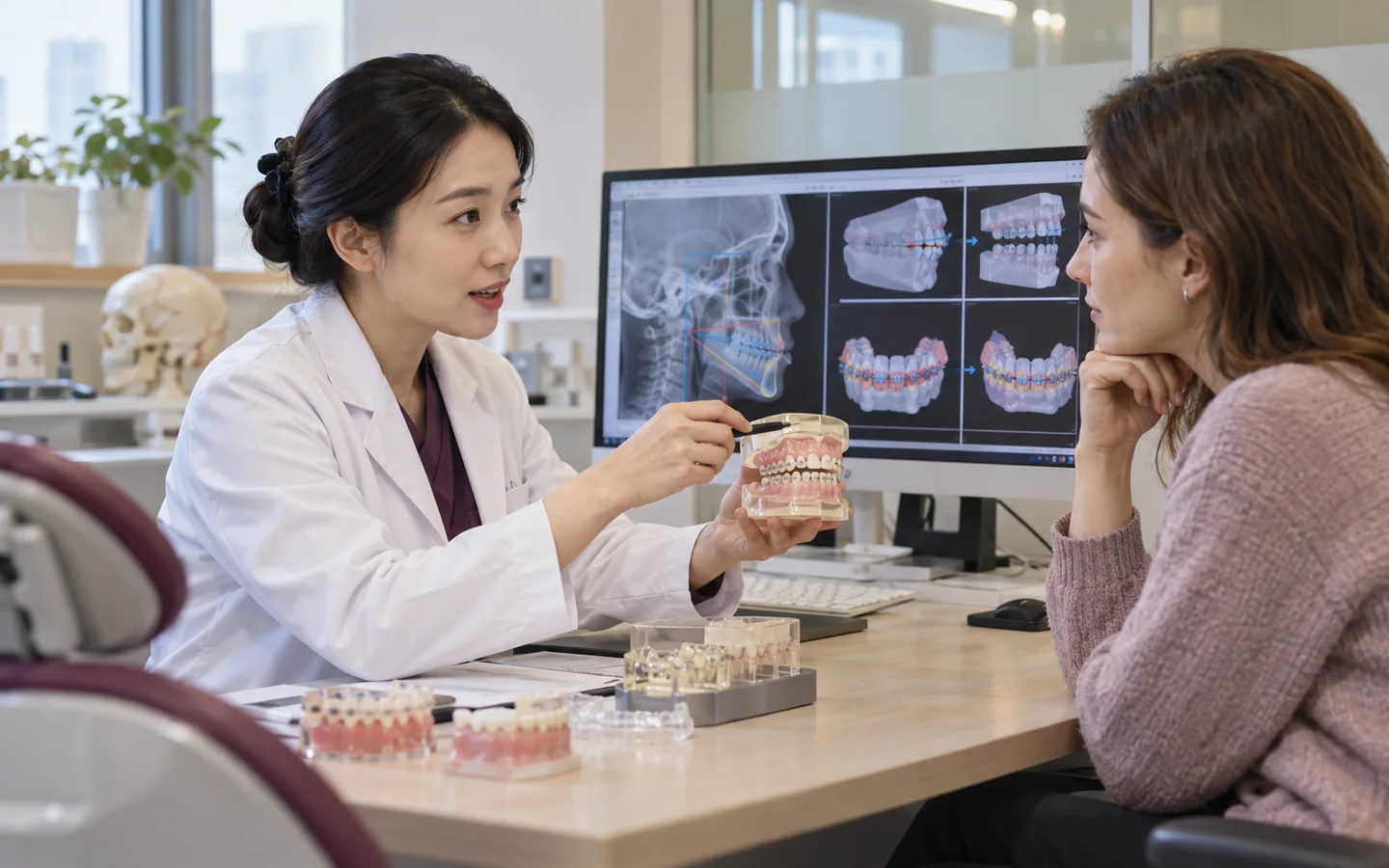
Complex Orthodontics: diagnosis, function and long-term planning
Complex Orthodontics is considered when malocclusion involves skeletal discrepancy, impacted or missing teeth, periodontal limits or multidisciplinary restorative needs.
A complex plan must identify which changes orthodontics can achieve alone, where surgery or restorative care is required and how root, gum and bone risks will be monitored during travel.
Who may be considered?
Specialist review may help when bite or tooth-position problems exceed routine alignment and require several specialties or prolonged treatment.
- Severe crowding or bite discrepancy.
- Impacted teeth requiring surgical exposure.
- Pre- and postoperative orthognathic treatment.
- Adult cases with periodontal, missing-tooth or restorative constraints.
What the specialist team must confirm
Review facial and dental examination, periodontal health, panoramic and cephalometric imaging, root position, impacted teeth, CBCT when justified, digital models, jaw-joint and airway symptoms and growth status.
Key points for this treatment
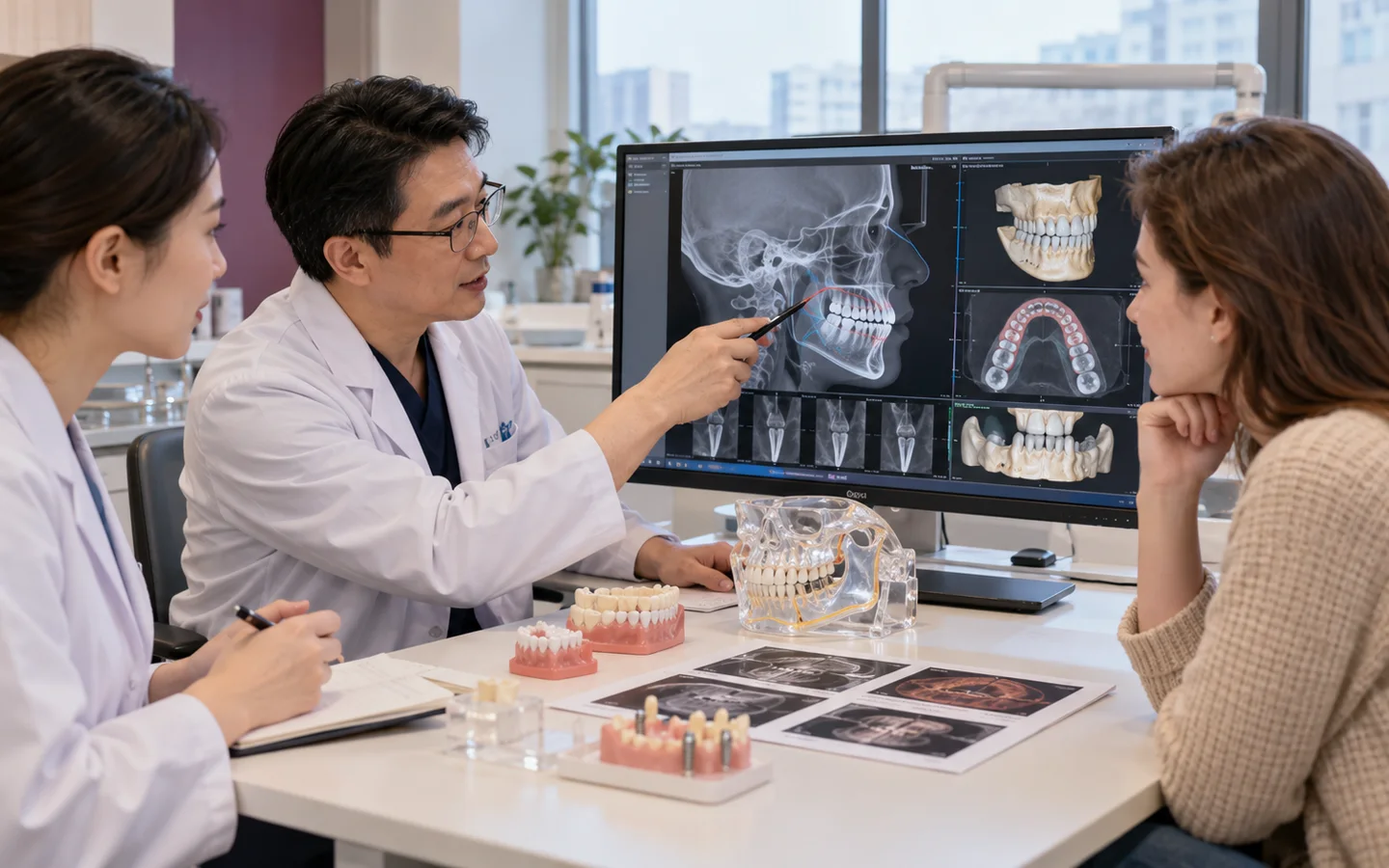
From multidisciplinary diagnosis to stable retained occlusion
The plan should specify visit intervals, appliance emergencies and how care transfers between countries.
Retention and tissue monitoring continue after alignment
Soreness after adjustments is usually brief, while hygiene, gum inflammation and appliance breakage require active management.
Retainers, bite stability, root health, periodontal support and growth or jaw changes are followed after active movement ends.
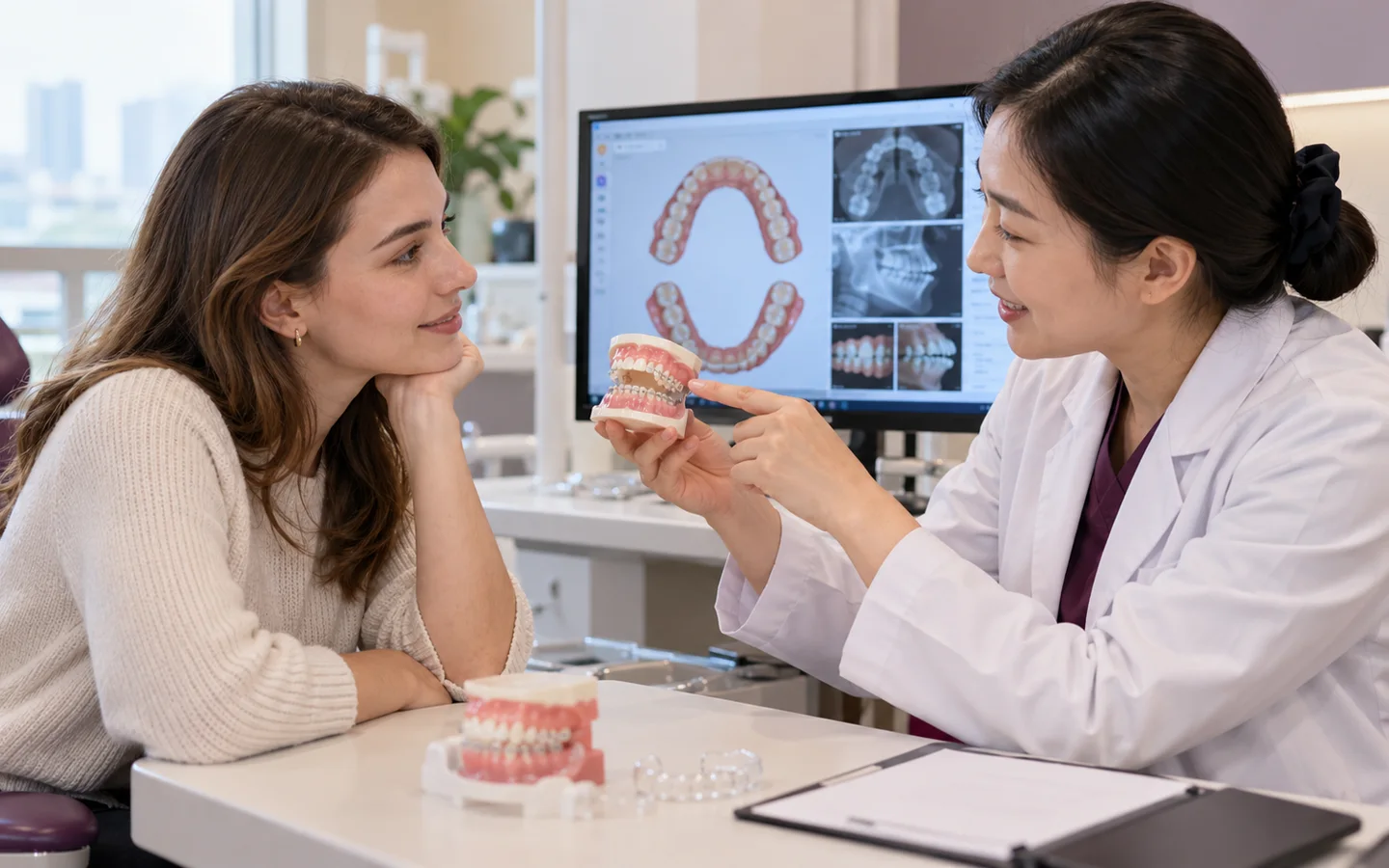
Risks, limits and realistic expectations
Risks include root shortening, gum recession, bone loss, decay, white spots, pain, bite instability, relapse, appliance injury and treatment that takes longer than planned.
Facial swelling, fever, severe dental pain, trauma, swallowed or aspirated appliance parts or rapidly worsening gum disease needs urgent local care.