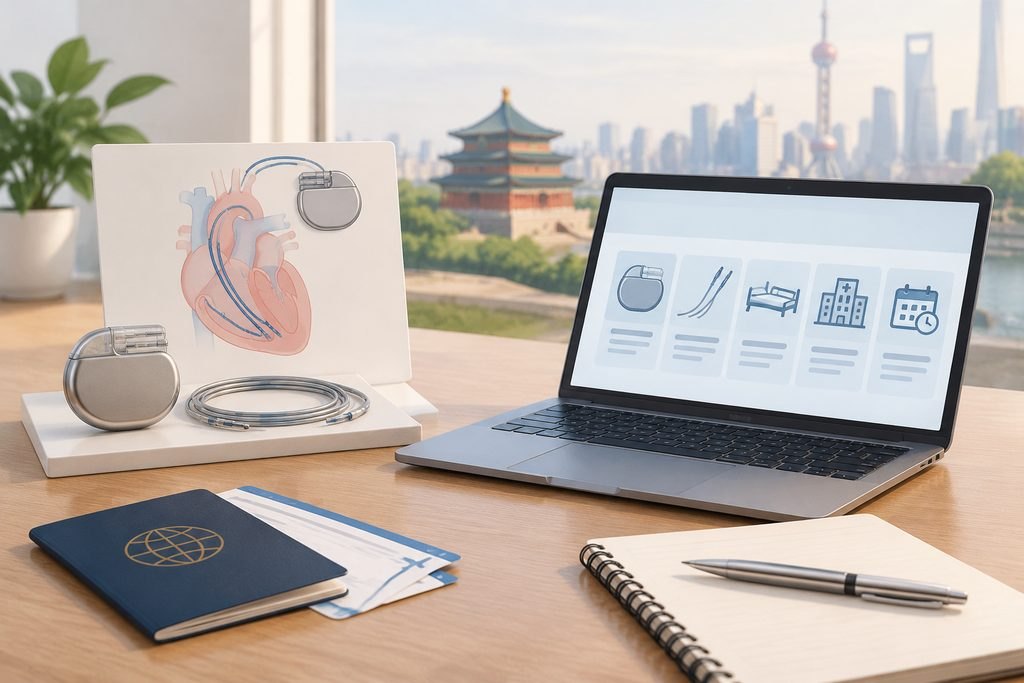
Why a pacemaker quote is not one number
A pacemaker system is not a single product. It usually combines a pulse generator, one or more leads placed in the heart, and the programming and testing that go with implantation. Each element can vary between patients, so a hospital cannot give a meaningful figure until it knows what your case requires.
The clinical decision also matters. A first implant, a generator replacement, a lead revision or an upgrade from a simpler device are different procedures with different device and operating-room costs. The hospital's electrophysiology team decides which configuration is appropriate after reviewing your records and, where needed, repeating or extending tests.
Because of this, the useful question is not 'what is the price?' but 'what exactly does this estimate include, and what could change it?' That is the scope you should clarify in writing before committing to travel.
Hospital charges: what an itemised estimate should list
When you request an estimate, ask the hospital to separate the main cost blocks rather than give one lump sum. A clear estimate normally distinguishes the device and leads, the procedure and anaesthesia, the hospital stay and ward type, and any pre-procedure tests or post-procedure checks.
Ask how the proposed device and configuration affect the estimate. Different manufacturers, models and features carry different prices, and the hospital may not stock every option. Ask which device is proposed, whether alternatives exist, and whether the quoted price is for the device alone or includes implantation and initial programming.
Ward type is another variable. Public tertiary hospitals and private international hospitals can differ in room charges and included services. Ask whether the estimate assumes a standard ward or an international department, and whether that changes the total.
Finally, ask what is explicitly excluded. Ask whether a longer stay for complications, additional procedures, tests after admission and take-home medicines are included or charged separately. These are not reasons to distrust a quote; they are items to confirm so you can plan realistically.
- Device and leads: model, quantity and whether implantation is included
- Procedure and anaesthesia: type of procedure and who performs it
- Stay: number of nights assumed and ward category
- Tests: which pre- and post-procedure investigations are included
- Exclusions: complications, extra days, medicines and follow-up visits
Records that help a hospital price your case
A hospital cannot scope a pacemaker estimate from a diagnosis name alone. The electrophysiology team needs enough information to understand your rhythm problem, your current device status if you already have one, and any conditions that affect the procedure.
Useful records typically include recent ECG and Holter or event-monitor reports, an echocardiogram report, relevant blood results, a current medication list, and any previous pacemaker or cardiac device records including the device model and last check. If you have a pacemaker identification card, its details help the team understand what is already implanted.
You do not need to send a complete archive at first contact. A short summary with the main reports is enough for an initial review, and the team can tell you what else is needed. Do not send passport numbers, card details or your full medical file through an initial enquiry form.
Coordination fees and travel costs are separate
Hospital charges are paid to the hospital. ChinaSpecialistCare's coordination services are separate and are agreed in advance. A specialist matching and appointment coordination service has a separately agreed fee and does not include a proxy consultation or the hospital's own consultation fee. Hospital, treatment and surgery coordination is case-specific, and no standard public fee is authorised for it.
An optional proxy consultation, where a doctor takes your records to a relevant hospital specialist while you remain at home, has a separately agreed fee. It is optional and is not a prerequisite for every appointment or operation. A multidisciplinary review, if relevant to a complex case, is scoped and agreed first.
Travel costs are separate again: flights, accommodation, local transport and any companion or interpretation support. Confirm the scope and fee for hospital companion and interpretation separately. Coordination charges are not hospital fees and do not include third-party charges.
Follow-up and device checks to confirm before you travel
A pacemaker is not a one-off purchase. The NHS describes regular follow-up and a pacemaker identification card to show healthcare professionals. Patients should keep device-check appointments and maintain medication records, and follow the treating team's activity instructions.
For overseas planning, this raises practical questions that affect cost and logistics. Ask both your home team and the China team who will handle wound review, device checks and ongoing care after you return. Confirm whether the proposed device's programmer and remote-monitoring arrangements are compatible with the follow-up centre you will use at home, rather than assuming universal international coverage.
Chest pain, breathing difficulty, fainting or other concerning symptoms need prompt medical attention. If you develop urgent or worsening symptoms, local care takes priority over overseas travel planning. Do not change any medication on your own.
Ask the hospital to state in writing what follow-up is included in the quoted fee and what would be charged separately, and whether an English-language device record or identification card can be provided. These are questions to confirm with the provider, not guarantees.
Sources & scope of this guide
References and official service information relevant to this guide.
This is general planning information and has not been individually reviewed by a doctor. Medical decisions and personal treatment advice come from your treating clinicians.