Why Some Parkinson's Questions Cannot Be Answered From Records Alone
Parkinson's disease changes from hour to hour and from day to day. A written summary or a video clip captures one moment. The treating clinician needs to see how movement, tremor, stiffness and walking change across a dose cycle, and how the person responds to levodopa in real time. That is why many questions about ON and OFF states, dose timing and motor fluctuations are difficult to settle from documents alone.
This does not mean records are useless. A clear history, medication list, brain imaging reports and previous assessments help the clinician understand the context before the visit. They can narrow the questions and reduce repetition. But they do not replace direct observation of movement, balance and function.
For an overseas patient, the practical point is to separate questions that can be prepared remotely from questions that will need an in-person assessment in China. That separation helps you plan the visit and avoid expecting a remote reply to settle everything.
ON and OFF Assessments: What the Clinician Needs to See Directly
ON and OFF states describe how symptoms change in relation to medication timing. A patient may feel mobile and fluent during an ON period, then slow, stiff or tremulous during an OFF period. The pattern matters because it influences how clinicians think about dose timing, medication adjustments and whether other options should be discussed.
A diary can record when OFF periods happen, how long they last and what the person was doing. That diary is valuable. However, the clinician still needs to observe the transition. They may ask the patient to perform specific movements, walk, turn or sit and stand during different states. They may compare tremor, rigidity, bradykinesia and gait directly. These observations cannot be reconstructed reliably from a written description alone.
If you are preparing for care in China, ask the treating team what they want recorded before travel and what they will assess in person. Do not change any medication schedule on your own to create a particular state for the visit. Medication decisions belong to the treating clinician.
Levodopa Response: A Question That Usually Needs Direct Testing
Levodopa response is central to Parkinson's assessment. Clinicians want to know whether symptoms improve after a dose, how much they improve, how long the benefit lasts and whether side effects appear. A patient's own account is important, but it is subjective and can change with fatigue, stress, sleep and other factors.
A formal levodopa challenge or observed response assessment allows the clinician to compare function before and after a dose under controlled conditions. This is not something a records-based opinion can reproduce. It requires the patient to be present, with the treating team deciding how and when to assess.
For overseas planning, this means you should not expect a remote review to confirm whether someone is a candidate for a device or a changed medication plan. The remote review can organise the history and identify what needs testing. The in-person assessment produces the observations the treating team needs for its own decisions.
Device and Follow-Up Choices: Suitability and Programming Questions
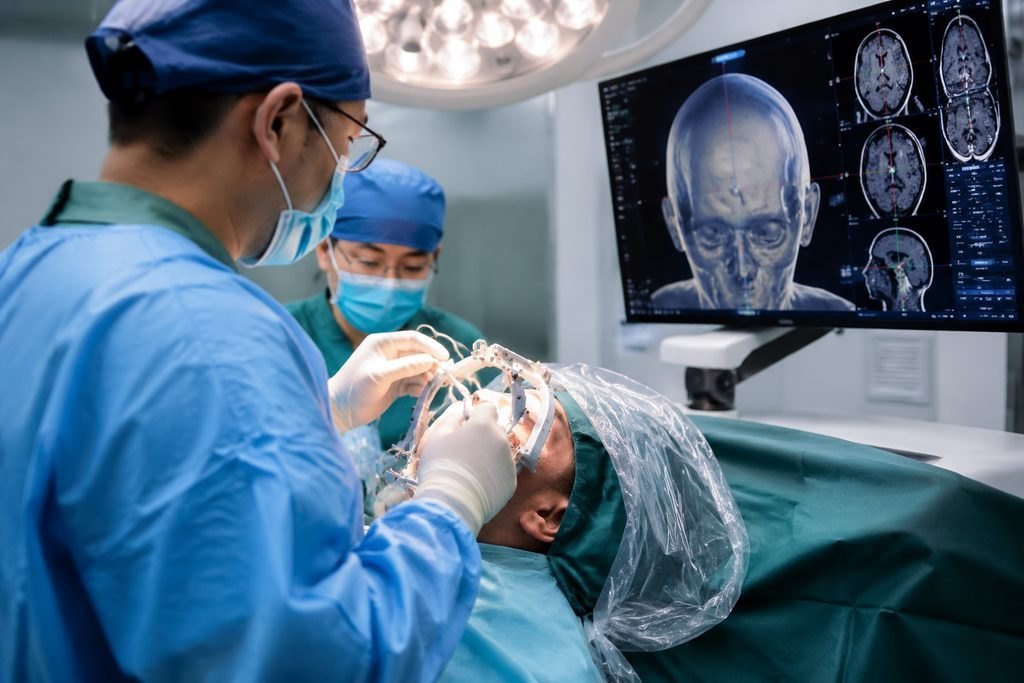
Deep brain stimulation uses implanted electrodes and a pulse generator. It may help selected Parkinson's symptoms but does not cure the disease. Whether it is suitable for a particular person depends on several factors that cannot be fully judged from a file: symptom type and distribution, levodopa response, cognitive status, mood, balance, age-related considerations and the person's goals.
Device-related questions also include follow-up. After implantation, programming and adjustments are part of ongoing care. A patient considering care in China should ask how follow-up is arranged, who performs programming, what remote support is possible and what happens after returning home. These are questions for the treating team and the device service, not assumptions to make in advance.
A records-based opinion can help prepare these questions and clarify what information the hospital wants. It cannot confirm suitability, guarantee programming access or establish that a device service will accept a patient. Those decisions belong to the treating hospital and licensed clinicians.
What to Prepare Before Asking for an In-Person Assessment
Preparation makes the in-person visit more useful. A clear summary helps the clinician focus on the questions that matter. You do not need to send a complete medical archive at first contact. A brief summary and the main question are enough to start.
Useful items to gather include: the diagnosis and when it was made; current medications with doses and timing; a recent medication diary showing ON and OFF periods; reports of previous brain imaging; notes from previous specialist visits; and a short list of the patient's main concerns and goals.
Also prepare a simple question list. For example: Which of my questions can be answered from records, and which need examination? What assessments will be done during the visit? What should I record before travel? How will follow-up and programming be arranged if a device is discussed? These questions help the treating team give you a clear plan.
How ChinaSpecialistCare Can Help With Preparation and Coordination
The questions that cannot be settled from a file are the ones that depend on watching the person move. ON and OFF patterns, the size and duration of a levodopa response, balance, gait, freezing and the suitability of a device are all assessed by a clinician who is in the room. Records set the context; they do not substitute for that observation.
This is why the useful split is not 'serious questions' versus 'routine questions'. It is 'questions a records-based opinion can narrow' versus 'questions that need the patient present'. A records-based opinion can organise the history, flag what is missing and frame the discussion. It cannot confirm a device is appropriate, reproduce a levodopa response or establish that a hospital will accept the case. Those belong to the treating clinician and hospital.
For an overseas patient, that split changes what you ask for first. Rather than requesting a remote answer to a suitability question, ask the treating team which of your questions they can address from records and which they will assess in person. That answer tells you what to prepare, what to record before travel and what to expect from the visit itself.
A medication diary is the single most useful thing to bring. Record when each dose is taken, when OFF periods begin and end, what the person was doing, and any involuntary movements or side effects. Note sleep, meals and stress where they seem to matter. Bring the diary in its original form rather than a tidied summary, because the treating clinician may want to see the raw pattern across several days.
Ask the hospital what it wants before you travel, and send only what it requests. A brief summary of the diagnosis, current medications with doses and timing, imaging reports and the main question is enough to start. Do not change any medication schedule to produce a particular state for the visit; that decision belongs to the treating clinician.
ChinaSpecialistCare provides non-clinical coordination for international patients. We can help organise records, request specialist appointments and arrange interpretation during hospital visits. We do not diagnose, prescribe, decide suitability or promise that a hospital will accept a case. Those decisions belong to the treating hospital and licensed clinicians.
If you are considering an in-person assessment in China for Parkinson's disease, an initial enquiry is free. Share a brief summary of the diagnosis, current medications and your main question. Our team will review what is available, identify missing information and suggest a relevant next step. A proxy consultation is optional and is not required to make an initial enquiry.
For device-related questions, the relevant reference page is Deep Brain Stimulation. It explains the general scope of the procedure and what to discuss with the treating team. Use it alongside this guide when preparing your questions.
Sources & scope of this guide
References and official service information relevant to this guide.
This is general planning information and has not been individually reviewed by a doctor. Medical decisions and personal treatment advice come from your treating clinicians.