Start with the fracture context, not the procedure name
The same operation name can describe two very different situations. A hip fracture is an acute injury that needs timely local assessment, usually where the patient already is. A later review, by contrast, may concern a hip that has already been treated, a planned procedure, or a second opinion on whether an operation is appropriate at all. Before asking about risks and alternatives in China, clarify which situation applies to you. If there is a recent fall, inability to bear weight, severe groin or hip pain, or a known fracture, local emergency or orthopedic care takes priority over any overseas enquiry.
This distinction changes the questions that matter. In an acute fracture, the clinical team is weighing urgency, the patient's general condition, and the type of procedure that can be performed safely. In a planned or later review, there is more room to discuss implant choice, approach, rehabilitation expectations and whether a different operation might be considered. Writing down which category you are in helps the receiving clinician answer precisely rather than generally.
It also affects what you should send. For an acute fracture, the key items are the injury films, the fracture description and any immediate treatment already given. For a later review, the useful items are the original injury and operation records, current imaging, and a clear description of present pain, walking ability and any aids you use. Ask the receiving team which of these they need before you send a large file.
What partial hip replacement actually changes
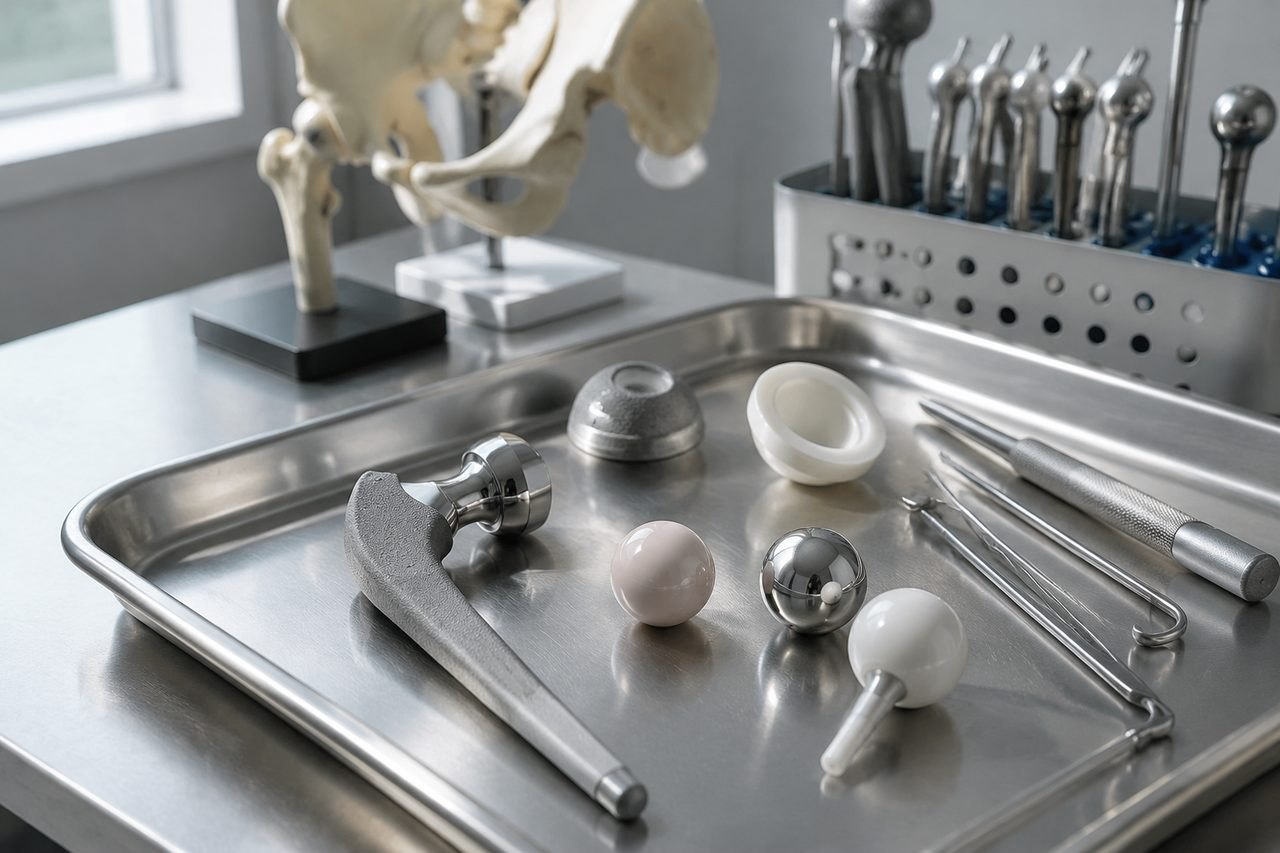
A partial hip replacement replaces the femoral head, unlike a total hip replacement, which replaces both joint surfaces. That single anatomical difference is the starting point for every risk and alternative question. Because the acetabulum, the socket side of the joint, is not replaced in a partial procedure, the condition of that socket matters to the decision. If the socket is already damaged, the treating surgeon may discuss whether a partial or total replacement is more appropriate for that individual hip.
This is not a recommendation for either operation. It is a question to put to the orthopedic team: given my imaging and my general health, how do you expect each option to behave over time, and what would make you change your plan? Ask them to explain the reasoning in terms you can repeat back. If you cannot restate their answer, you have not yet understood the trade-off well enough to decide.
The femoral head is not the only variable. The soft tissues around the hip, the patient's bone quality, other medical conditions and the ability to participate in rehabilitation all influence how a surgeon frames risk. None of these can be assessed from a procedure name alone. That is why a records-based opinion is a starting point for discussion, not a final clearance.
How to ask about risks without inviting a personal recommendation
Patients often ask, "What are the risks?" and receive a list that could apply to anyone. A more useful question is: "For a patient with my records, which risks would you consider most relevant, and what information would change your view?" This keeps the clinician explaining their reasoning rather than issuing a recommendation you have not asked for. It also gives you a way to compare answers if you speak to more than one team.
Ask separately about immediate, medium-term and longer-term concerns. Immediate concerns may include anaesthetic and wound issues, blood clots and infection. Medium-term concerns may include mobility, pain and the need for rehabilitation. Longer-term concerns may include wear, loosening or the possibility of further surgery. The exact list depends on the individual patient, so treat any general list as a prompt for questions, not as a prediction.
It is reasonable to ask what the team would do if a complication occurred, who would manage it, and how follow-up would work if you returned home. You do not need to accept a vague answer. Ask them to write the key points in the plan so you can review them with your local doctor. If a clinician declines to discuss alternatives, that itself is information about how the relationship may work.
- Ask which risks are most relevant to your records, not to patients in general.
- Ask what would change the team's preferred plan.
- Ask how complications and follow-up would be handled after you leave China.
- Ask for the key points in writing so your local clinician can review them.
Alternatives to discuss, and why the socket matters
Alternatives may include non-operative management, a different type of hip replacement, or delaying surgery while other health problems are addressed. Whether any of these is realistic depends on the fracture pattern, the state of the socket, the patient's general condition and the goals of care. The treating team, not an article, decides which options are available for a specific patient.
A practical way to frame the conversation is to ask: "What are the alternatives you would consider for me, and what are the main advantages and disadvantages of each?" Then ask what would make the team choose one over another. This surfaces the reasoning behind the plan and helps you understand whether the decision is close or clear-cut. It also gives you a fair basis for a second opinion if you want one.
If you are seeking care in China, ask how the hospital handles the assessment and who is involved. Some cases are straightforward; others benefit from a review involving more than one specialty. You can ask whether a multidisciplinary review is appropriate for your situation, but the hospital decides whether to arrange one and what it includes.
Records that help a Chinese orthopedic team answer specifically
A useful enquiry does not require a complete medical archive. Start with a short summary: what happened, when, what treatment has been given, current symptoms, walking ability, aids used, and the main question you want answered. Then ask the receiving team which records they want. Typical items may include the injury or operation notes, recent X-rays or other imaging, a medication list and relevant test results. The exact list depends on the case.
Imaging is often central to a hip assessment, but the format matters. Ask whether the hospital wants the original images or a disc, and whether a radiology report is needed alongside them. Do not assume that a report alone is sufficient. If you are sending records from another country, ask about translation and whether the hospital needs certified copies. These are administrative questions to confirm with the specific provider, not rules that apply everywhere.
Keep the first contact brief. A short summary by the enquiry form, email or WhatsApp is enough to start. Do not send passport numbers, card details or a full medical archive at the first step. Once the team understands the question, they can tell you what to send next. This keeps the process focused and avoids sharing more than is needed.
What to confirm before you plan travel or accept a plan
Before committing to care in China, confirm the clinical and practical points that affect your decision. Ask whether the hospital has accepted your case, who will assess you, what the proposed plan includes, and what would happen if the assessment changes the plan. Ask how long the hospital expects you to stay for assessment and treatment, but treat any estimate as provisional until the treating team confirms it. Do not rely on a general timeline from a website or a coordinator.
Ask about mobility support and rehabilitation. A hip procedure affects walking and daily activities, and the treating team's instructions on weight-bearing, exercises and follow-up are specific to the operation and the patient. Do not follow a generic rehabilitation plan from another source. If you need a walking aid, ask how it will be arranged and whether you should bring one.
Finally, ask how follow-up would work after you return home. A Chinese hospital may provide records and a plan that your local doctor can continue, but the local clinician makes their own assessment. Ask what documentation you will receive and whether it will be in a language your local team can use. If you are unsure whether your enquiry concerns an acute fracture or a later review, say so in your first message. An initial enquiry is free and does not require buying a proxy consultation. The hospital decides suitability, and a records-based opinion does not establish final eligibility or guarantee acceptance.
Sources & scope of this guide
References and official service information relevant to this guide.
This is general planning information and has not been individually reviewed by a doctor. Medical decisions and personal treatment advice come from your treating clinicians.