Why a partial hip replacement estimate is not one number
A partial hip replacement replaces the femoral head, unlike a total hip replacement, which resurfaces both sides of the joint. That single difference matters for cost because the procedure uses a different implant set and a different surgical plan. It also means a quote for a total hip replacement cannot be used as a stand-in for a partial one, and vice versa.
When an overseas patient asks for a cost, the useful answer is not a figure pulled from a website. It is a structured estimate built from the actual clinical picture and the specific hospital's written terms. Two patients with the same diagnosis can receive different quotes because the implant, the ward, the length of stay and the coordination services differ. The estimate is a document, not a slogan.
This guide is about how to read that document and what to ask before you treat any number as final. It does not provide prices, because no approved China-wide figures exist for this procedure. It explains which missing answers change the next step.
The implant decision changes the estimate
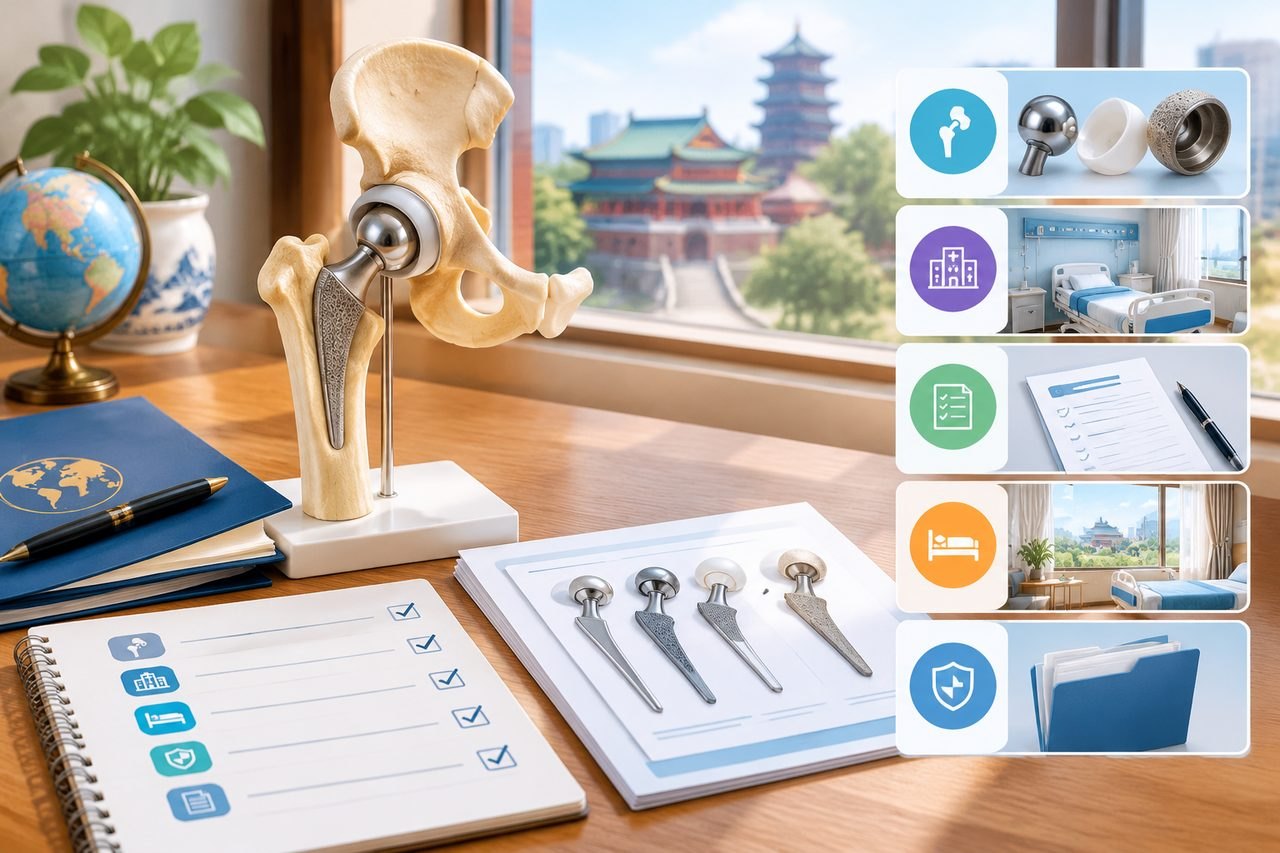
A partial hip replacement is not a single product. The femoral component can differ by design, by fixation method (cemented or uncemented), and by manufacturer. Each of those choices carries a different acquisition cost for the hospital, and that cost is passed into the quote. Until the surgeon selects the implant, the implant line in any estimate is provisional.
This is why a quote that says only 'partial hip replacement' without naming the prosthesis is incomplete. Ask the hospital to state the implant brand, model and fixation approach in writing. If the surgeon has not yet decided, ask what information is still needed before that decision can be made. The answer might be additional imaging, a review of bone quality, or an assessment of the patient's general health.
A related question is whether the quoted implant is the one the surgeon actually plans to use, or a placeholder. Hospitals sometimes quote a standard option and then substitute a different device in theatre. Ask how the hospital handles a change of implant after the quote is issued, and whether the patient is informed and re-consented before any substitution.
What a hospital quote should itemise
A useful quote separates the charges that make up the episode of care. The exact line items vary by hospital, so the right approach is to ask the named provider what its quote includes, rather than assume a standard structure. The questions below are designed to surface the differences.
Ask whether the quote covers the surgeon's fee, the anaesthetist's fee, the operating theatre, the implant, inpatient medicines, routine blood tests and imaging, physiotherapy during admission, and the ward bed. Ask whether the quote is a fixed package or an estimate that can change if the stay is longer or if a complication occurs. Ask what happens if the patient needs a blood transfusion, a temporary ICU stay, or a return to theatre.
Also ask how the hospital handles charges that arise after discharge, such as follow-up imaging or wound review. Some hospitals include a defined follow-up window; others bill each visit separately. The answer determines how you budget beyond the initial quote.
Finally, ask for the quote in writing, in English, with the currency and the validity period stated. A verbal estimate is not a basis for a financial decision.
- Does the quote name the specific prosthesis, or is it a generic line item?
- Is the price fixed for the episode, or an estimate subject to change?
- Which professional fees are included, and which are billed separately?
- What is the hospital's process if the planned implant changes during surgery?
- Does the quote include a defined follow-up period, and what does it cover?
Ward choice, length of stay and the coordination layer
Chinese tertiary hospitals often offer different ward classes, from standard multi-bed rooms to private or international-department rooms. The room rate is only part of the difference; international departments may also have different professional fees and different administrative processes. Ask the hospital to quote the ward class you are actually considering, and ask whether the surgeon's fee changes with the ward class.
Length of stay is another variable. The treating team decides how long you stay based on your clinical progress, not on a fixed schedule. Ask the hospital what its typical discharge planning looks like for a partial hip replacement, and what factors would extend the stay. Do not treat any stated number of days as a commitment.
Coordination services are separate from hospital charges. ChinaSpecialistCare provides non-clinical coordination, such as specialist appointment matching, hospital navigation and interpretation. These are optional and separately agreed. The hospital's clinical fees are paid to the hospital. If you use coordination, ask for a written scope of what is included before you commit.
Travel costs — flights, accommodation, local transport and any companion — are also outside the hospital quote. They depend on your origin, your length of stay and your preferences. No single figure applies.
Records that make an estimate meaningful
A hospital cannot produce a useful estimate without the clinical facts. The minimum set usually includes the diagnosis, recent imaging of the hip, a record of any prior surgery in the area, and information about other medical conditions and current medicines. The exact list depends on the hospital and the surgeon, so ask the receiving team what it needs rather than assuming a universal checklist.
If the diagnosis is a hip fracture, the timing of surgery is a clinical decision. Do not delay acute fracture care to travel overseas. If you are considering treatment in China for a non-urgent or already-stabilised problem, the records review can proceed at a planned pace. The treating clinician decides whether and when surgery is appropriate.
When you send records, include the imaging files themselves, not only the reports. A surgeon assessing implant choice and bone quality needs to see the images. Ask the hospital whether it accepts digital files in your format, and whether it needs physical films.
If some records are missing, say so. The hospital can tell you whether it can proceed with what you have or whether a specific document is needed. Do not assume that an incomplete file means you must delay all clinical assessment.
Questions whose answers change your next step
The point of asking is to decide what to do next. If the hospital cannot name the implant, your next step is to request that detail before comparing quotes. If the quote is an estimate rather than a fixed price, your next step is to ask for the assumptions behind it and the process for changes. If the ward class is unclear, ask for a quote for the specific room type you want.
If the hospital says it needs more imaging before it can quote, your next step is to find out whether that imaging can be done locally and sent, or whether it must be done in China. If the hospital says it cannot confirm acceptance in advance, that is normal: suitability is decided after the clinical review. Your next step is to complete the records review and wait for the clinical decision.
If you are comparing more than one hospital, ask each for the same itemised structure so the quotes are comparable. A lower total that omits the implant or the anaesthetist is not a lower cost; it is an incomplete one.
For an initial enquiry, you do not need to buy a proxy consultation. A brief summary of the diagnosis and your main question is enough to start. ChinaSpecialistCare's free initial case review checks the available records, identifies missing information and suggests the relevant next step. It is not a diagnosis or a promise of acceptance.
Sources & scope of this guide
References and official service information relevant to this guide.
This is general planning information and has not been individually reviewed by a doctor. Medical decisions and personal treatment advice come from your treating clinicians.