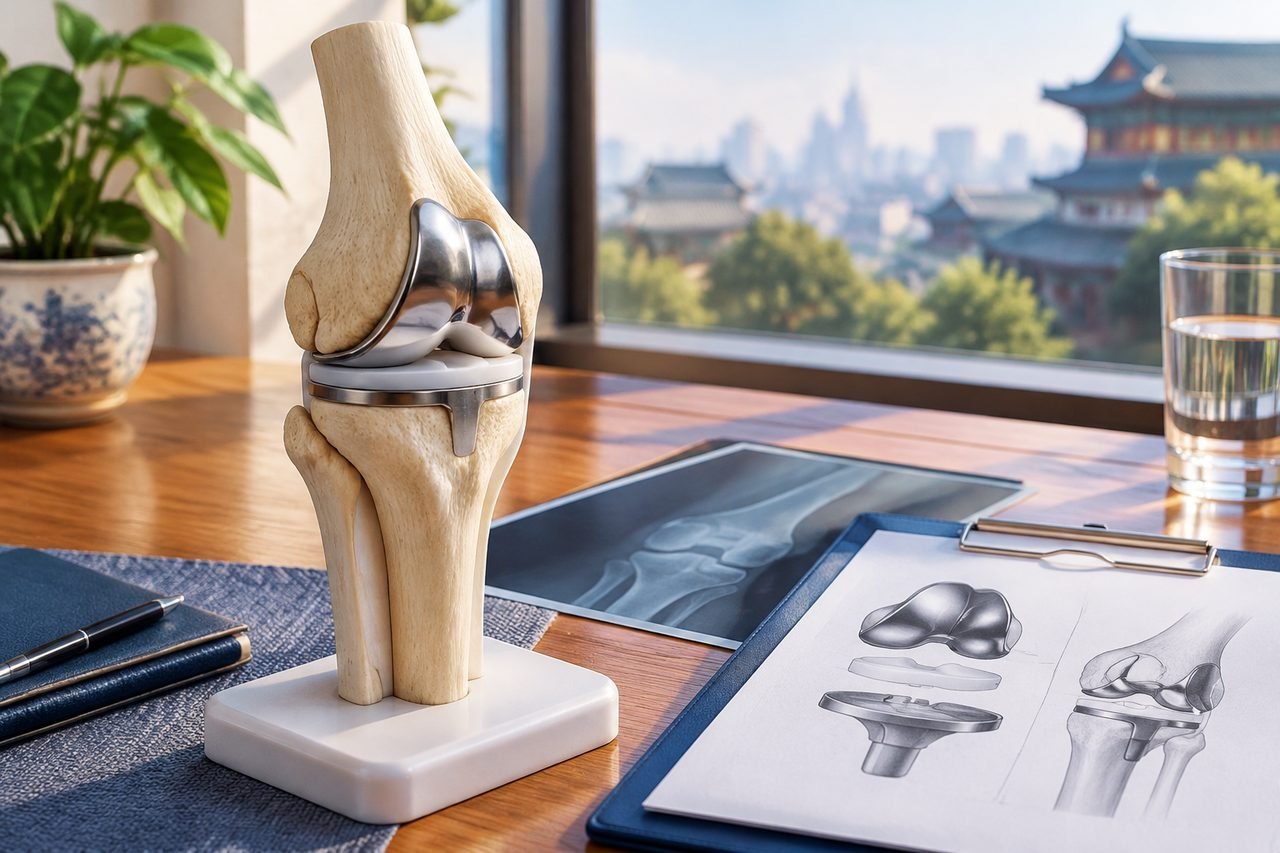
Why partial rather than total replacement is being proposed
Partial knee replacement replaces one affected compartment of the knee. Whether a partial or total replacement is appropriate depends on an assessment of the knee, not on a single image or a general preference. That assessment is the first thing to understand before consent, because the operation you are agreeing to is defined by which compartments are treated.
Ask the surgeon to walk you through the imaging and examination findings that support treating one compartment. Useful questions include: which compartment is affected; whether the other compartments show changes that could matter later; whether ligament stability and alignment support a partial procedure in your case; and what would change the plan toward a total replacement. You are not asking the surgeon to guarantee an outcome. You are asking what evidence in your own knee drives the recommendation.
If the answer is vague, or if the plan seems to rest on scheduling convenience rather than your knee, that is a reason to pause. A partial procedure is not automatically a smaller or safer version of a total replacement; it is a different operation with its own selection criteria. The treating clinician decides suitability, and you are entitled to hear the reasoning in plain language.
It also helps to ask what happens if the findings during surgery differ from the preoperative assessment. Surgeons sometimes adjust the plan once the joint is directly visible. Ask how that decision would be made, who would make it, and how you would be informed if you are under anaesthesia. This is a consent question, not a technical challenge to the surgeon's judgement.
What the written plan should name about the implant
Implant scope is a common gap in overseas consent conversations. Patients often hear "partial knee replacement" without learning which prosthesis, which bearing design, or which fixation approach is planned. Those details affect the operation and the follow-up, and they should appear in the written plan rather than only in conversation.
Ask for the specific implant name and manufacturer, the materials involved, and whether the hospital holds that implant for your date. Ask whether the plan allows for an alternative if the intended implant is unavailable, and who decides that. Availability and stock are hospital matters; the point of the question is to know what you are consenting to and what happens if it changes.
You should also ask what the hospital's own documentation says about the implant's regulatory status in China and about tracing records. If you plan to continue follow-up in your home country, ask what implant documentation you will receive before discharge. This is practical preparation, not a claim about any particular device's performance.
Finally, ask whether the quoted plan covers the implant itself or lists it separately. The answer varies by provider and by contract, so it must come from the hospital handling your case. Do not assume a package structure from another hospital or another country applies here.
What the estimate covers, and what it does not
A hospital estimate for partial knee replacement is not a single universal figure. It reflects the ward type, the implant, the length of stay, anaesthesia, imaging, laboratory work, physiotherapy and any complications that require additional care. Because these elements differ between hospitals and between patients, the only meaningful estimate is the one written for your case by the hospital that would treat you.
Ask for an itemised written estimate rather than a total. Useful questions include: which items are included; which are billed separately; how the estimate changes if the stay is longer than planned; how complications are billed; and whether the figure is fixed or an approximation. Ask what currency the hospital bills in and how payment is made. These are administrative questions the hospital's international office can answer directly.
Separate the hospital's charges from any coordination or interpretation fees you may agree with a service provider, and from travel, accommodation and living costs. Mixing them makes comparison impossible. If you are working with a coordination service, ask for its fees in writing as a distinct line, and confirm that hospital charges are paid to the hospital.
If you are comparing hospitals, compare the itemised scope, not just the headline number. A lower total may exclude rehabilitation sessions or a specific implant, and a higher one may include a private room. The comparison only becomes useful once the inclusions are visible.
How rehabilitation would be arranged after surgery
Rehabilitation is part of the operation's plan, not an afterthought. Before consenting, ask how physiotherapy is organised during the hospital stay, who provides it, how many sessions are typically arranged, and what instructions you will receive at discharge. Ask whether the hospital provides a written rehabilitation plan you can take home, and whether it can be shared with a physiotherapist in your own country.
Ask who will supervise your recovery once you leave China. If you plan to fly home soon after discharge, ask the treating team what they advise about timing and about any restrictions during travel. Do not rely on a general timeline from the internet; the surgeon and physiotherapist who know your knee should give you that guidance.
It is also worth asking what the plan is if your recovery does not follow the expected course. Who do you contact, and how? Will the hospital provide a point of contact for questions after you leave? If you will be in another country, ask what records and imaging you should carry with you.
A receiving physiotherapist or clinician will make their own assessment when you arrive home. They are not bound by the original team's plan, and they may adjust it. What you need from the China team is a clear record of what was done and what was recommended, so the next clinician can make an informed judgement.
Consent, language and who answers your questions
Consent is only meaningful if you understand what you are agreeing to. If your Chinese is limited, ask how the consent discussion will be interpreted, who will interpret, and whether the consent form is available in English. Ask whether you can have the discussion before any sedating medication, and whether a family member or companion can be present.
Ask who your named contact is for clinical questions before surgery, and who answers administrative questions about dates, admission and payment. These are often different people. Knowing which is which prevents messages from being lost.
If you are using a coordination service, clarify its role. A coordination team can help request appointments, organise records and provide interpretation, but it does not decide suitability, give a diagnosis or guarantee hospital acceptance. Those decisions belong to the hospital and its licensed clinicians.
Write down the answers you receive and keep them. If a question is answered only verbally, ask for it in the written plan or in a message you can retain. A clear record protects both you and the treating team if the plan changes.
What to confirm before you agree, and the next step
Before you consent, you should be able to state, in your own words: why a partial rather than total replacement is proposed for your knee; which implant and materials the plan names; what the written estimate includes and excludes; how rehabilitation will be arranged during and after your stay; and who to contact with questions. If any of these is unclear, ask again before agreeing.
You do not need a complete medical archive to start. A short summary of your diagnosis, your main question and any recent imaging or reports is enough for an initial enquiry. After first contact, the team can explain how to share further records securely. An initial enquiry is free and does not require buying a proxy consultation.
If you would like help requesting a specialist appointment or organising records and interpretation, ChinaSpecialistCare can coordinate those non-clinical steps, while the hospital and its clinicians decide assessment, suitability and treatment. You can begin with a brief summary through the enquiry form, email or WhatsApp.
If your knee symptoms are worsening, or if you have new swelling, fever or inability to bear weight, seek local medical assessment rather than delaying care for an overseas enquiry.
Sources & scope of this guide
References and official service information relevant to this guide.
This is general planning information and has not been individually reviewed by a doctor. Medical decisions and personal treatment advice come from your treating clinicians.