Why a general reply is not an appointment confirmation
When you send an enquiry about partial nephrectomy to a hospital or coordination service, the first reply often confirms only that your message arrived. It may say your information has been forwarded, that a specialist will review it, or that someone will contact you later. None of that tells you which department owns your case, which hospital campus you would attend, or whether the appointment is a consultation, a records review or a surgical planning visit.
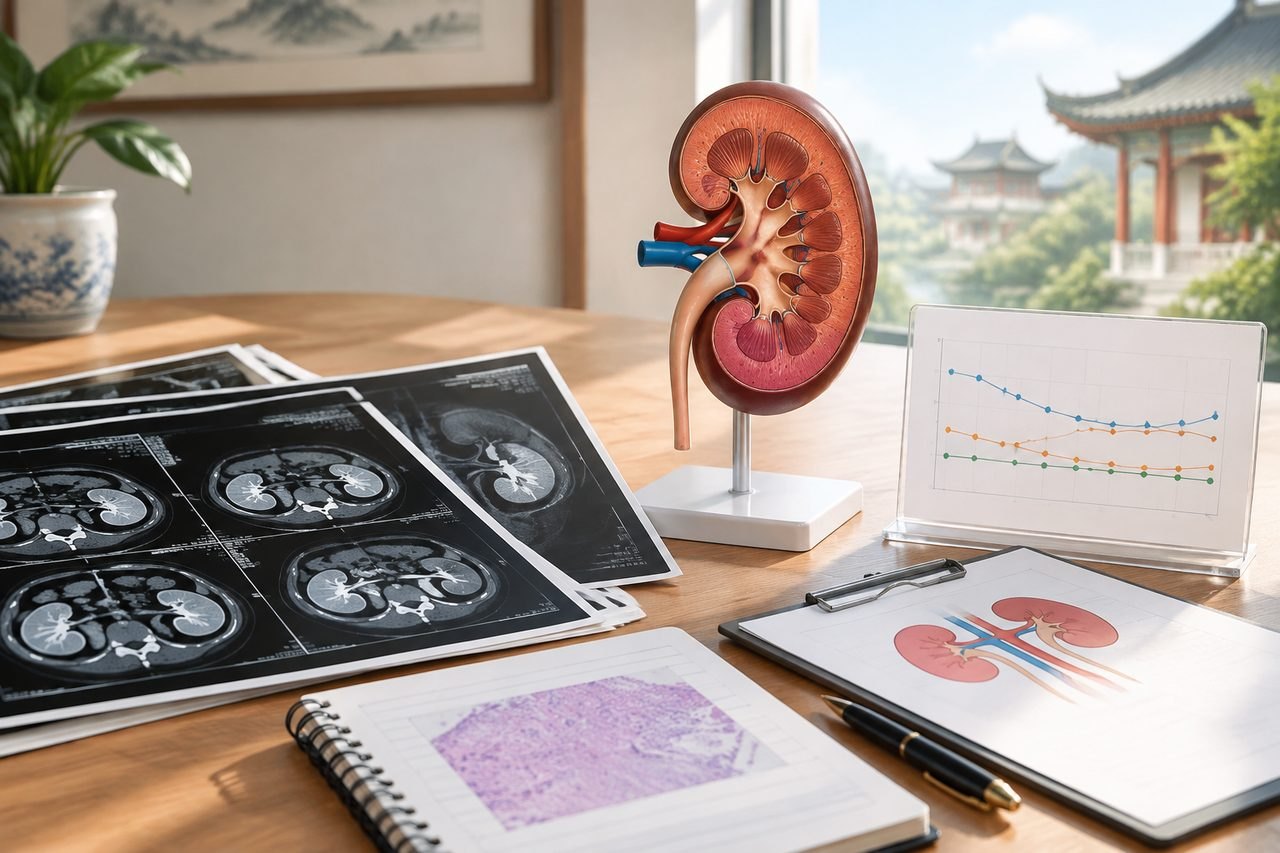
This matters because partial nephrectomy is a kidney operation, and the decision about whether part of a kidney can be removed depends on the lesion and on how the kidney has been assessed. A partial nephrectomy removes part of a kidney, and the proposed approach depends on the lesion and kidney assessment. If you do not know which team is assessing you, you cannot tell whether the right imaging and kidney-function information has reached the right people.
A confirmation should therefore be specific. It should name the department, the campus, the appointment type and the clinical team. If any of those are missing, treat the reply as a holding message rather than a booked plan.
The four details to ask the hospital to confirm in writing
Before you make travel or payment decisions, ask for four details in writing. First, the department: for kidney surgery this is normally a urology department, but you should confirm the exact name used by that hospital and whether a multidisciplinary team is involved. Second, the campus or site: large hospitals can run several locations, and imaging, consultation and surgery may not all happen at the same address. Third, the appointment type: is this a first consultation, a records-based review, a pre-operative assessment or a surgical planning visit? Fourth, the named clinician or team who will assess you, and whether that person is the one who would discuss the operation.
Ask also what the appointment does and does not include. A consultation may involve reviewing your imaging and blood tests and discussing options, but it does not by itself confirm that partial nephrectomy is suitable, that surgery will be scheduled, or that a particular ward will be used. Those are clinical and administrative decisions for the treating hospital.
If the reply uses vague phrases such as "the relevant department" or "our specialists", ask for the specific name. A written answer you can keep is more useful than a phone call you cannot check later.
What records help the team assess kidney-preserving surgery
The clinical question behind your enquiry is usually whether part of the kidney can be removed while leaving enough kidney function. To answer that, the team needs to see the actual images and the reports that describe the lesion and the kidney. Ask what format they accept for imaging, whether they want the original scan files or only the radiology report, and whether they need recent blood tests showing kidney function.
You can also ask how the team assesses kidney-preserving surgery in your situation: what imaging they rely on, whether they need additional scans before deciding, and how they judge the trade-off between removing the lesion and preserving kidney function. These are questions for the treating clinicians, not something an enquiry service can answer.
Ask how pathology and kidney function will be followed after any operation, and who would be responsible for that follow-up. If you would return home after treatment, ask how the Chinese team would hand over records to your local doctors. The answer may affect how you plan the trip, so it is worth clarifying early.
Questions that separate a real plan from a preliminary reply
A preliminary reply often answers a different question from the one you asked. You asked about partial nephrectomy; the reply describes general services or asks you to send everything. To move forward, ask direct questions and expect direct answers.
Useful questions include: Which department will assess me? Which campus should I attend? Is this appointment a consultation or a surgical planning visit? Which clinician or team will review my imaging? What records are still missing before a plan can be discussed? Does the hospital need to repeat any imaging or blood tests, and if so, when? What would the written estimate cover, and what would be paid separately?
You do not need to accept a general reply as final. If the hospital cannot name the department and campus, ask again or ask a different route. A clear answer here prevents wasted travel and confusion later.
How ChinaSpecialistCare can help with this step
ChinaSpecialistCare can help you request a specialist appointment and confirm the department, campus and appointment type with the hospital. We can also assist with record organisation and interpretation so that your imaging reports, kidney-function results and main question reach the right team. We do not decide suitability, prescribe treatment or promise that partial nephrectomy will be offered. The hospital makes those decisions.
If you would like help confirming these details, you can start with a free initial enquiry. You do not need to buy a proxy consultation to ask about the department or appointment type.
One practical limit is worth stating plainly. A coordination service can carry your question to the hospital and bring the answer back, but it cannot convert a holding reply into a clinical decision. If the hospital has not named a department, the honest position is that the appointment is still unconfirmed, however quickly the first message arrived.
It also helps to decide in advance what you will do with each possible answer. If the hospital confirms a urology appointment at a named campus, you can move on to records and travel planning. If it replies with a general service description, you have a reason to ask again rather than treat the message as progress. If it asks for records you do not have, ask which of them are genuinely needed before a plan can be discussed, and whether your existing reports are enough to start.
Keep the exchange in one thread where possible. When several people reply, it becomes hard to tell whether the department, campus and appointment type have actually been settled or merely repeated. A single written summary you can re-read is easier to check against what you were told earlier.
None of this replaces the treating team's judgement about whether partial nephrectomy is appropriate in your case. The point of confirming the department and appointment is narrower: it makes sure your question reaches clinicians who can assess the kidney and the lesion, rather than staying inside an enquiry queue.
A practical next step
Write down the four details you need: department, campus, appointment type and named clinical team. Send them to the hospital or to us with a short summary of your diagnosis, your main question and the records you already have. Ask for the answer in writing. If the reply does not name the department and campus, ask again before you book travel or pay any coordination fee.
A short summary is enough to start. You do not need to send a complete archive or passport details at this stage. The hospital can tell you which records it needs once it has named the team that will assess you.
If the hospital confirms a urology appointment, ask what the visit is expected to cover and what you should bring. Ask whether the clinician who reviews your imaging is the same person who would discuss surgery, and whether a multidisciplinary discussion is part of the process. These details affect how you plan the trip and what you tell your local doctors.
Keep local care in place while you enquire. If your symptoms worsen, seek care where you are rather than waiting for an overseas reply.
When you have the written confirmation, compare it with what you were told earlier. If the department, campus or appointment type has changed, ask why and whether the new arrangement still fits your question. A confirmed appointment is not the same as a confirmed treatment plan, and the hospital should be clear about which one you have.
Sources & scope of this guide
References and official service information relevant to this guide.
This is general planning information and has not been individually reviewed by a doctor. Medical decisions and personal treatment advice come from your treating clinicians.