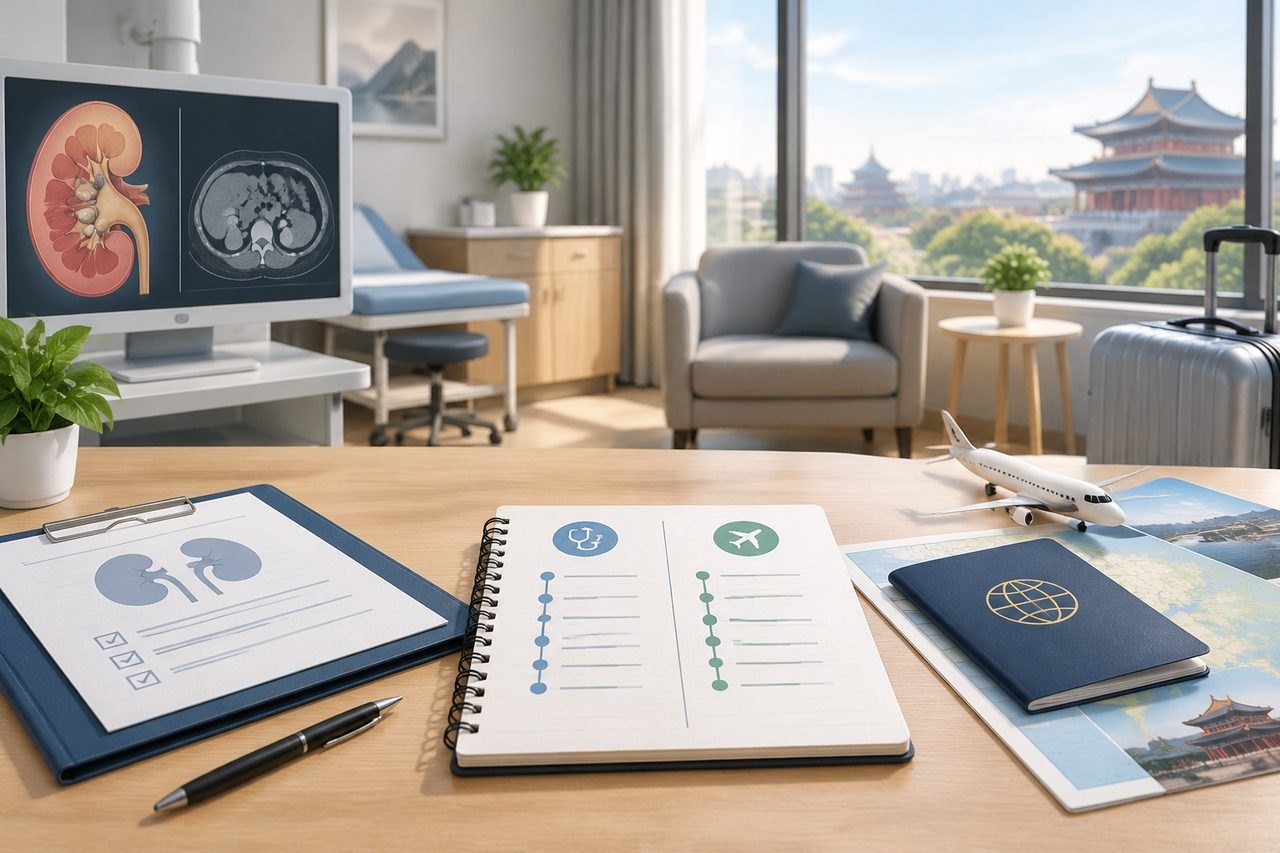
Why the Medical and Travel Timelines Must Stay Separate
The clinical timeline answers what happens to the stone. The travel timeline answers when you need to be in China and for how long. Mixing them creates a common and avoidable problem: a patient books a flight based on an early email, then discovers the hospital wants more imaging, a urine culture, or a discussion about staged treatment before a date can be fixed.
PCNL accesses kidney stones through a small tract from the skin. The treating team has to judge whether that approach fits your particular stone burden and anatomy. That judgement is clinical, and it comes before any reliable travel date. A coordinator can help you organise records and request an appointment, but suitability, procedure scope and scheduling belong to the hospital and its clinicians.
So the practical rule is simple. Treat every clinical answer as provisional until the hospital states it in writing, and treat every travel booking as movable until the clinical plan is confirmed.
What the Hospital Needs to Judge Before a Date Is Fixed
The first clinical question is not "when can I come?" but "what is being treated?". Ask the team how it evaluates stone size and location, because these factors shape whether PCNL is appropriate, what access route is planned, and whether one session is expected to be enough. Stone burden and position also influence whether the team discusses a staged approach rather than a single procedure.
The second question is whether staged treatment is proposed. PCNL can require further treatment or drainage, and some patients need more than one stage. If the team raises this possibility, ask what it would mean for your stay: would a second stage happen during the same visit, or would it be planned separately? Do not assume an answer. Ask for it explicitly, because it changes both the medical sequence and the length of any trip.
The third question is follow-up. Ask how later stone reviews would be handled, including whether imaging is repeated in China, whether your home urologist can carry out review, and what records the team would want sent back. This matters for patients who cannot stay for an extended period.
None of these answers can be settled from a single email. They depend on imaging, laboratory results and an examination. A preliminary reply that says PCNL "may be suitable" is a starting point for gathering records, not a confirmed treatment plan.
- Ask how the team assesses stone size and location for your case.
- Ask directly whether staged treatment is proposed and what that means for timing.
- Ask how later stone reviews would be arranged and who would carry them out.
- Ask what would make the plan change after the team sees your imaging.
Records That Make the Clinical Answer More Specific
A useful records set lets the hospital move from a general reply to a case-specific one. The exact list depends on your history, so ask the receiving team what it wants rather than sending everything you have. As a starting point, recent imaging of the urinary tract is central, because stone size and location are read from it. If you have had previous stone treatment, the operative notes and any stone analysis are relevant.
Laboratory results, including kidney function and urine testing, help the team assess your current state. A medication list, including blood thinners and any regular prescriptions, belongs in the file because it affects planning. If you have a history of urinary infection or drainage procedures, include those records too.
Send reports with dates and, where possible, the original images rather than photographs of a screen. If a report is in another language, ask whether a translation is needed and who should provide it. Do not delay urgent local care while assembling an overseas file; if you have fever, severe pain or another acute problem, seek local assessment first.
Once the file is complete, ask one focused question: based on these records, what is the next clinical step, and what remains undecided? That reply tells you whether you are close to a date or still gathering information.
How to Confirm the Appointment Without Confusing It With the Plan
An appointment confirmation and a treatment confirmation are different things. A confirmed appointment means the hospital has agreed to see you on a date. It does not mean the procedure is scheduled, that a bed is reserved, or that the team has accepted you for PCNL. Ask the hospital to state which of these it is confirming.
When you receive a date, ask what has been confirmed in writing and what still depends on assessment in China. Ask whether any tests are expected before the procedure and whether they can be done at home or must be repeated. Ask who to contact if your symptoms change before travel, and what would make the team advise postponing.
Keep the appointment confirmation, the written clinical reply and any estimate in one place. If the hospital's message is ambiguous, reply with a short summary of your understanding and ask them to correct it. Written clarity at this stage prevents expensive changes later.
- Ask whether the message confirms an appointment, a procedure date, or both.
- Ask which tests must be repeated in China and which can be done locally.
- Ask what symptoms before travel would require postponement.
- Ask for the clinical reply and any estimate in writing.
Booking Flights and Hotels Only After the Plan Is Clear
Travel arrangements should follow the clinical plan, not lead it. Once the hospital has confirmed the appointment and described the expected sequence, you can work out how many days you need in the city. Ask the team how many days before and after the procedure you should plan to be available, and whether any review is expected before discharge. These are questions for the treating team, because the answer depends on your case.
Choose flexible or changeable bookings where possible. A plan that involves staged treatment or a possible second session makes fixed, non-refundable travel risky. If you are travelling with a companion, confirm early whether the hospital allows someone to stay and what practical support is available.
Do not treat a hotel booking as evidence that treatment is confirmed. Keep the two records separate, and check the clinical plan again before you pay for anything that cannot be changed.
What to Ask About Scope, Estimates and Responsibility
Cost questions are best asked as scope questions. Ask the named hospital what its written estimate includes and excludes, and which items remain undecided until assessment. Ask whether the estimate covers the procedure, the hospital stay, imaging and laboratory tests, and any follow-up review. Ask who issues the estimate and when it is finalised.
Hospital charges are paid to the hospital or the relevant provider. Coordination services, if you use them, are separate and agreed in advance. An initial enquiry is free and does not require buying a proxy consultation; a proxy consultation is optional and is not a prerequisite for an appointment or an operation.
If you want help with records, interpretation or requesting a specialist appointment, ChinaSpecialistCare can assist with that coordination. The hospital still decides suitability, procedure scope and scheduling. Ask for the written scope before you commit to travel.
A practical next step: send a short summary of your stone history, your main question, and your available imaging reports through the enquiry form, email or WhatsApp. The team will identify what is missing and suggest the relevant next step. Keep local care in place for any urgent or worsening symptoms.
Sources & scope of this guide
References and official service information relevant to this guide.
This is general planning information and has not been individually reviewed by a doctor. Medical decisions and personal treatment advice come from your treating clinicians.