
Home / Urology / Percutaneous Nephrolithotomy
Urology patient guide · 经皮肾镜取石术

PCNL Kidney Stone Surgery in China

Considering PCNL kidney stone surgery in China? Start with stone burden, procedure scope and staged treatment. This guide helps you identify the relevant records, questions for the receiving team and the scope of an individual estimate before a visit is agreed.

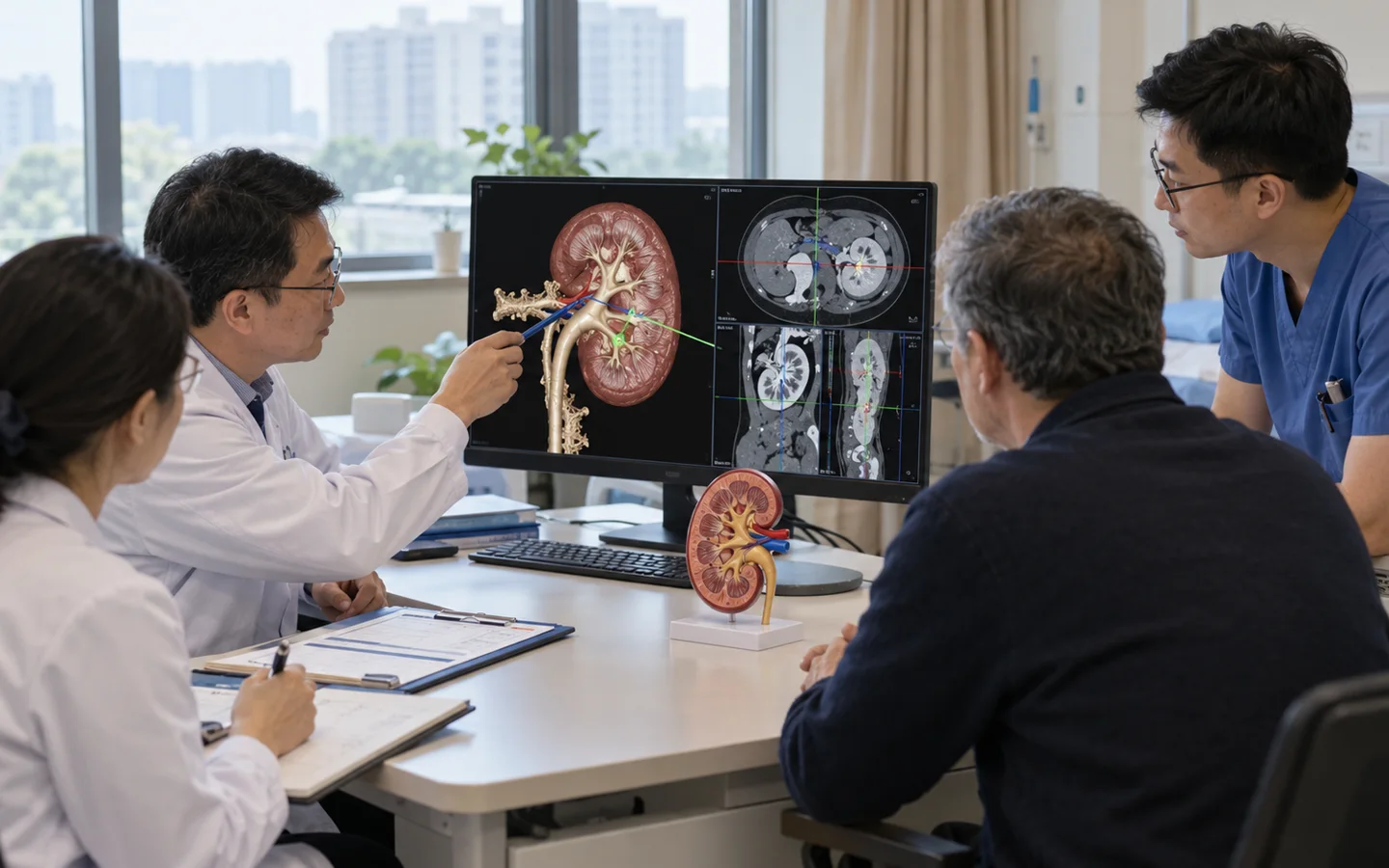
Chinese kidney stone surgeon explaining percutaneous nephrolithotomy access to an international adult patient with a kidney model

Medical cost reference

Indicative · not a quotation

PCNL Kidney Stone Surgery costs in China

US$8,000–14,000

Original USD reference

Other currencies are approximate equivalents, not a quote or payment rate. Reference FX: ECB · 2 October 2026. Local snapshot, not live.

PCNL; side, stone burden, staged procedures and stent management need confirmation.

This published reference range is a starting point for planning, not a fixed price or a China-wide average. Cities, public and private hospitals, procedure details and individual care needs affect costs. The hospital must confirm what is included and provide an estimate after reviewing your case.

  • Stone size, number and side
  • Access, devices and staged procedures
  • Admission and stent or stone follow-up

Hospital medical fees, travel and our coordination services are separate. Any paid specialist review or coordination service is explained and agreed before you proceed.

Your next step

Start with your question

Tell us your diagnosis and what you need. Our free initial review checks the information and helps identify a suitable next step; it is not a specialist opinion or a hospital quotation.

Request a case-based estimate

Not ready to send records? Ask us first. Where hospital review is appropriate, we can help request an estimate. No travel commitment or mandatory proxy consultation.

Planning PCNL kidney stone surgery in ChinaHospital review · individual costs · visit and follow-up

Plan the visit around stone burden, procedure scope and staged treatment. Agree the assessment route before travel.

Records for the PCNL kidney stone surgery review

Tell us what you already have: Thin-slice noncontrast CT DICOM; Urine and prior renal-pelvis cultures; Kidney function and differential function. Start with a short summary; after first contact we explain which records the receiving team needs and how to share them.

Confirm the proposed scope and costs

Review the published reference below with the receiving team. Confirm the particular procedure, hospital and items included in your own estimate; the reference is not a confirmed quotation.

Visits and care after returning home

Ask how the team evaluates stone size and location, whether staged treatment is proposed and how later stone reviews would be handled. Tell us if you need interpretation or English-language documents, and confirm the relevant arrangements with the receiving team.

PCNL creates a direct tract into the kidney to remove large stones

A needle tract is developed through the back into the collecting system, allowing a nephroscope and fragmentation tools to remove stone material.

Positioning, tract number and size, intrarenal anatomy and bacterial risk are tailored to stone complexity and patient factors.

Infection control starts before puncture

A negative bladder culture does not always exclude bacteria inside an obstructed kidney or infected stone; the team should plan antibiotics and drainage accordingly.

Who may be considered?

Specialist review may help when the diagnosis, symptoms and previous treatment create a focused question about percutaneous nephrolithotomy.

  • A staghorn or other large kidney stone.
  • Stone burden unlikely to clear reliably with shock waves or ureteroscopy.
  • A hard or anatomically inaccessible stone after failed treatment.
  • A patient with acceptable bleeding and anesthesia risk.

What the specialist team must confirm

Review thin-slice CT, collecting-system anatomy, stone volume and density, urine cultures, previous infection, kidney function, hemoglobin, coagulation, body habitus and prior renal surgery.

Key points for this treatment
Accesssmall tract through the back
Best fitlarge complex kidney stones
Goalhigh single-session clearance
Key risksbleeding infection and residual stone
Chinese PCNL team reviewing three dimensional kidney CT safe access tract and antibiotic plan
The access tract determines safety and reachThe surgeon maps a route that reaches the main stone while avoiding bowel, pleura and major renal vessels.

From access mapping to residual-stone review

Large stones may still require more than one tract, staged endoscopy or combined techniques despite a strong clearance goal.

SterilizeCulture urine and control infection
PlanChoose position and access calyx
ClearFragment and remove stone burden
ConfirmCheck drainage bleeding and residual stone

Bleeding, drainage and infection guide early recovery

A nephrostomy tube or ureteral stent may be used temporarily. Blood counts, urine output, pain, fever and imaging are monitored.

Later imaging measures true clearance. Stone analysis and metabolic evaluation address recurrence risk, which remains after technically successful surgery.

International adult patient walking with nurse support during recovery after complex kidney stone removal
Recovery includes preventionRemoving a large stone does not correct the metabolic or infectious factors that helped it form.
Clear kidneyRemove temporary drains
Residual stoneStage endoscopic treatment
BleedingImage embolize or transfuse if needed
InfectionEscalate cultures drainage and antibiotics

Risks, limits and realistic expectations

Risks include bleeding and transfusion, sepsis, kidney or adjacent-organ injury, urine leak, pleural complication, residual stones, repeat access and rare loss of kidney function.

Do not delay urgent local care

Fever, shortness of breath, faintness, worsening flank swelling, heavy bleeding or reduced urine output requires urgent local review.

Before hospital review

Records for PCNL kidney stone surgery assessment

A safe international review depends on dated source reports, original imaging and a complete treatment timeline—not a diagnosis label alone.

Thin-slice noncontrast CT DICOM
Urine and prior renal-pelvis cultures
Kidney function and differential function
Blood count and coagulation
Prior stone operation notes
Stone composition and metabolic studies
Antibiotic resistance history
Current medicines and comorbidities

Tell us what you need

Ask about your care,
your hospital and your budget.

You can ask about suitability, an expert opinion, an appointment or the likely medical cost. If you are unsure, choose “Not sure — please advise”.

This enquiry is aboutPercutaneous NephrolithotomyNot sure — please advise

How a personal estimate is prepared

  1. Tell us about your case.Describe your diagnosis, main question and preferred city, if any.
  2. Share the relevant records.We explain what is needed and how to send it by WhatsApp or email.
  3. Request a hospital estimate.Where appropriate, we help request hospital review and a cost estimate. Any paid review is agreed first.

This is an enquiry, not an order or payment. Proxy consultation is not mandatory. Any service scope is agreed separately before you proceed.

Ask about Percutaneous Nephrolithotomy

A first enquiry is free. Email and permission to respond are required; the other details are optional. Any paid clinical review or coordination is discussed separately.

Included automatically so we know which procedure you are asking about.
A preference, not a confirmed appointment.
Please do not send passport numbers, card details or full medical files in this first enquiry. We will explain which records are needed next.

Send a short summary first. This is an enquiry, not an order, payment or confirmed appointment.

No booking or payment is made by sending this enquiry.
Editorial transparency

Medical sources

Patient information is based on established government and professional guidance. Content updated 5 October 2026. This is patient information, not an individual clinical assessment.