Which record is actually missing, and why it changes the decision
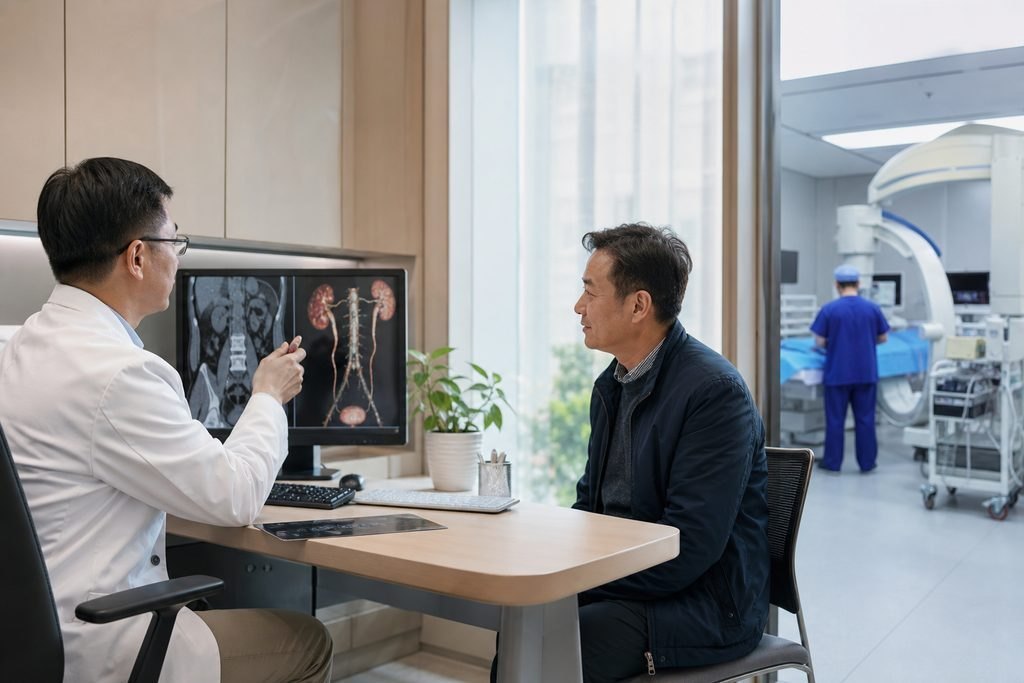
Before percutaneous nephrolithotomy, the urology team needs to understand the stone burden: how large the stone or stones are, where they sit in the kidney, and whether one kidney or both are involved. A written report alone may not be enough if the images are absent, because the report describes what one radiologist saw, while the surgeon may need to review the actual scan to judge access, tract planning and whether a staged approach is more appropriate.
This is why the practical question is not simply 'do I have records?' but 'which record is missing, and does the treating team need it before it can advise on PCNL?' A missing CT or ultrasound image can change whether the team can discuss stone size and location with you. Missing blood results can change whether they can comment on kidney function or infection status. Missing discharge summaries can change whether they understand previous stone treatments, stents or complications.
PCNL accesses kidney stones through a small tract from the skin, and further treatment or drainage may be needed. That single fact already tells you why imaging and prior treatment history matter. The surgeon is planning a route into the kidney, not simply removing a stone in isolation. If the route, the stone position or the kidney's condition is unclear, the team may ask for more before giving a meaningful opinion.
So the first step is to list what you have and what you do not. Do not assume the missing item is unimportant. Do not assume it is essential either. The treating urologist decides what is clinically necessary for their assessment.
Who to ask for each missing document
Different records come from different places, and asking the right office saves time. Imaging usually comes from the radiology department or imaging centre that performed the scan. Ask for the image files, not only the typed report, and ask whether they can provide a disc, a download link or a portable format. Blood tests and urine cultures usually come from the laboratory or the hospital where the samples were taken. Discharge summaries, operation notes and stent details come from the hospital's medical records department or the treating urology unit.
If you had a previous stone procedure, ask for the operation note and any follow-up imaging. If a stent was placed, ask for the stent type, the date it was inserted and whether removal was planned. If you have had recurrent stones, ask for any stone analysis result, because that may inform how the team thinks about prevention, although it does not by itself determine whether PCNL is suitable.
When you request records, be specific. 'Please send my CT scan images and report from [date]' is more useful than 'please send my file.' Ask how long the request takes and whether there is a fee for copying. Those administrative details vary by provider and country, so confirm them with the records office rather than assuming a standard.
If you cannot obtain a record, say so clearly when you contact a China-based team. A gap that is explained is different from a gap that is hidden. The team can then tell you whether it can proceed on the available information or whether it needs something else first.
What to send first, and what not to send yet
You do not need a complete archive to start a conversation. A short summary is enough for an initial enquiry: your main question, the date of your most recent imaging, what it showed in plain terms, any previous stone treatments, and any current symptoms. If you have a recent report and a few key blood results, include them. If you do not, say what is missing.
Do not send passport numbers, payment card details or a full lifetime medical file through an initial web form. Those are not needed to ask whether PCNL is a relevant option for your situation. Once a hospital or coordination team confirms it can review your case, it can explain how to share larger files securely.
For the clinical question itself, the most useful items are usually the imaging that shows stone size and location, recent kidney function tests, and any evidence of current urinary infection. If you have fever, severe pain, vomiting or difficulty passing urine, that is not a records problem. Seek local urgent care first. An overseas enquiry should not delay treatment for an acute problem.
Keep your summary factual. 'I have a 12 mm stone in the left kidney seen on CT in March, no previous surgery, normal kidney function on recent bloods' is more useful than a long narrative. The urologist can ask follow-up questions.
How missing records affect the next step in China
A missing record can affect the next step in three ways. First, it can delay a clinical opinion, because the urologist may not be able to comment on stone burden or procedure scope without the images. Second, it can change the recommended pathway, because a team that cannot see the stone may ask for a new scan rather than rely on an old report. Third, it can affect practical planning, because the hospital may need certain results before it can confirm an appointment or admission.
None of these outcomes means the case is rejected. It means the team needs to clarify what it can assess and what remains uncertain. Ask directly: 'Based on what I have sent, can you comment on whether PCNL is relevant, or do you need specific additional records first?' That question gives the team a clear way to respond.
It also helps to ask how the team evaluates stone size and location, whether staged treatment is being considered, and how later stone reviews would be handled. PCNL can be part of a plan that includes more than one step, and further treatment or drainage may be needed. If the team proposes a staged approach, ask what the stages are, what each is intended to achieve, and what would trigger a change in plan.
Do not treat a preliminary reply as a final decision. A records-based opinion is not the same as hospital acceptance, and it does not guarantee that a procedure will be performed. The hospital decides suitability after its own assessment.
Questions to ask before you travel or commit
Once you have gathered what you can, ask the treating team a focused set of questions. What is still missing from my file, and does it change your advice? Do you need the original images or is the report sufficient for your review? If a new scan is needed, can it be done locally before travel, or would you arrange it in China? Is PCNL being considered as a single procedure or as part of a staged plan? What would make you recommend a different approach?
Ask about the practical scope as well. What does your written estimate include, and what remains undecided until after assessment? Which costs are paid to the hospital and which are separate coordination fees? Do not assume that any component is included or excluded. Ask the named provider how its own quote works.
Ask about follow-up too. If a stent or drain is placed, who removes it, where, and when? Drain placement and removal timing are decisions for the treating team, so confirm them directly. If you plan to return home after treatment, ask how follow-up would be handled and whether the receiving clinician at home would need specific records.
Finally, ask what would make you unsuitable for travel at this time. The treating team, not a coordination service, decides clinical suitability. If your symptoms worsen, local care takes priority over any overseas plan.
A practical next step
Start by listing the records you have and the records you are missing. Request the imaging images and report, recent kidney function results, and any evidence of infection from the providers that hold them. Then send a short, factual summary to the China-based team you are considering, and ask one clear question: based on what I have sent, can you advise on whether PCNL is relevant, or do you need specific additional records first?
An initial enquiry is free and does not require buying a proxy consultation. If you want help requesting records, understanding a specialist's reply, or arranging a urology appointment, ChinaSpecialistCare can coordinate that as a non-clinical service. The hospital and its licensed clinicians decide diagnosis, suitability and treatment. You can review the PCNL procedure reference for background before you make contact.
Sources & scope of this guide
References and official service information relevant to this guide.
This is general planning information and has not been individually reviewed by a doctor. Medical decisions and personal treatment advice come from your treating clinicians.