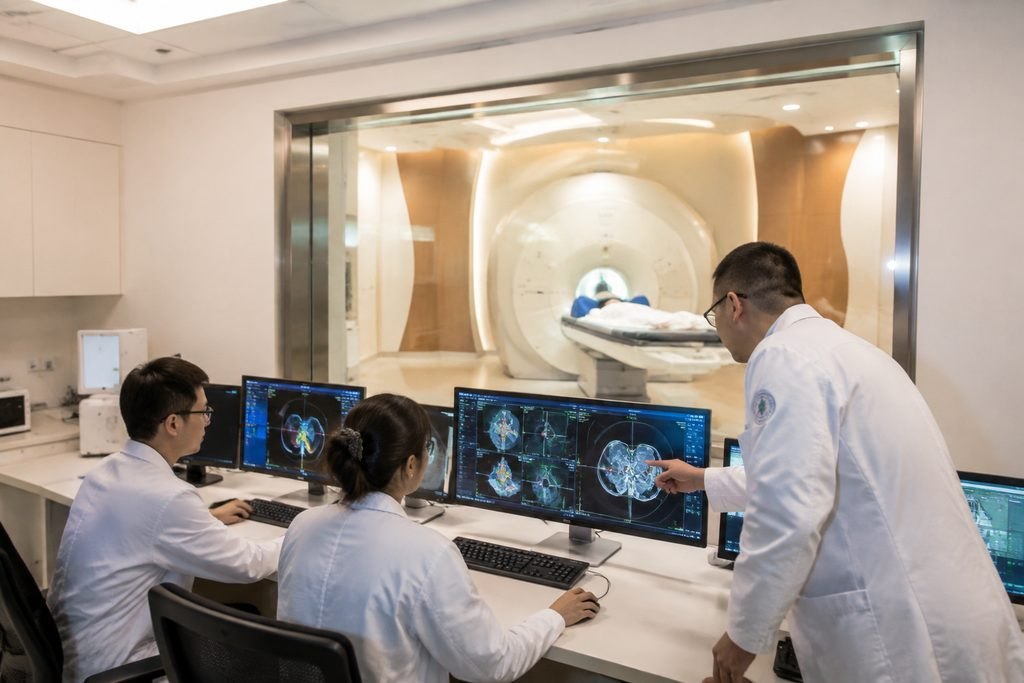
What the recommendation actually means
A recommendation for radiotherapy is a clinical judgement about the role of radiation in your overall treatment. It does not automatically specify proton therapy or photon therapy. The two approaches deliver radiation differently: proton therapy uses protons, while photon therapy uses X-rays. Both are forms of external beam radiotherapy, and both can be appropriate for different situations.
When a clinician in your home country suggests proton therapy, they may be considering the physical characteristics of proton beams and how those interact with the location and shape of your tumour. That suggestion is not a guarantee that proton therapy is the right choice for you, nor that it will be available at a particular hospital in China. The decision depends on your individual diagnosis, staging, previous treatments, nearby healthy tissues, and the treating team's assessment.
Your first task is not to choose a machine. It is to understand what question the recommendation is trying to answer. Is the goal curative treatment, pre-operative downstaging, post-operative consolidation, or symptom control? Is the concern about sparing a specific organ, such as the heart, lungs, spinal cord, or bowel? Is there a history of prior radiation that limits further photon treatment? These details shape whether proton therapy is even a relevant discussion.
Why the same diagnosis can lead to different recommendations
Two patients with the same cancer type may receive different radiotherapy recommendations because the decision depends on more than the diagnosis name. Tumour location, size, proximity to critical structures, lymph node involvement, histology, molecular features, and prior treatments all matter. A recommendation made in one health system may reflect the technologies and protocols available there, not a universal rule.
In China, radiation oncology departments at major hospitals have their own equipment, planning systems, and clinical experience. Some may offer proton therapy; others may offer advanced photon techniques such as intensity-modulated radiotherapy or volumetric modulated arc therapy. Availability is not the same as suitability. A hospital may have a proton system but still recommend photon therapy for your case, or vice versa, based on its own assessment.
This is why sending your records for review is more useful than asking whether a hospital 'has proton therapy.' The clinical question is whether proton therapy offers a meaningful advantage for your specific situation, and whether the treating team can deliver it safely and effectively. That question cannot be answered from a website description alone.
What records the radiation oncologist needs to assess suitability
A records-based review is only as good as the information provided. For radiotherapy planning, the treating team typically needs to see the diagnostic imaging that defines the tumour, the pathology report that confirms the diagnosis, and a clear summary of any prior surgery, chemotherapy, or radiotherapy. If you have had previous radiation, the prior treatment plan and dose distribution are especially important because they affect what can be safely delivered now.
Imaging should include the actual DICOM files, not just the written report, because the radiation oncologist needs to see the tumour and surrounding anatomy. If you have had a recent PET-CT, MRI, or CT scan, those files help the team understand the target volume and nearby organs at risk. Blood tests, pulmonary function tests, and cardiac assessments may also be relevant depending on the treatment area.
You do not need to send a complete archive before making an initial enquiry. A brief summary of the diagnosis, the main question, and the available records is enough to start. The coordination team can then explain what additional documents would help the hospital assess your case. Do not send passport numbers, payment details, or original films through an initial web form.
Questions that change the next step
The answers to a few specific questions determine whether you need a records review, a remote opinion, or a visit to China. Ask the treating team or the hospital directly, and expect that some answers may require the radiation oncologist to see your imaging first.
First, what is the clinical goal of radiotherapy in your case? If the goal is curative and the tumour is near a critical structure, the choice between proton and photon therapy may matter more than if the goal is symptom relief. Second, has the team explained why proton therapy is being considered rather than photon therapy? A clear rationale helps you evaluate whether the same reasoning applies in another hospital.
Third, what prior treatments have you had, and do they limit the options? Prior radiation to the same area can make further photon treatment risky, but it does not automatically mean proton therapy is suitable. Fourth, what does the hospital need to see before it can give a recommendation? This is a practical question about records, not a commitment to treat.
Fifth, if proton therapy is recommended, is it available at the hospital you are considering, and does the treating team have experience with your specific cancer type? Availability and experience are separate questions. You can ask both without expecting a guarantee.
- What is the goal of radiotherapy in my case?
- Why is proton therapy being considered instead of photon therapy?
- Do my prior treatments limit either option?
- What records does the hospital need to assess suitability?
- Is proton therapy available at this hospital, and does the team treat my cancer type?
A planning example: same diagnosis, different next steps
Consider a hypothetical patient with a tumour near the spine who has been advised to consider proton therapy. The recommendation may reflect concern about sparing the spinal cord. In China, the radiation oncologist would review the MRI and CT to see exactly how close the tumour is to the cord, whether there is prior radiation, and whether the planned dose can be delivered safely with photon therapy using advanced planning techniques.
If the records show that photon therapy can meet the same safety constraints, the team may recommend photon therapy. If the tumour is in a location where proton therapy offers a clearer advantage, and the hospital has the equipment and experience, the team may recommend proton therapy. If neither option is clearly better, the discussion may focus on other factors such as waiting time, cost, and travel.
This example is not medical advice. It illustrates why the same recommendation can lead to different plans after a records review. The next step depends on what the treating radiation oncologist finds in your imaging and history, not on the label 'proton' or 'photon' alone.
Practical preparation and the limits of a remote review
If you decide to seek a review in China, start with a brief enquiry that includes your diagnosis, the main question, and a list of available records. The coordination team can help identify missing information and suggest whether a records-based opinion or a specialist appointment is the more useful next step. A remote review can clarify whether proton therapy is worth pursuing, but it cannot confirm final suitability or hospital acceptance.
Final eligibility for proton or photon radiotherapy is determined by the treating hospital after a full assessment, which may include a planning CT and other tests. A remote opinion does not replace that process. If your symptoms worsen or you develop new neurological, respiratory, or cardiac symptoms, seek local urgent care rather than waiting for an overseas review.
For general information about proton therapy as a service, you can review the relevant reference page. For an individual assessment, the hospital's radiation oncology team must review your records and confirm whether either technique is appropriate for you.
Sources & scope of this guide
References and official service information relevant to this guide.
This is general planning information and has not been individually reviewed by a doctor. Medical decisions and personal treatment advice come from your treating clinicians.