Home / Oncology & Cancer Care / Proton Therapy
Oncology treatment pathway · 质子治疗

Proton Therapy in China

Considering proton therapy in China? Start with diagnosis, centre eligibility and treatment sessions. This guide helps you identify the relevant records, questions for the receiving team and the scope of an individual estimate before a visit is agreed.

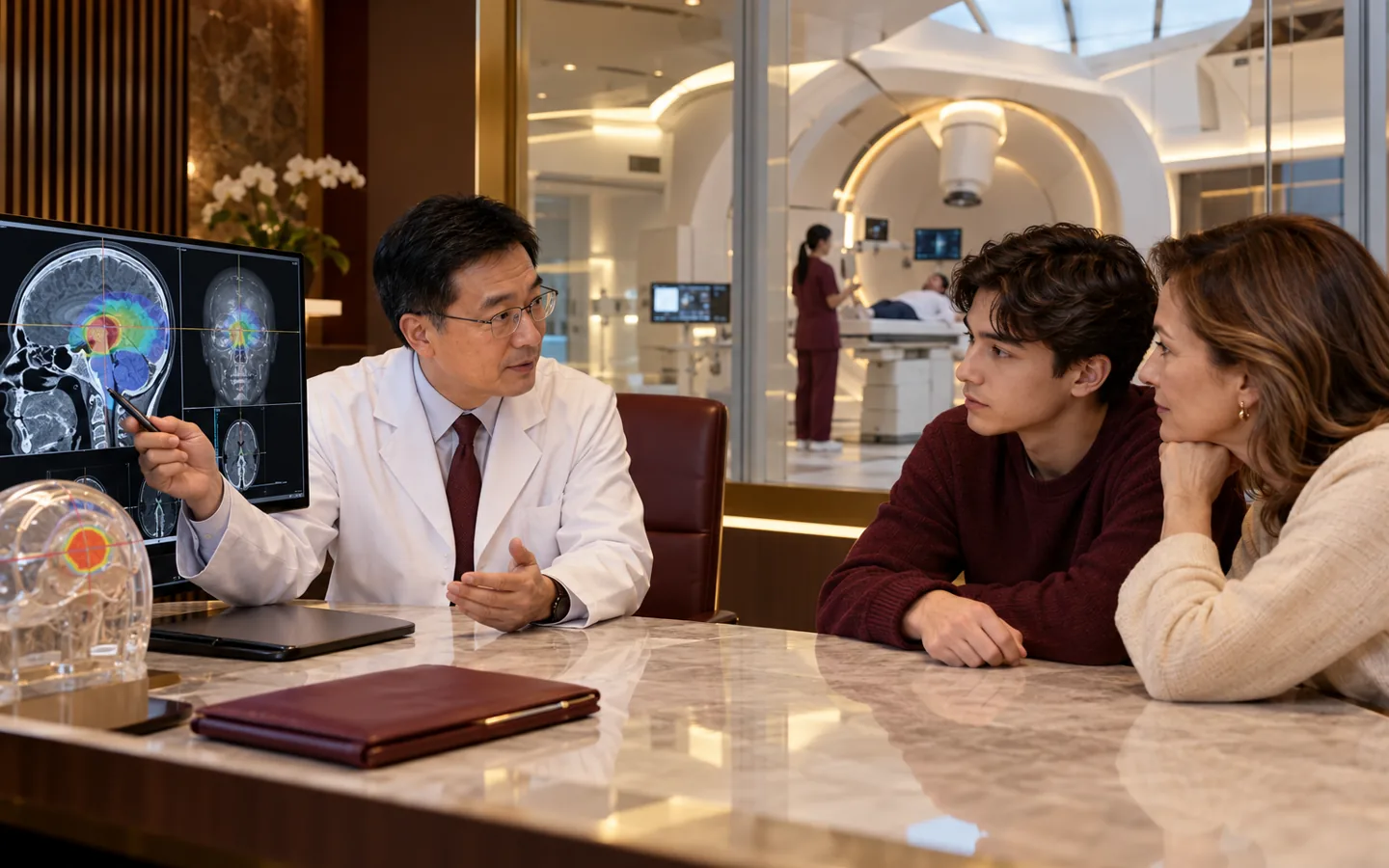
Chinese proton therapy physician explaining particle beam treatment to an international family

Medical records & cost enquiry

Proton Therapy: assessment and cost questions

For Proton Therapy, the budget depends on the proposed care and the hospital. A useful estimate needs to distinguish:

  • Centre eligibility and treatment target
  • Planning and number of treatment sessions
  • Outpatient or inpatient care and follow-up

Hospital medical fees, travel and our coordination services are separate. Any paid specialist review or coordination service is explained and agreed before you proceed.

Your next step

Start with your question

Tell us your diagnosis and what you need. Our free initial review checks the information and helps identify a suitable next step; it is not a specialist opinion or a hospital quotation.

Request a case-based estimate

Not ready to send records? Ask us first. Where hospital review is appropriate, we can help request an estimate. No travel commitment or mandatory proxy consultation.

Planning proton therapy in ChinaHospital review · individual costs · visit and follow-up

Plan the visit around diagnosis, centre eligibility and treatment sessions. Agree the assessment route before travel.

Records for the proton therapy review

Tell us what you already have: Pathology and staging reports; Original CT MRI and PET images; Previous radiotherapy DICOM plan and dose. Start with a short summary; after first contact we explain which records the receiving team needs and how to share them.

Confirm the proposed scope and costs

Before asking for a personal estimate, clarify: Centre eligibility and treatment target; Planning and number of treatment sessions; Outpatient or inpatient care and follow-up. The receiving team confirms the proposed scope and hospital charges; coordination is agreed separately.

Visits and care after returning home

Ask for an assessment of the specific treatment target and confirm centre acceptance, planning visits, sessions and follow-up before travel. Tell us if you need interpretation or English-language documents, and confirm the relevant arrangements with the receiving team.

The physical advantage must translate into a meaningful patient benefit

Proton beams deposit dose differently from photon beams and can reduce radiation beyond the target in selected situations. This may help protect developing tissues or critical organs when geometry is favourable.

Lower calculated dose to normal tissue does not automatically mean better tumour control or fewer complications for every cancer. A comparative plan and disease-specific evidence are more useful than the label “proton.”.

Ask for a patient-specific comparison

The relevant question is whether a robust proton plan materially reduces clinically important exposure without compromising target coverage.

Who may be considered?

This pathway may be discussed when the confirmed diagnosis, disease extent and treatment history make proton therapy a reasonable question—not simply because the technology is available.

  • Selected paediatric cancers where reducing integral dose may be important.
  • Tumours near the brain, spinal cord, eyes, heart or other critical structures.
  • Cases where long-term toxicity reduction is a major treatment objective.
  • Some retreatment situations after careful reconstruction of previous dose.
  • A patient seeking an evidence-based comparison between proton and modern photon therapy.

What the specialist team must confirm

The team reviews pathology, stage, target geometry, motion, previous radiation and expected survival, then creates or evaluates a robust plan. Range uncertainty, tissue density, implanted devices and anatomical change can affect proton delivery.

Key points for this treatment
Particlepositively charged proton beam
Dosereduced exit dose in selected geometry
Comparisonbenefit depends on the actual plan
Evidencevaries by tumour type and setting
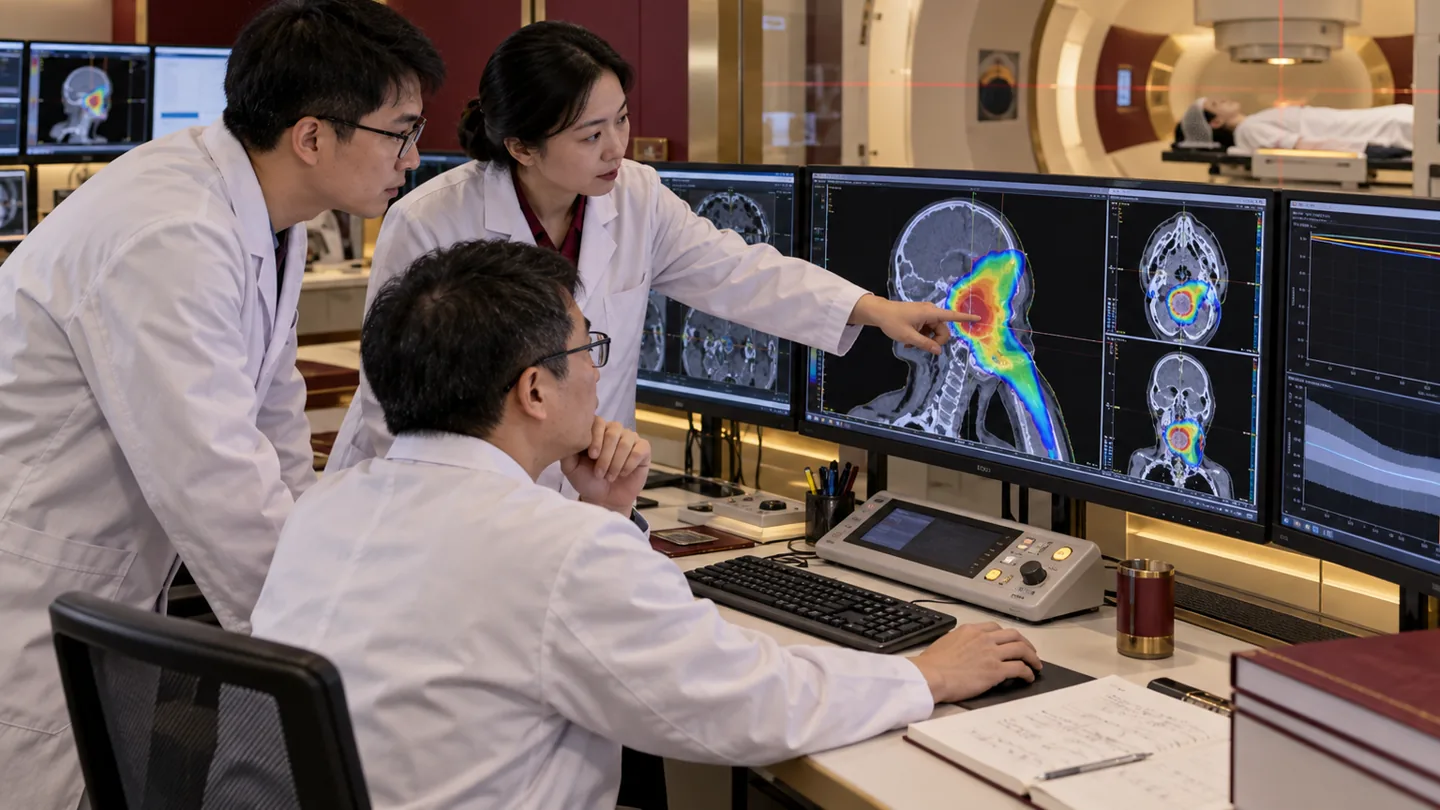
Chinese medical physicists reviewing a proton dose plan and range uncertainty
Robustness matters as much as dose shapeThe plan must remain safe when setup, motion and proton range vary within expected limits.

From proposed advantage to a robust treatment plan

A proton recommendation should identify which organ exposure is reduced, why that reduction matters and how uncertainty will be controlled.

ReviewConfirm disease and treatment indication
CompareEvaluate proton and photon dose plans
TestCheck robustness and motion strategy
DeliverUse image guidance and adaptive review

Treatment course and longer-term follow-up

Daily positioning and periodic imaging confirm that anatomy remains compatible with the plan. Weight loss, tumour shrinkage or changes in air cavities may prompt reassessment.

Follow-up focuses on tumour control and site-specific early and late effects. Children may need prolonged growth, endocrine, neurocognitive, hearing or cardiac surveillance depending on the treated area.

Chinese proton therapy follow-up visit comparing response imaging and normal tissue recovery
Long-term outcomes are part of the value questionThe expected reduction in normal-tissue dose should be connected to a realistic follow-up benefit.
ProceedA meaningful dosimetric and clinical rationale exists
Photon preferredComparable outcome with a simpler plan
ReplanAnatomy changes during treatment
Not suitableGeometry or evidence does not support proton use

Limits, burdens and realistic expectations

Proton therapy is not available everywhere, can be expensive and may require lengthy travel. Range uncertainty and motion can affect dose. Evidence of superiority is strong only in selected settings, and proton treatment still causes acute and late effects.

Do not delay urgent local care

Do not delay urgent decompression, bleeding control, infection treatment or another time-sensitive intervention while arranging proton consultation or international travel.

Before hospital review

Records for proton therapy assessment

A useful review needs source documents that show the diagnosis, disease extent, prior treatment, current condition and the exact decision under review.

Pathology and staging reports
Original CT MRI and PET images
Previous radiotherapy DICOM plan and dose
Surgery and systemic-treatment timeline
Current height and weight
Implant and device details
Relevant organ-function tests
Treatment goal and long-term priorities

Tell us what you need

Ask about your care,
your hospital and your budget.

You can ask about suitability, an expert opinion, an appointment or the likely medical cost. If you are unsure, choose “Not sure — please advise”.

This enquiry is aboutProton TherapyNot sure — please advise

How a personal estimate is prepared

  1. Tell us about your case.Describe your diagnosis, main question and preferred city, if any.
  2. Share the relevant records.We explain what is needed and how to send it by WhatsApp or email.
  3. Request a hospital estimate.Where appropriate, we help request hospital review and a cost estimate. Any paid review is agreed first.

This is an enquiry, not an order or payment. Proxy consultation is not mandatory. Any service scope is agreed separately before you proceed.

Ask about Proton Therapy

A first enquiry is free. Email and permission to respond are required; the other details are optional. Any paid clinical review or coordination is discussed separately.

Included automatically so we know which procedure you are asking about.
A preference, not a confirmed appointment.
Please do not send passport numbers, card details or full medical files in this first enquiry. We will explain which records are needed next.

Send a short summary first. This is an enquiry, not an order, payment or confirmed appointment.

No booking or payment is made by sending this enquiry.
Editorial transparency

Medical sources

Patient information is based on established government and professional guidance. Content updated 5 October 2026. This is patient information, not an individual clinical assessment.