
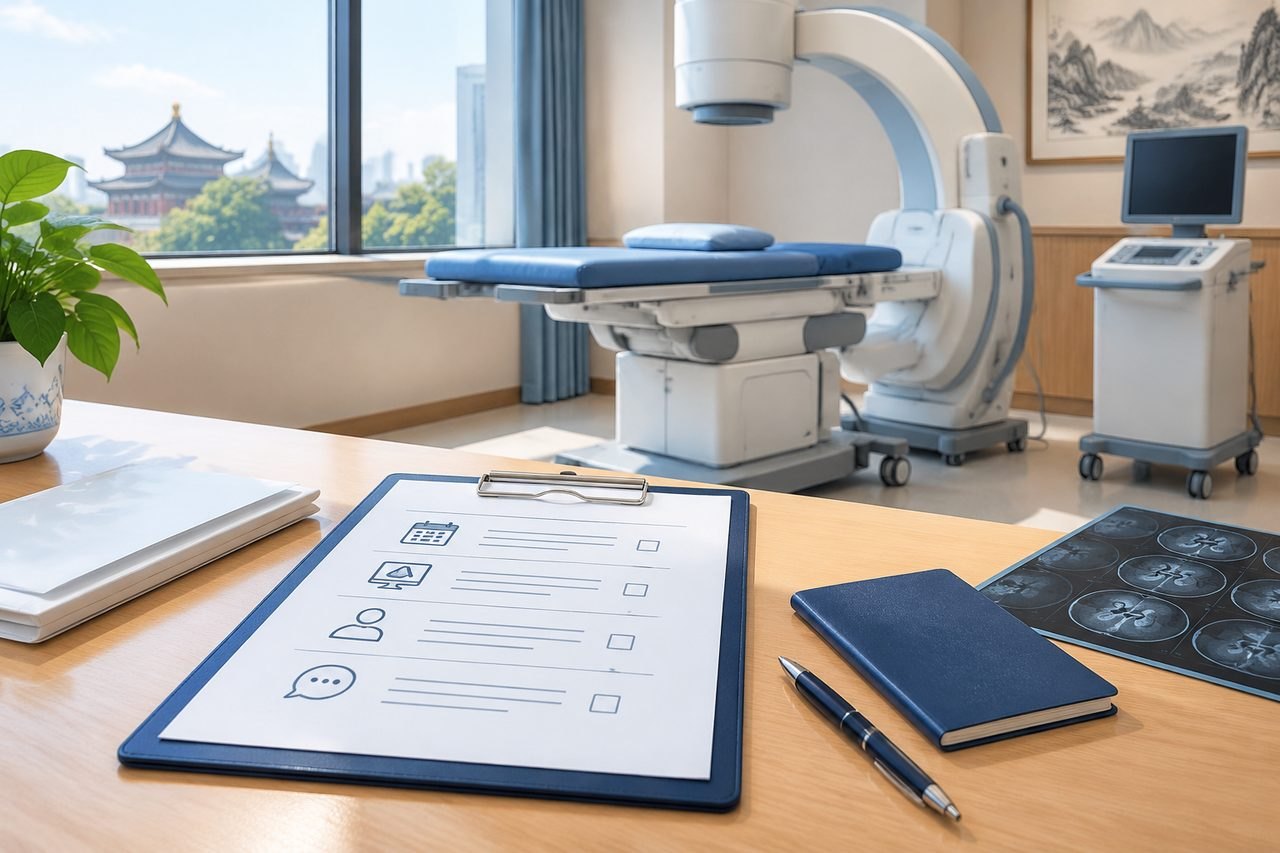
Why a written follow-up plan matters after radiotherapy in China
Radiotherapy is not a single appointment. The technique and schedule depend on the individual treatment plan, so the practical details that matter to an overseas patient are often decided across consultation, planning and delivery stages rather than in one conversation. When you return home, your local clinician may need to know what was proposed, what was actually delivered, and what still needs review. A verbal summary is easy to misremember or mistranslate.
A written follow-up plan is useful because it separates three things that are often mixed together: the clinical plan, the administrative arrangements, and the responsibility for each next step. The clinical plan belongs to the treating radiation oncologist. The administrative arrangements depend on the hospital. Responsibility may be shared between the China team and your home team. Writing these down reduces the chance that a review is missed because each side assumed the other would arrange it.
This guide does not tell you whether radiotherapy is suitable for you, which technique should be used, or whether a particular hospital can accept you. Those decisions belong to the treating clinicians and the hospital. The question here is narrower and practical: how do you obtain a written follow-up plan that you can act on and share?
What the written plan should say about the proposed radiotherapy
Ask the treating team to write down which radiotherapy plan is proposed for you and what stage the planning has reached. The technique and schedule depend on the individual treatment plan, so the document should reflect your case rather than a general description of radiotherapy. It is reasonable to ask for the proposed treatment area, the intended number of sessions if that has been decided, and whether any further planning scans or assessments are still outstanding.
A common gap is the difference between a plan that has been discussed and a plan that has been approved for delivery. Ask the team to state clearly whether the plan is provisional, awaiting further review, or confirmed for treatment. If it is provisional, ask what information is still needed and who will provide it. This matters because an overseas patient may otherwise make travel arrangements around a plan that has not been finalised.
Ask also whether prior radiation records are needed. If you have received radiotherapy before, the new team may want the previous plan, dose information and treatment summary to assess overlap and safety. Ask what specific documents they need, in what form, and whether translated or certified copies are required. Do not assume that a discharge summary alone is sufficient. The treating team should confirm what it needs.
If the team uses a different term for the plan, such as a treatment summary or a radiotherapy record, ask for that document by its local name. The label matters less than the content: what was proposed, what was delivered, and what remains.
How sessions and later reviews are arranged
Ask the team to describe how treatment sessions would be scheduled and how later reviews would be arranged. This is an administrative question, not a clinical one, but it affects your planning. The answer may include who books each session, how changes are communicated, and what happens if a session cannot go ahead. Ask whether the schedule is fixed in advance or confirmed step by step.
For follow-up, ask which reviews are planned, what each review is for, and where it would take place. Some reviews may be with the radiation oncology team, others with a different specialty. Ask the team to write down the purpose of each review rather than only a date. A date without a purpose is hard to act on, especially if you are deciding whether to travel back to China or to have the review locally.
If some reviews could be done in your home country, ask the team to say so in writing and to specify what information they would need from your local clinician. If reviews are expected in China, ask how they would be scheduled and what you should bring. Do not assume that a review can be moved between countries without the treating team's agreement.
Ask what the team's process is if a review needs to be brought forward or delayed. You are not asking for a guarantee; you are asking how the team handles changes. A written answer helps you know who to contact and what to expect.
Records to request before you leave the department
Ask for a copy of the documents that describe your radiotherapy, in a form you can carry and share. The exact list depends on the hospital and the stage of treatment, so ask the team to confirm what it can provide. Typical items may include the consultation note, the treatment plan or summary, the record of sessions delivered, and the follow-up schedule. Ask whether the documents can be provided in English or with an English summary.
Ask how you will receive the records and how long that may take. Do not assume a same-day printout. If the records will be issued later, ask who will send them, by what method, and to whom. If you need them for a local clinician, say so and ask whether the format is suitable.
Keep a personal copy of the written follow-up plan separate from the clinical records. The plan is the document you will refer to when arranging reviews; the clinical records are what a receiving clinician will read. Both are useful, but they serve different purposes.
If any document cannot be provided, ask the team to state that in writing and to explain what alternative record is available. A clear statement of what is not available is more useful than an assumption.
Contacts and responsibility: who does what after treatment
Ask the team to write down a named contact or office for follow-up questions, together with the circumstances in which you should use it. A general hospital switchboard is not a follow-up contact. Ask whether the contact is a clinician, a nurse, or an administrative office, and what each can and cannot answer.
Ask who is responsible for each step. For example, who arranges the next review, who sends records to your home clinician, and who you should tell if your situation changes. If responsibility is shared with your home team, ask the China team to state what it will do and what it expects your home clinician to do. When responsibility is left unstated, each side may assume the other is arranging the next review, and the gap surfaces only when a review date passes without anyone acting. Naming the responsible person for each step, in writing, is what makes the plan usable after you leave the department.
Ask how the team prefers to be contacted for non-urgent questions and what it considers urgent. Do not use a general enquiry channel for a clinical concern. If you become unwell, seek local medical care rather than waiting for a reply from an overseas team.
Ask whether the written plan will be updated if the clinical plan changes. If so, ask how you will be told and who is responsible for sending the updated version.
A practical way to request the plan in writing
You do not need a long letter. A short, specific request is easier for the team to answer. You can ask the treating team to confirm the proposed radiotherapy plan, whether prior radiation records are needed, how sessions and later reviews would be arranged, the follow-up contact, and who is responsible for each step. Ask for the answer in writing, in a language you can share with your home clinician.
If you are planning care in China and want help preparing the administrative side, ChinaSpecialistCare can assist with appointment coordination and practical arrangements after hospital acceptance. This is non-clinical coordination; the treating hospital and licensed clinicians decide suitability, the treatment plan and follow-up. You can start with a free initial case review by sharing a brief summary and your main question. A proxy consultation is optional and is not required to make an initial enquiry.
Before you travel or before you leave the department, check that the written plan answers your actual question. If it does not, ask again. The goal is a document you can act on, not a promise about your outcome.
- Ask for the proposed radiotherapy plan and whether it is provisional or confirmed.
- Ask which prior radiation records are needed and in what form.
- Ask how sessions and later reviews are arranged, and where.
- Ask for a named follow-up contact and what that contact can answer.
- Ask who is responsible for each step, including records sent to your home clinician.
- Ask how the plan will be updated if the clinical plan changes.
Sources & scope of this guide
References and official service information relevant to this guide.
This is general planning information and has not been individually reviewed by a doctor. Medical decisions and personal treatment advice come from your treating clinicians.