
Why the Anaesthesia Team Asks About Dentures
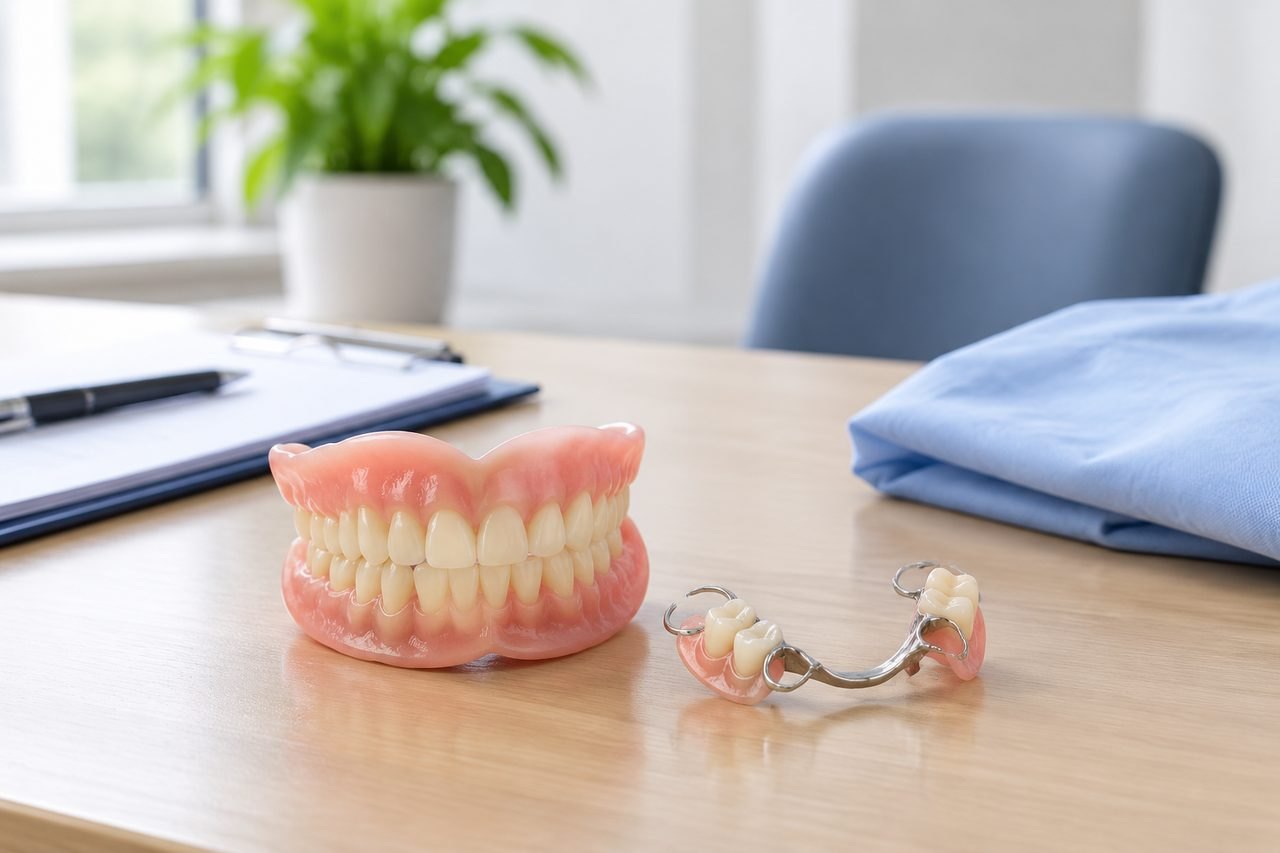
Dentures and other dental prostheses matter during anaesthesia for two connected reasons: they can affect how the airway is assessed and managed, and they can be damaged or displaced during the procedure. A partial denture or a loose tooth can become a foreign body if it moves, and a full denture changes the shape of the mouth and face in ways the anaesthetist needs to understand before planning airway management.
This is why the preoperative conversation should cover more than the word 'dentures'. The team needs to know what you wear, when you wear it, whether it is fixed or removable, and whether any teeth are loose or recently treated. The same applies to dental implants, bridges, retainers and mouthguards. Each has a different implication, and the anaesthetist will decide what matters for your case.
The anaesthetist's assessment is individual. Age, body weight, neck movement, mouth opening, previous surgery and the planned procedure all feed into the plan. A general instruction found online cannot replace that assessment, and a hospital in China will apply its own preoperative protocol. Your job is to give accurate information and ask what that protocol requires of you.
What to Tell the Preoperative Team About Your Dental Work
Bring the details, not just the devices. If you wear a removable full or partial denture, say so and describe when you last wore it. If you have a fixed bridge, implants or crowns, mention them even though they cannot be removed. If you have loose teeth, gum disease under treatment, or recent extractions, that belongs in the same conversation.
Written records help. A recent dental note, an X-ray report or a letter from your dentist describing the prosthesis and the condition of the supporting teeth gives the anaesthetist concrete information. If you do not have these, a short written summary in English is still useful, and the hospital can advise whether it needs anything translated or verified.
Medicines matter too. Some medicines affect bleeding or interact with anaesthetic drugs, and the preoperative team will want a current list including doses and who prescribed them. Do not stop or change any medicine on your own before the visit. Ask the prescribing clinician and the anaesthesia team how your regular medicines should be handled around surgery.
The Removal Question: What to Ask and Why the Answer Varies
Ask the anaesthetist directly: should I remove my dentures before coming to the hospital, in the ward, or in the anaesthetic room? The answer depends on the type of anaesthetic, the airway plan and the hospital's own routine. For some procedures the team may prefer the denture to stay in until a specific point so that the face and mouth keep their usual shape; for others it may need to come out earlier. Do not assume either way.
Ask a second question: who will keep the denture safe while I am in theatre and recovery? A removable prosthesis is easy to misplace when a patient is sedated or recovering. Label the container, hand it to a named person if the hospital allows, and confirm where it will be stored. This is practical, but it is also part of preventing loss and confusion afterwards.
Ask a third question: what should I do if I wake up and my denture is not with me? Knowing the ward's process in advance saves distress. The preoperative visit is the right time to settle this, not the morning of surgery when you may already be anxious or sedated.
- Which of my dental devices are removable and which are fixed?
- Does the anaesthetist want any of them removed, and at what point?
- Where will a removed denture be kept, and who is responsible for it?
- What is the plan if I have loose teeth or a partial denture that could move?
- Which of my regular medicines should the team know about before anaesthesia?
Loose Teeth, Partials and Fixed Work: Separate Risks
A removable partial denture is not the same problem as a loose natural tooth. A partial can be taken out, but a loose tooth cannot, and the anaesthetist may need to plan around it or ask for a dental opinion before surgery. Fixed crowns and implants are not removed for anaesthesia, but their presence and condition still belong in the record.
If you have active gum disease, recent dental surgery or an unresolved dental infection, tell the preoperative team. The timing of elective surgery alongside dental treatment is a clinical judgement, and the anaesthetist and surgeon should make it together with you. Do not delay urgent care because of a dental appointment, and do not treat a dental opinion as clearance for anaesthesia.
The broader point is that the preoperative visit is a risk conversation, not a checklist. A responsible anaesthetist can and should discuss the evidence-based risks and benefits relevant to your situation, including how dental factors affect the airway plan. Ask for that discussion in plain language, and ask what would change the plan.
Language, Consent and Practical Preparation in China
If you do not speak Chinese, arrange interpretation for the preoperative visit rather than relying on a brief hallway conversation. Consent for anaesthesia and surgery should be understood before sedation, and questions about dentures, fasting, escort arrangements and what to bring are easier to settle with a consistent interpreter. A bilingual companion can help with hospital navigation and practical support, but clinical decisions remain with the treating team.
Confirm the hospital's instructions in writing where possible. Ask what time to arrive, what to bring, whether an escort is required after sedation, and how the ward handles personal items. These are hospital-specific arrangements; do not assume that one hospital's routine applies to another. If you are travelling to China for surgery, build in time for the preoperative assessment before the operating date rather than arriving at the last moment.
Costs are a separate question. Hospital fees, anaesthesia charges and any dental review are set by the treating hospital, and our coordination fees are separate. Ask the hospital for a written quote that states what is included for your planned procedure. Do not rely on a general figure from another patient or another city.
A Practical Next Step
Before your preoperative visit, write a one-page summary: your dental devices, loose or recently treated teeth, current medicines, allergies and your main questions. Share it with the hospital team and, if you are using coordination support, with the coordinator so that interpretation and appointment planning can be arranged. An initial enquiry is free and does not commit you to a proxy consultation; the hospital decides suitability and gives the clinical instructions.
If you are still choosing where to have surgery in China, our dental care reference and treatment preparation guides can help you frame questions, but they do not replace the anaesthetist's assessment. The most useful thing you can do is ask the team what it wants you to do with your dentures, and confirm the answer before the day of surgery.
Sources & scope of this guide
References and official service information relevant to this guide.
This is general planning information and has not been individually reviewed by a doctor. Medical decisions and personal treatment advice come from your treating clinicians.