Which records actually change a revision plan
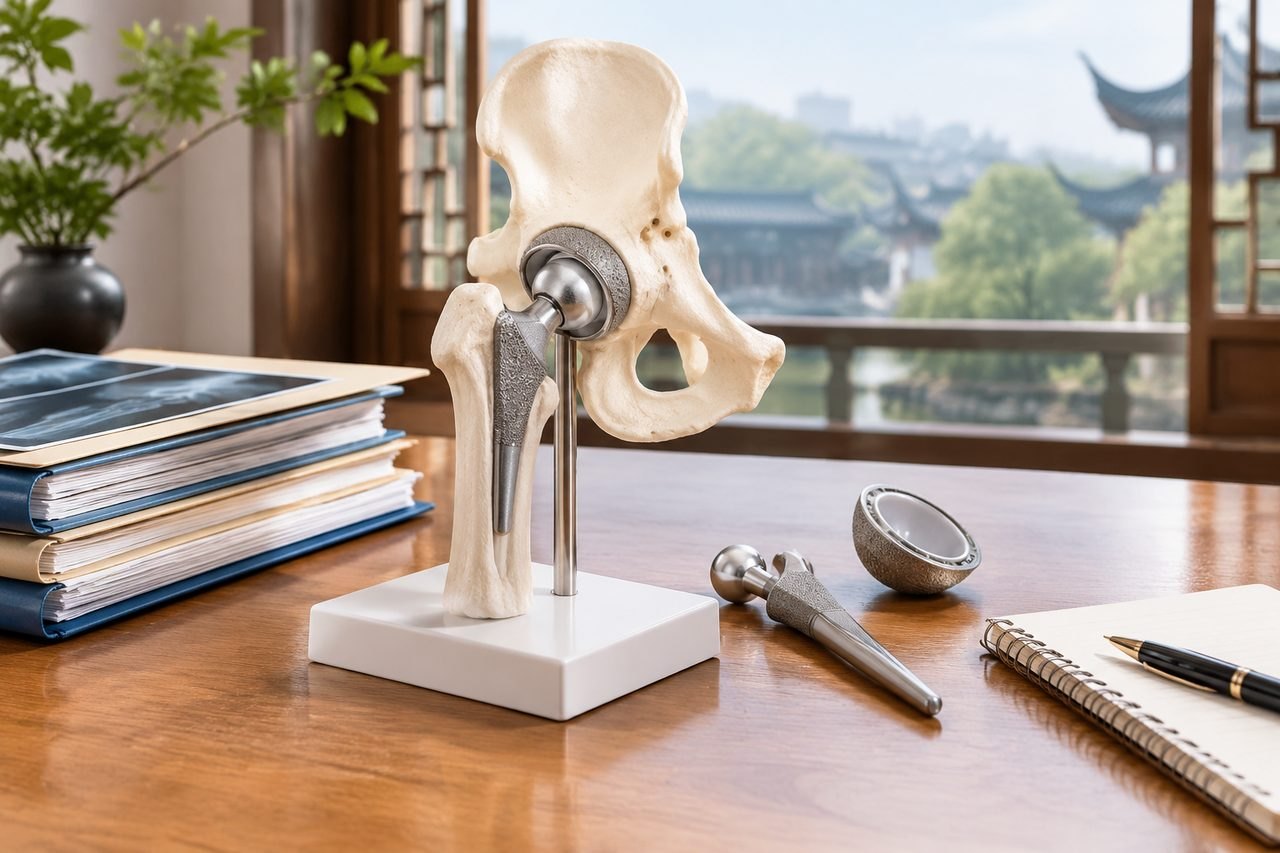
Revision hip surgery is not simply a repeat of the first operation. The surgeon has to understand what is already inside your body, why it is failing, and how much bone is available to support new components. AAOS OrthoInfo notes that revision may replace some or all implant components, and that infection or bone loss can change reconstruction planning. That is why the records that matter most are the ones that describe the existing implant and the current problem, not a complete lifetime file.
The first group is implant identity. Ask for the implant sticker or label, the manufacturer and model, the lot or serial number, and the size of each component if it is recorded. If you have an implant card or passport, that is useful. If you do not, the original hospital's operating notes or the manufacturer's traceability record may identify the device. This matters because a revision team needs to know what it may be removing and whether matching or compatible components are relevant to the plan.
The second group is the original operation record. The operation note, discharge summary and any immediate postoperative X-rays help show the starting point. The third group is the current problem: recent X-rays or other imaging your treating clinician has ordered, plus notes describing pain, instability, loosening, infection concern or any change in walking. The fourth group is general health information relevant to surgery, such as current medicines, allergies and major conditions. You do not need to decide which of these is clinically decisive. Send what exists and ask the hospital which gaps it wants filled.
Who to ask for each missing document
Missing records usually sit with a small number of sources, and a specific request is more likely to succeed than a general one. For the original operation note, discharge summary and implant details, start with the medical records department of the hospital where the first replacement was done. If that hospital has closed or merged, ask the successor institution or the regional health records authority that took over its files. Name the operation, the approximate date and your identifying details so staff can locate the file.
For implant identity, the original hospital may hold the traceability record, but the manufacturer or its local distributor may also be able to confirm the model from a lot number or an implant card. Ask the hospital first; if it cannot identify the device, ask whether it can provide the manufacturer name so you can request traceability information directly.
For current imaging and recent consultation notes, ask the clinic or hospital that performed them. If you have already seen a specialist about the failing hip, that clinician's letter often summarises the problem more usefully than raw scans alone. For medicine lists and allergies, your general practitioner or current prescriber can produce a dated summary. Keep a simple log of who you asked, when, and what you received, because revision planning often involves more than one request.
If a document genuinely no longer exists, say so plainly rather than leaving it blank. A hospital can plan around a known gap; it cannot interpret silence. Ask the receiving team what alternative information would help, such as a recent clinical examination, current imaging or a description of the original procedure from your own history.
How missing records affect the next step
Incomplete records do not automatically block an enquiry. They change what a hospital can confirm at each stage. A records-based opinion can discuss likely revision options, but it cannot replace an in-person examination, and it does not establish hospital acceptance or final surgical suitability. The treating hospital decides whether it can assess your case, what further imaging or tests it needs, and whether it can offer a plan.
The practical question is whether the missing item is likely to change the surgical approach. If the implant model is unknown, the team may need to plan for more than one possibility. If infection is a concern, the assessment may need specific tests and may follow a different pathway from a mechanical loosening problem. If bone loss is suspected, imaging quality matters because reconstruction scope depends on how much bone remains. These are clinical judgements, not administrative ones, so ask the hospital which missing item it considers most important for your situation.
A missing record can also affect timing. If a key document arrives late, a review may be delayed or repeated. That is a reason to send a partial file early with a clear list of what is still coming, rather than waiting until everything is assembled. It is also a reason to keep local care moving: if your symptoms are worsening, urgent assessment where you are takes priority over an overseas enquiry.
Questions to ask about staged revision and rehabilitation
Two planning questions are worth asking early, because their answers shape what records you need. First, is a single-stage or staged revision being considered? A staged approach can involve more than one operation and a period between stages, often when infection is a concern. If the hospital raises this possibility, ask what information it needs to decide, what the interval would involve, and how your medicines, wound care and follow-up would be managed. Do not assume a staged plan is confirmed until the treating team says so in writing.
Second, how would rehabilitation and weight-bearing be coordinated? AAOS OrthoInfo notes that individual rehabilitation and weight-bearing instructions matter. Ask who provides those instructions, how they are communicated to you in English if needed, and what therapy or follow-up would be arranged after discharge. If you plan to return home soon after surgery, ask how the handover to a local physiotherapist or doctor would work and what restrictions you must carry with you. The receiving clinician or physiotherapist makes their own assessment; they are not bound by the original team's plan, but they need the operative details to judge safely.
Ask also what the hospital's written plan would include: the proposed procedure, the implant strategy if known, the expected inpatient course, discharge criteria, medicine plan and follow-up schedule. A clear written plan is more useful than a verbal summary, especially when you are coordinating across languages and borders.
What a reply from a Chinese hospital does and does not confirm
When a hospital replies to your enquiry, it may confirm that it can review your records, request specific additional documents, or offer an appointment for in-person assessment. It may also say that it cannot assess you without further imaging or an examination. Treat that reply as a step, not a final decision. A records review is not the same as hospital acceptance, a confirmed surgical plan or a guarantee that revision surgery will be offered.
Ask the hospital to state, in writing, what it has reviewed, what remains uncertain, and what it needs next. If it offers an appointment, ask what that appointment is for: assessment only, further imaging, a surgical consultation, or a treatment plan. If it gives a provisional plan, ask which parts depend on tests done in China. This keeps expectations accurate and helps you decide whether travelling is worthwhile.
Costs are a separate question. Hospital fees, clinician fees, implant costs and our coordination fees are distinct, and the hospital's own written quote is the authoritative source for its charges. Ask what the quote includes, what is excluded, and what remains undecided until after assessment. Do not rely on a verbal estimate or a figure from an unrelated provider.
A practical order of actions, and what to do if a step stalls
Start with a short summary of your situation: when the original hip replacement was done, what problem you have now, and your main question. Send that through the enquiry form, email or WhatsApp. You do not need to send a complete medical archive at first contact, and you should not send passport numbers or payment details. After that, gather records in this order: implant identity, original operation note and discharge summary, current imaging and specialist letters, then medicine and allergy lists. Send each item as it arrives and note what is still outstanding.
If a request stalls, try a different route. If the original hospital does not respond, ask your current doctor to request the records on your behalf. If the implant cannot be identified, ask the hospital whether it can proceed with a plan that accounts for uncertainty, or whether it needs manufacturer traceability first. If imaging is too old or unclear, ask the treating clinician whether new imaging is needed; do not arrange tests yourself without a clinical request. If you cannot obtain a document at all, tell the hospital and ask what alternative information it would accept.
ChinaSpecialistCare can help with non-clinical coordination: checking what you have, identifying obvious gaps, requesting a specialist appointment, and arranging interpretation where needed. We do not decide suitability, diagnose, prescribe or guarantee hospital acceptance. An initial enquiry is free, and a proxy consultation is optional rather than a prerequisite. A brief next step is to send your current summary and whatever records you already hold, then ask the hospital which single missing item matters most for your revision assessment.
Sources & scope of this guide
References and official service information relevant to this guide.
This is general planning information and has not been individually reviewed by a doctor. Medical decisions and personal treatment advice come from your treating clinicians.