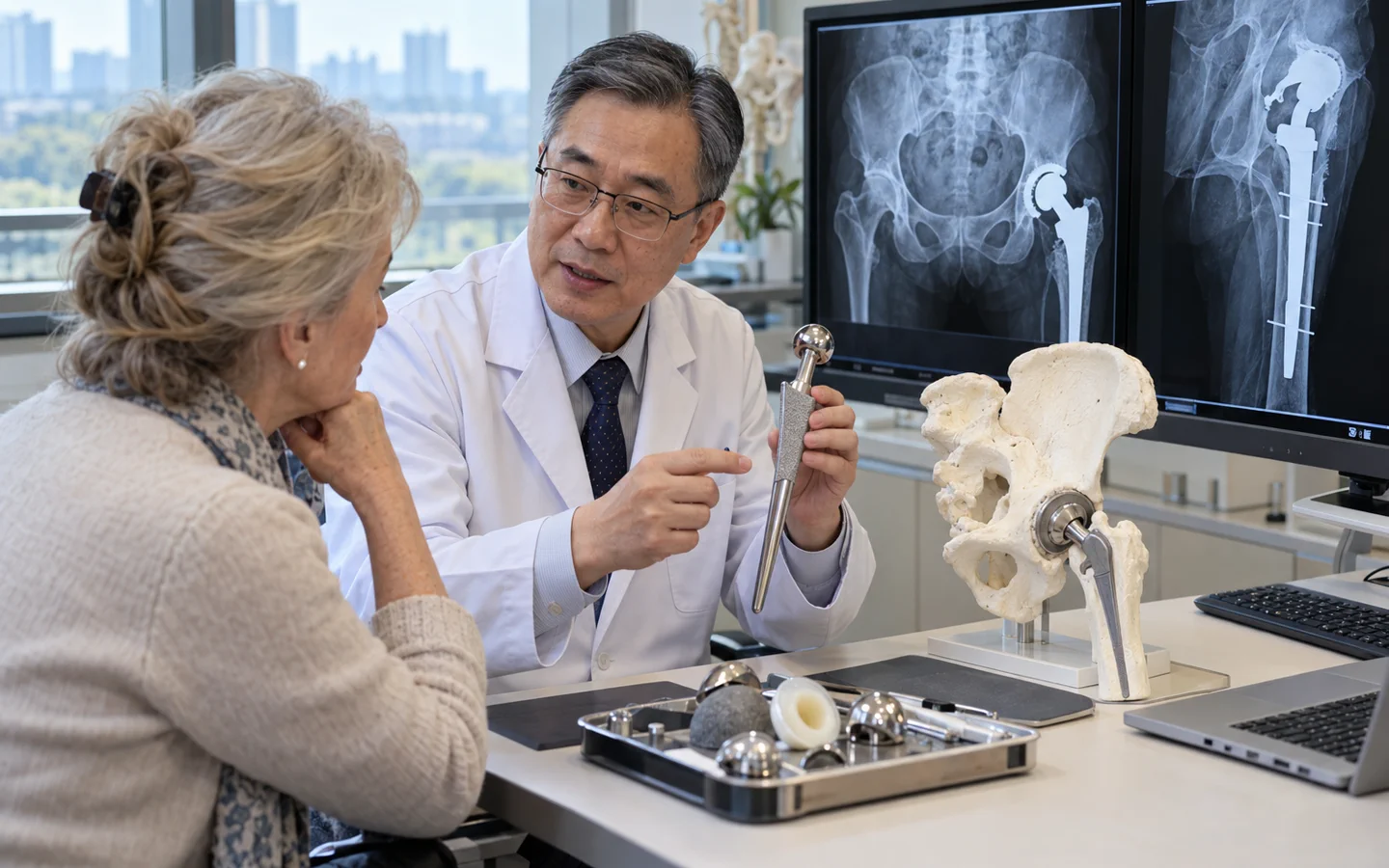
What is revision hip replacement?
Revision hip replacement is another operation on a previously replaced hip. The surgeon may exchange a liner, ball, stem or cup, or remove and rebuild the entire reconstruction. It is usually longer and more complex than a primary replacement because scar tissue, bone loss, infection, fracture or implant damage can change the anatomy.
Special long stems, larger cups, metal augments, bone graft or custom components may be needed. The goal is to treat the reason for failure, restore a stable joint and preserve or rebuild enough bone for durable fixation.
Pain can come from loosening, infection, instability, fracture, tendon or spine problems and other causes. Revision should be planned only after the team identifies the likely source.
Why revision may be recommended
AAOS lists wear and loosening, infection, recurrent dislocation or instability, fracture around the implant and adverse reactions to implant debris among the reasons for revision. A component can also be poorly positioned or damaged.
Investigating infection
The work-up may include inflammatory blood tests and aspiration of joint fluid for cell count and cultures. Antibiotics taken before samples are collected can affect results, so medication changes must be directed by the treating team. Infection revision may require one operation or staged procedures separated by antibiotic treatment.
Imaging and implant identification
Current X-rays are compared with older images to look for migration, wear, fracture and bone loss. CT, MRI with metal-artifact reduction or a nuclear medicine scan may be requested. Original implant stickers and operative reports help the team identify component sizes, connections and removal tools.
Key points for this treatment
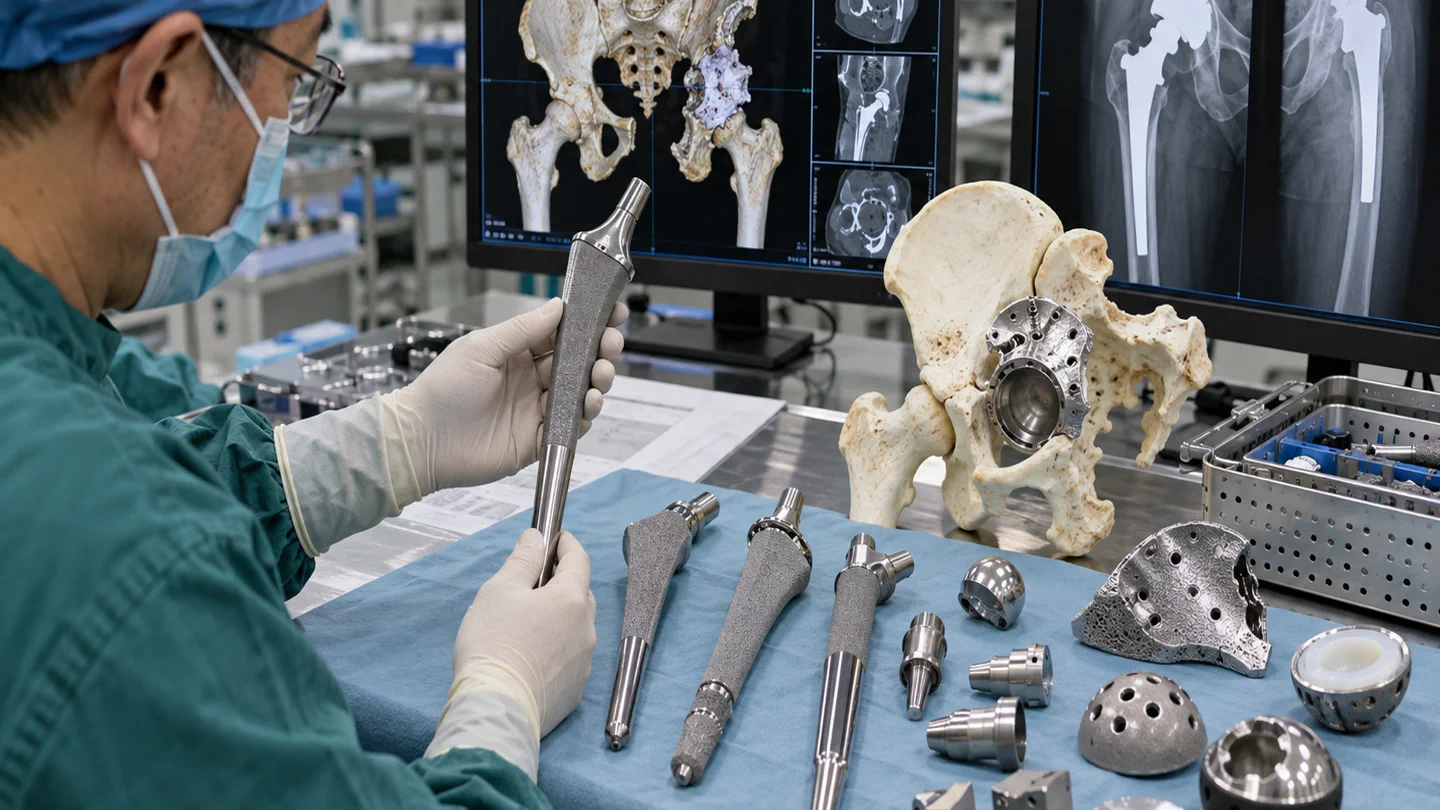
How revision surgery works
The surgeon uses the previous scar where practical, removes scar tissue and assesses implant fixation. Well-fixed components may sometimes remain, while loose or infected components are removed. Bone defects can be reconstructed with graft, metal augments, cages or custom implants before new components are secured.
Revision stems often extend farther down the femur to obtain fixation in stronger bone. A fracture may need plates, cables or other fixation. Surgery for infection can involve extensive cleaning, removal of implants and a temporary antibiotic spacer before a later reconstruction.
Why the plan needs backups
Imaging can underestimate implant fixation or bone loss. A specialist revision team prepares alternative implants, extraction tools and blood-management plans. The patient should understand which decisions may be made during surgery.
Recovery after revision
Hospital stay and recovery are often longer than after primary replacement. Weight bearing may be unrestricted, partial or temporarily limited depending on fixation, bone graft and fracture repair. The surgeon’s written instructions must take priority over generic timelines.

International travel should not be scheduled until wound status, clot prevention, mobility and emergency follow-up are secure. Complex revision patients benefit from a direct handover to a local orthopedic team.
Risks and realistic expectations
Revision carries the general risks of hip surgery and often higher risks of infection, dislocation, fracture, nerve or blood-vessel injury, bleeding and transfusion, clot, leg-length difference, persistent pain and failure of fixation. Medical complications also depend on age and health.
The result may relieve pain and improve stability, but function may not match a successful first replacement—especially after severe bone or muscle damage, infection or repeated operations.
Fever, wound drainage, rapidly increasing pain, a sudden change in hip position, a fall, new inability to bear weight, chest pain or breathlessness requires urgent assessment.