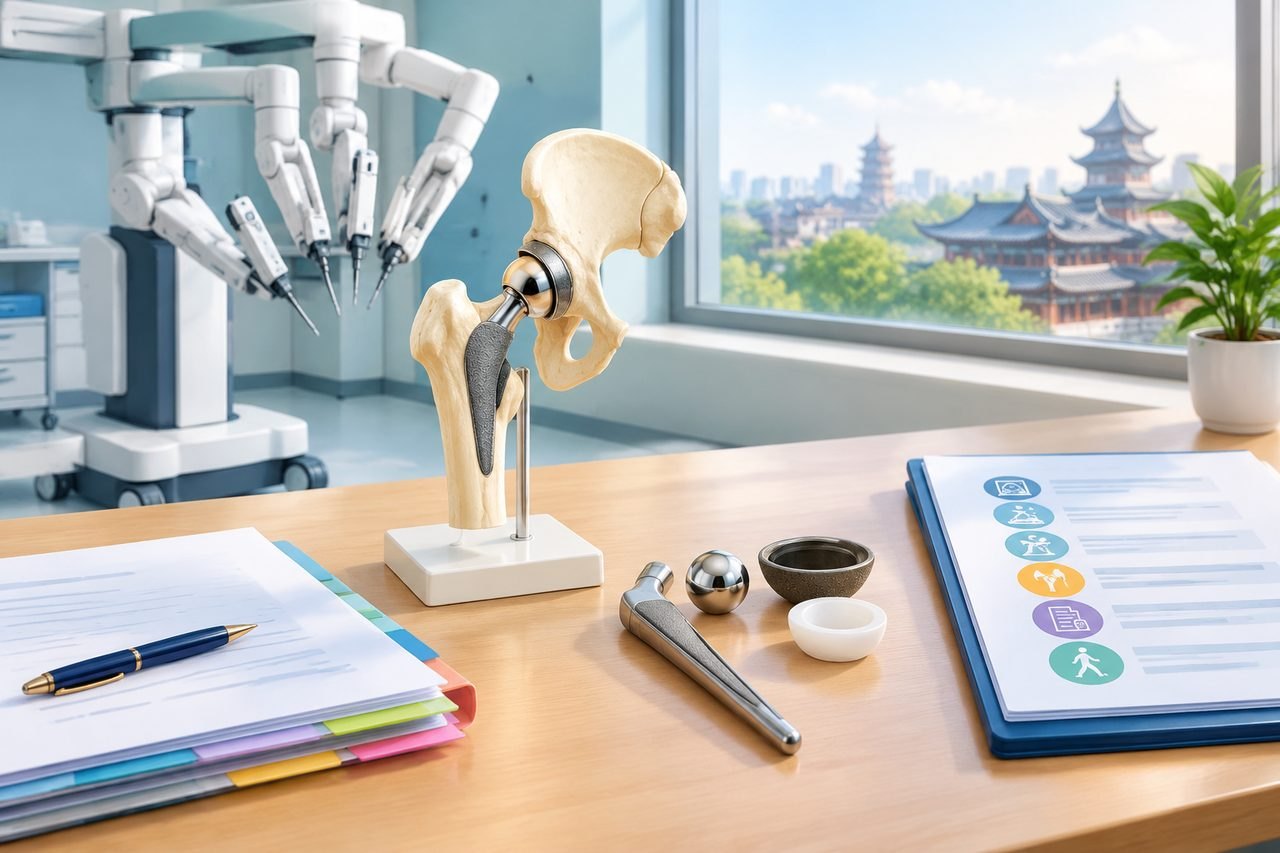
What a New Scan or Report Can Actually Change
A revised recommendation after new imaging or a new report is not automatically a sign that something went wrong. Hip assessment draws on several inputs: your symptoms and examination, plain X-rays, sometimes a CT scan, your bone quality, your general health and your goals. When one of those inputs changes, the surgical plan can change with it. The practical question is not whether the plan changed, but which specific decisions changed and why.
Robotic tools assist joint-replacement planning and surgery; the surgeon remains responsible for the operation. That distinction matters when you are told the plan has changed. Robotic assistance is a method used within an operation, not a separate procedure with its own independent indication. If the proposed operation itself changes, for example from a partial to a total hip replacement, or from one surgical approach to another, then the role of robotic assistance may also change or may no longer be relevant. Ask the team to separate these layers clearly: the operation, the approach, the implant, the technology used to help perform it, and the surgeon performing it.
It also helps to know which document triggered the change. Was it a new CT scan, a repeat X-ray, a bone-density result, a blood test or a report from another clinician? Ask for the specific finding in plain language. A vague statement that the images look different is not enough to make a decision. You are entitled to ask what the new information shows, how it affects the planned operation and what would happen if the team proceeded with the earlier plan instead.
Reconfirm the Operation, the Approach and the Implant
The first thing to reconfirm is the operation itself. Is the team still proposing the same type of hip replacement, or has the recommendation moved to a different procedure? If the operation has changed, ask whether the change is because of the new finding, because of a change in your symptoms, or because the surgeon reconsidered the original assessment. Each reason leads to different follow-up questions.
The second item is the surgical approach. Different approaches to the hip involve different positions, different instruments and different tissue handling. If the approach has changed, ask how that affects your expected position after surgery, your restrictions and your rehabilitation. Do not assume the rehabilitation plan stays the same when the approach changes.
The third item is the implant. Hip implants differ in design, bearing surface, fixation method and size range. A new scan may change the sizes or the type the surgeon considers suitable. Ask which implant is now proposed, whether it is a standard option or a specialised one, and whether the change affects the charges in the written estimate. If the implant has changed, ask whether the earlier implant remains an option and under what circumstances.
The fourth item is the technology. If robotic assistance was part of the earlier plan, ask whether it is still part of the revised plan, and if so, how it is being used. If it has been dropped, ask why. The answer may be clinical, practical or related to the specific platform available at that hospital. You can ask these questions without challenging the surgeon's judgement.
- Which operation is now proposed, and what changed it?
- Which surgical approach is planned, and how does it affect rehabilitation?
- Which implant is proposed, and does the change affect the estimate?
- Is robotic assistance still part of the plan, and how is it being used?
Ask How Robotic Assistance Relates to the Revised Operation
Robotic-assisted joint replacement uses a robotic tool to help with planning and with parts of the operation. It is not a different disease treatment and it does not replace the surgeon. The surgeon still plans the operation, makes the decisions during surgery and remains responsible for the result. When the plan changes, the useful question is how the robotic tool fits into the new plan, not whether robotic surgery is better in general.
Ask the team to explain what the robotic system is being used for in your case: planning the implant position, preparing the bone, guiding instruments, or checking the result during surgery. Different systems support different steps. Ask whether the same operation could be performed without robotic assistance, and if so, what the practical differences would be for you. This is a legitimate question and does not imply you are refusing the technology.
You should also ask about the platform. Hospitals may use different robotic systems, and the system available at one hospital may not be the same as at another. If the revised plan depends on a particular platform, ask whether that platform is confirmed for your case and whether the surgical team has an alternative if it is not. Do not assume that a robotic option mentioned in general discussion is confirmed for your specific operation.
Reconfirm the Written Estimate and What It Includes
A changed plan often means a changed estimate. Ask the hospital or the named provider for an updated written estimate that reflects the revised operation, implant, technology and expected length of stay. Do not rely on a verbal figure or an earlier quote. Ask what the estimate includes and what it does not, and ask which items are paid to the hospital and which, if any, are paid separately.
If robotic assistance is part of the revised plan, ask directly whether it adds a separate charge, whether it is included in the surgical fee, or whether the hospital handles it differently. Do not assume a universal rule. Hospitals structure their charges in their own way, and the only reliable answer is the one in the written estimate from the provider you are actually using.
Ask how the estimate handles possible changes during surgery. If the surgeon finds something unexpected, or if the implant needs to be different from the plan, how is that billed? Ask whether a revision of the estimate is issued before or after the change. You are not asking for a guarantee; you are asking how the provider communicates cost changes.
Keep the estimate alongside the revised plan. If the plan changes again after further tests, ask for a new estimate rather than adjusting the old one verbally. This keeps the record clear for you and for anyone helping you coordinate.
- Request an updated written estimate after any plan change.
- Ask whether robotic assistance adds a separate charge or is included.
- Ask how intraoperative changes are billed and communicated.
- Keep each version of the estimate with the matching plan.
Reconfirm Rehabilitation, Weight-Bearing and Follow-Up
Rehabilitation instructions follow the operation and the approach, not the technology. If the operation or approach has changed, ask for the revised rehabilitation plan in writing. Ask specifically about weight-bearing status, movement restrictions, exercises, and when you can expect to be assessed again. Do not carry over the earlier instructions.
Ask who will supervise your rehabilitation after discharge, and whether that person or team has the revised plan. If you are returning home or to another country, ask what information will be provided to your local clinician or physiotherapist. The receiving clinician makes their own assessment; your role is to make sure they have the records they need.
Ask about follow-up timing and how it will be arranged. If some follow-up can be done remotely and some requires an in-person visit, ask which is which. Do not assume a fixed schedule; ask what the team recommends for your situation and what would prompt an earlier review.
If you have been given restrictions before the plan changed, ask whether those still apply. A change in approach or implant can change what you are allowed to do in the first weeks. Getting this wrong is a practical risk, so ask for the revised instructions in writing before you leave the hospital.
What to Send, What to Ask and the Next Step
When you contact a hospital or a coordination service after a plan change, send the new report or scan, the revised plan if you have one, and a short note explaining what changed. You do not need to send a complete medical archive at first contact. A brief summary of your diagnosis, the proposed operation and your main question is enough to start.
Ask the surgical team these questions in writing so you have a record: What changed in the plan and why? Which operation, approach and implant are now proposed? Is robotic assistance still part of the plan, and how? What does the updated written estimate include? What are the revised rehabilitation instructions? Who will receive the revised plan if I return home?
If you would like help requesting a specialist appointment, sharing records or arranging interpretation for a revised plan discussion, ChinaSpecialistCare can assist with those non-clinical coordination steps. The hospital and its clinicians decide suitability, the operation and the final plan. An initial enquiry is free and does not require buying a proxy consultation.
The next step is simple: ask for the revised plan and the updated written estimate together, in writing, before you agree to proceed. If any answer is unclear, ask again. A plan that changes after new tests is normal; a plan you do not understand is the problem worth fixing first.
Sources & scope of this guide
References and official service information relevant to this guide.
This is general planning information and has not been individually reviewed by a doctor. Medical decisions and personal treatment advice come from your treating clinicians.