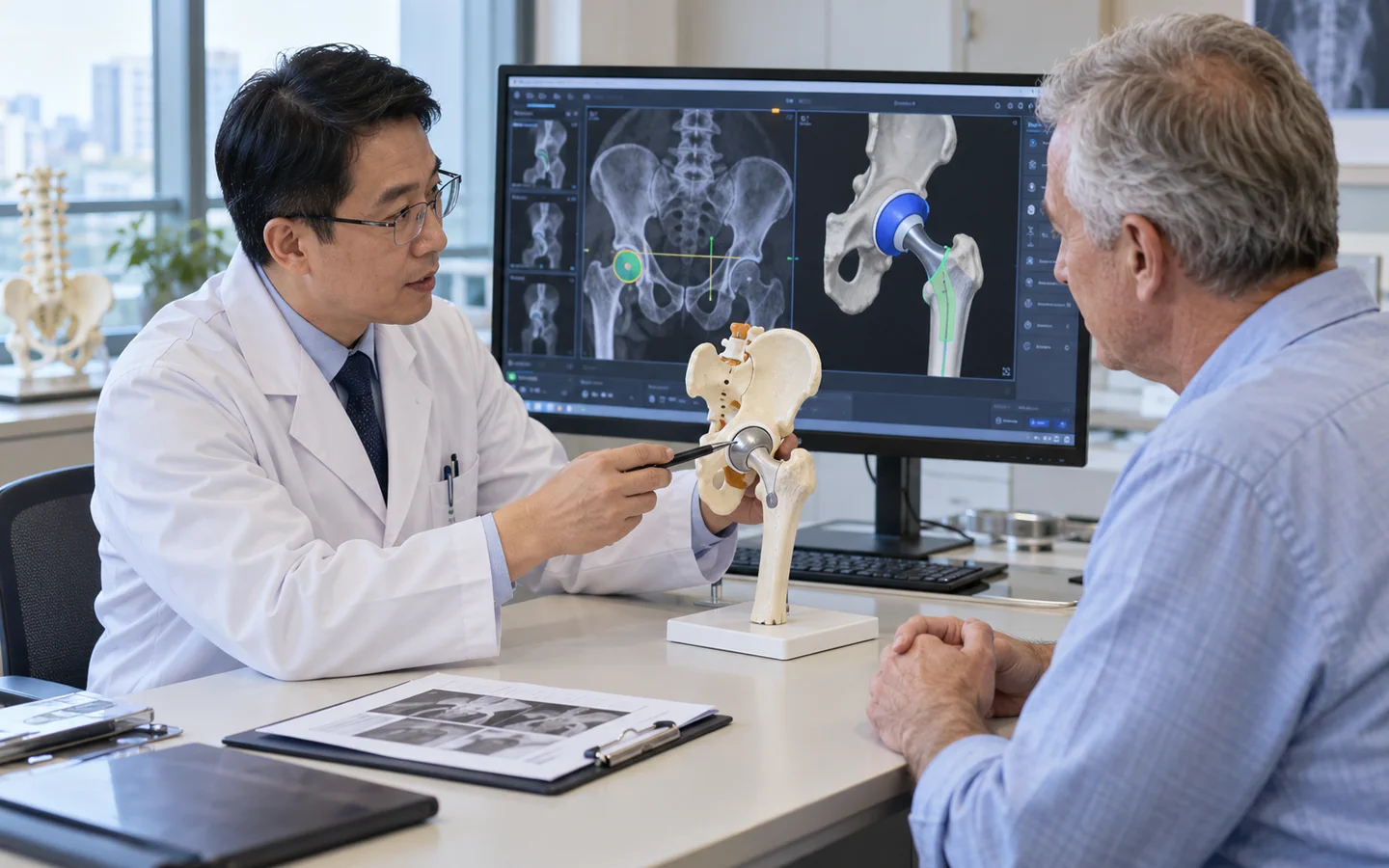
What is robotic-assisted hip replacement?
Robotic-assisted hip replacement is total hip replacement performed with a computerised planning and navigation system. A three-dimensional plan—often created from CT imaging—helps the surgeon estimate implant size and position. During surgery, trackers and instruments show how the patient’s anatomy relates to that plan.
The robot does not diagnose the patient, choose the operation or perform surgery independently. The surgeon exposes the joint, controls the instruments, makes clinical decisions and can modify or abandon the robotic plan if the real anatomy requires it.
A patient first needs a sound clinical reason for total hip replacement. The decision should not start with whether a robot is available.
Who may be considered?
Some patients having primary total hip replacement may be candidates. The team considers diagnosis, body size, bone quality, previous implants, severe deformity, ability to obtain the required imaging and whether the system supports the planned implant and approach.
Potential advantages
AAOS describes potential advantages including customised pre-operative planning and precise component alignment, particularly where anatomy varies. These technical measures do not automatically translate into less pain, shorter recovery or a longer-lasting implant for every patient.
Potential disadvantages
Possible disadvantages include an additional CT scan, extra planning and operating time, navigation-pin risks, added cost and limited availability. Ask whether the system requires a particular implant brand and what the team will do if registration or equipment fails.
Key points for this treatment
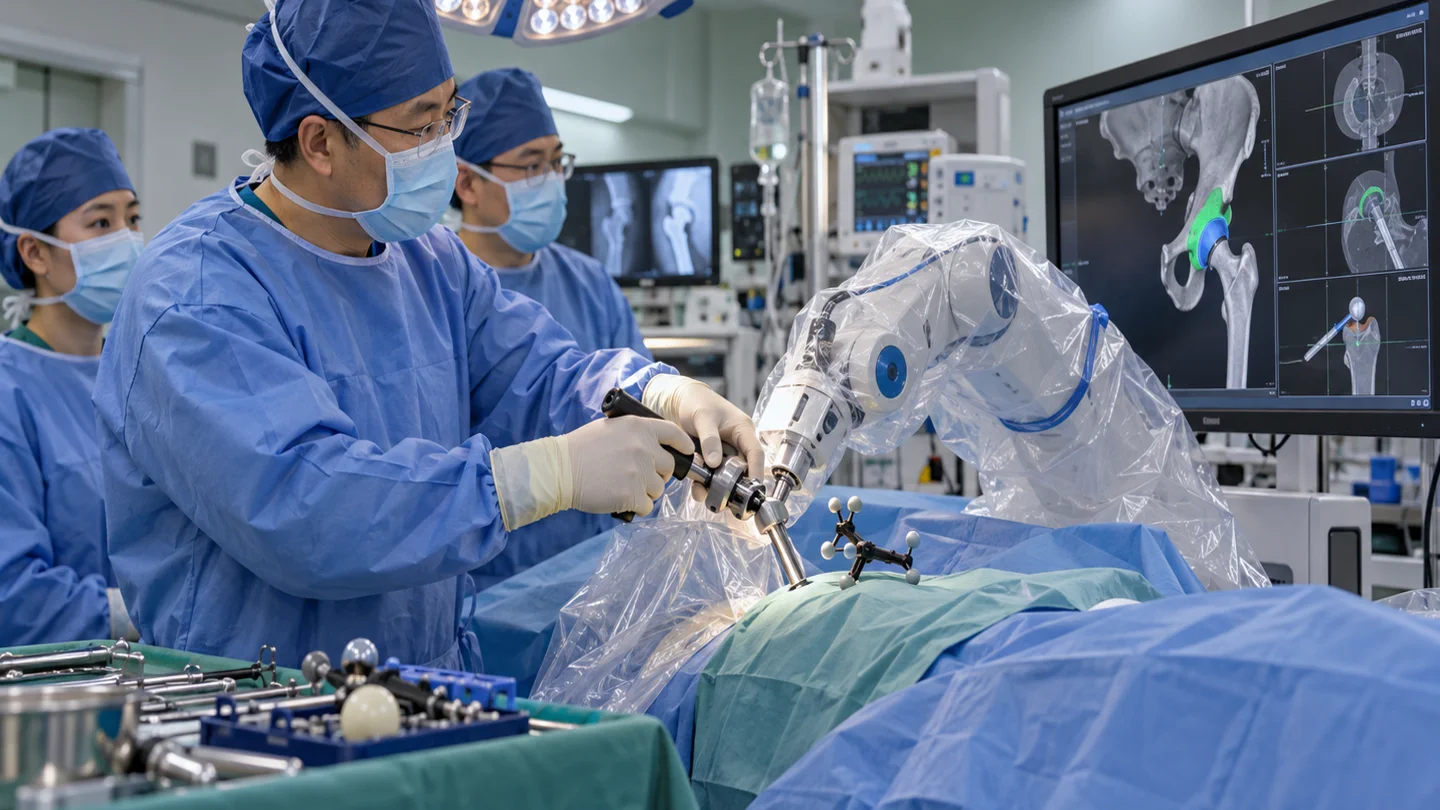
How the technology is used
Before surgery, the system creates a digital reconstruction from the required images. The surgeon plans cup orientation, component size, leg length and offset. In theatre, small tracking pins or reference arrays may be attached to bone so the navigation system can register the real anatomy.
The surgeon then performs the usual hip replacement through the selected approach. The robotic or navigated instruments help compare execution with the plan while the surgeon prepares the socket and femur, positions trial components and checks stability and movement.
What if the plan and anatomy differ?
CT and software cannot show every tissue condition encountered at surgery. The surgeon may change component size, position, fixation or even continue conventionally when this is safer. Ask whether the team is experienced in both robotic and standard workflows.
Recovery after robotic-assisted replacement
The biological recovery is still that of total hip replacement. Pain control, wound care, clot prevention, walking aids, rehabilitation and precautions are based on the operation and patient—not the presence of a robot.

Risks and technology-specific questions
General hip-replacement risks include infection, blood clots, bleeding, dislocation, fracture, nerve or blood-vessel injury, leg-length difference, persistent pain, wear and loosening. Robotic workflows can add pin-site fracture or infection risk, CT radiation, registration error, equipment delay and conversion to conventional instruments.
Ask for outcomes from the treating surgeon’s own practice, not only manufacturer claims. A technically accurate plan still cannot guarantee a particular recovery speed or implant lifespan.
Chest pain, breathlessness, increasing calf swelling, fever, wound drainage, severe new hip pain or inability to bear weight requires urgent medical assessment.