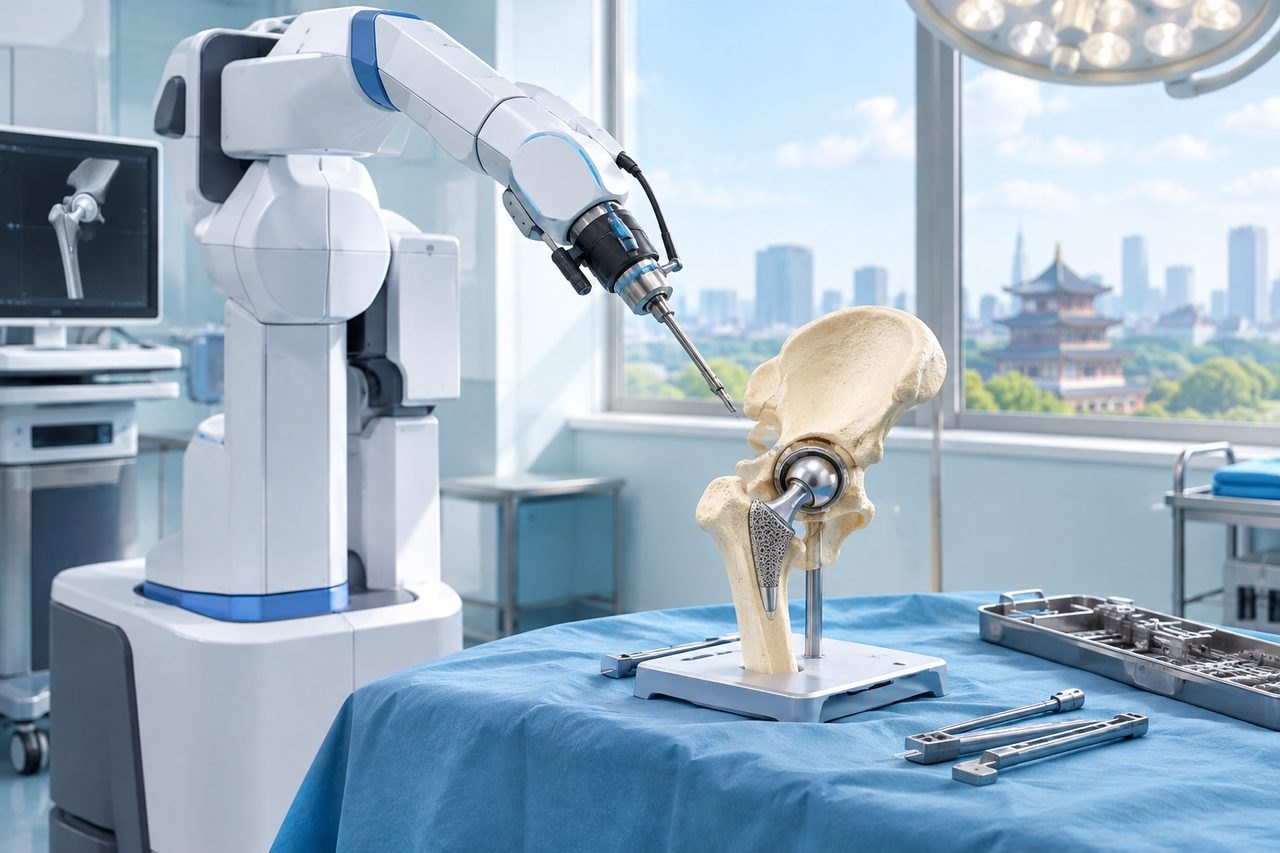
What Robotic Assistance Actually Adds to a Hip Replacement
A hip replacement removes the damaged joint surfaces and replaces them with prosthetic components. Robotic assistance is a tool used within that operation, not a different operation. The system helps the surgeon plan component position and, depending on the platform, can guide or constrain instrument movement during bone preparation. The surgical decision-making, the approach, the soft-tissue handling and the final responsibility stay with the surgeon.
This distinction matters when you read marketing material. A hospital may advertise robotic hip replacement as a service line, but the relevant question is whether the technology is being applied to your specific hip problem. Robotic assistance does not by itself establish that you are a candidate for hip replacement, that a particular implant is appropriate, or that your outcome will differ from a well-performed conventional procedure. Those are clinical judgements the treating team must make after reviewing your records and imaging.
The source material for this article, the American Academy of Orthopaedic Surgeons patient information page on robotic-assisted joint replacement, describes the technology as an assistive tool. It does not claim that robotic assistance produces better outcomes for every patient, and it does not establish which platforms are available in China. Treat any claim of superiority as something to ask the hospital to explain with reference to your case, not as a settled fact.
Platform, Implant and Surgeon Are Three Separate Questions
Patients often ask 'do you have robotic hip replacement?' as a single question. It is more useful to separate it into three. First, the platform: which robotic system does the hospital use for hips, and is it currently in service for this procedure? Second, the implant: does the robotic workflow require or favour a particular implant brand or design, and is that implant available in the size and configuration your anatomy needs? Third, the surgeon: does the surgeon who would operate on you use this platform regularly, and what is their experience with it?
These three questions can have different answers. A hospital may own a robotic platform but use it mainly for knee procedures. A surgeon may be experienced in hip replacement but new to a particular robotic system. An implant that works well with one platform may not be the implant the surgeon would otherwise choose for you. None of these answers can be assumed from a hospital's general reputation or from a department name.
When you contact a hospital or a coordination service, ask for the answers in writing where possible. If the reply is that the hospital 'offers robotic hip replacement', ask a follow-up: for my diagnosis and imaging, would the surgeon plan to use robotic assistance, and if so, which platform and which implant system? A vague answer is not necessarily a refusal; it may mean your records have not yet been reviewed. But it is a signal that you should not treat the technology as confirmed for your case until a clinician has looked at your file.
What Robotic Assistance Does Not Tell You About Cost
Robotic hip replacement can involve costs that a conventional hip replacement does not, but the structure of those costs is hospital-specific. Possible variables include the robotic platform fee or consumables, the implant chosen, the length of stay, the ward type, pre-operative imaging and any additional investigations the surgeon orders. Whether a robotic fee is a separate line, bundled into a surgical package, or absorbed into the overall charge is something only the named hospital can confirm in its written estimate.
This article does not quote prices, because no approved figures for robotic hip replacement in China are available here. Instead, the practical step is to ask the hospital's international office or billing department for a written estimate that states what is included, what is excluded, and what remains undecided until after clinical assessment. Ask specifically whether the robotic platform, the implant, imaging, inpatient stay, rehabilitation and follow-up visits are each inside or outside the quoted figure. If a component is described as 'to be confirmed', ask what information is missing and when it will be decided.
Coordination fees, if you use a service, are separate from hospital charges. Hospital consultations, tests, treatment, medicines and rooms are paid to the hospital or the relevant provider. Travel, accommodation and any companion or interpretation costs are separate again. A written estimate from the hospital is the only reliable basis for comparing one route with another, and it should be read alongside the hospital's own terms rather than treated as a final bill.
Rehabilitation Planning Is Part of the Technology Question
Robotic assistance changes some intra-operative steps, but it does not remove the need for post-operative rehabilitation. Hip replacement rehabilitation typically involves early mobilisation, weight-bearing instructions, exercises and a plan for the weeks after discharge. The specific protocol, the timing of milestones and the restrictions on movement depend on the surgical approach, the implant, your bone quality, your general health and the surgeon's judgement.
Because robotic-assisted surgery can involve different bone preparation or component positioning, the rehabilitation instructions may differ from a conventional hip replacement. Ask the treating team how your rehabilitation will be planned, who will supervise it, whether you will receive written instructions in a language you understand, and what follow-up is expected after you return home. If you plan to travel to China for surgery and then return to your home country, ask how the handover to a local physiotherapist or doctor will work. The receiving clinician will make their own assessment; the original team's plan is a starting point, not a binding instruction for every provider.
Do not treat any rehabilitation timeline you read online as a fixed schedule. Recovery varies between individuals, and the treating team's instructions take priority over general information. If you have questions about what you will be able to do and when, ask the surgeon or physiotherapist directly rather than relying on a brochure.
Records to Prepare Before Asking About Robotic Hip Replacement
A hospital cannot answer whether robotic assistance is relevant to your case without seeing your records. The useful starting set includes recent hip imaging, any previous hip surgery reports, a current medication list, relevant blood test results, and a clear statement of your main symptoms and functional limits. If you have had a previous hip replacement, include the operative note and the implant details if available. If you have other significant medical conditions, include the relevant specialist reports.
You do not need to send a complete medical archive at first contact. A brief summary with the key diagnosis, the main question and the available imaging is enough for an initial review. After that, the hospital or coordination team can tell you what else it needs. Do not send passport numbers, card details or a full archive through an initial enquiry form.
When your records are reviewed, ask the clinician to explain how robotic assistance would relate to your proposed operation, what alternatives exist, and what the limitations of the technology are for your anatomy. A records-based opinion can clarify whether you are a candidate for hip replacement and whether robotic assistance is likely to be used, but it does not replace an in-person assessment and does not guarantee hospital acceptance or a particular outcome.
Questions to Put to the Treating Hospital
The most useful preparation is a short list of questions you can send to the hospital's international office or ask during a consultation. Ask which robotic platform is used for hips, whether it is currently available for your procedure, and how the surgeon's experience with it is maintained. Ask whether the robotic workflow affects implant choice and whether the implant proposed for you is available in the required size. Ask for a written estimate that separates hospital charges from any coordination or travel costs, and ask what is included, excluded and still undecided.
On rehabilitation, ask who will supervise it, what written instructions you will receive, and how follow-up will be arranged after you leave China. Ask what warning signs should prompt you to seek urgent local care, and who to contact if a problem arises after you return home. These are practical questions that a hospital can answer before you travel, and the answers will help you decide whether the route is workable for you.
An initial enquiry with ChinaSpecialistCare is free and does not require buying a proxy consultation. You can start with a short summary of your diagnosis, your main question and the records you have. The team will check what is available, identify missing information and suggest a relevant next step. The hospital decides suitability, and no outcome is guaranteed. If your symptoms are worsening or you need urgent care, seek local medical attention first rather than delaying for an overseas enquiry.
Sources & scope of this guide
References and official service information relevant to this guide.
This is general planning information and has not been individually reviewed by a doctor. Medical decisions and personal treatment advice come from your treating clinicians.