Why a General Reply Is Not an Appointment
When you contact a hospital or an international office about robotic knee replacement, the first response often confirms only that the hospital offers knee surgery and invites you to send records. That message does not tell you who will see you, where, or in what capacity. For an overseas patient planning a long trip, those details decide whether the visit is worth making.
A confirmed appointment has three parts: a named department, a named campus, and a defined appointment type. The department matters because knee replacement sits within orthopedic surgery, and within a large hospital the joint-replacement work may be organised under a specific division or team. The campus matters because many Chinese tertiary hospitals run several sites, and the robotic program may be based at one of them. The appointment type matters because a surgical consultation, a registration slot with a general clinic, and a records review are different events with different preparation.
Robotic assistance supports joint-replacement planning, and suitability remains a surgeon-led decision. That is the clinical frame. The practical frame is administrative: you need to know which part of the hospital owns your case before you book flights.
The Three Questions That Turn a Reply Into a Booking
Ask these directly, and ask for the answers in writing so you can check them against your travel plans.
First: which department would assess me for robotic knee replacement, and is that the department that would perform the operation? In some hospitals the assessment clinic and the surgical team are the same unit; in others, patients are first seen in a general orthopedic clinic and then referred internally. You want to know which path applies to you.
Second: which campus? If the hospital has more than one site, confirm that the department, the imaging, the operating theatres and the ward are all at the same location, or ask how you would move between them.
Third: what type of appointment is this? A surgical consultation means a clinician reviews your knee, your imaging and your history, and discusses whether robotic assistance is appropriate for your alignment and anatomy. A registration slot may only secure a place in a clinic queue. A records-based opinion is a separate step again, and it does not by itself create a surgical booking.
If the reply cannot answer these three questions, treat it as an enquiry acknowledgement rather than an appointment.
Why Robotic Assistance Is Being Proposed for Your Knee
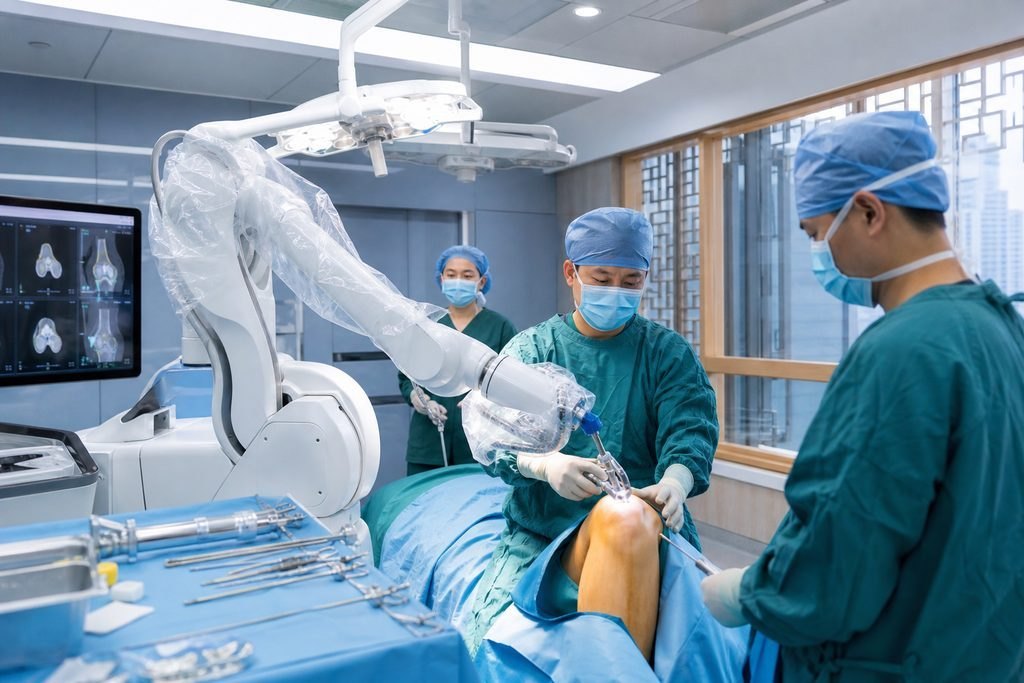
Robotic assistance is a tool used within joint-replacement surgery, not a different operation. The surgeon still plans and performs the procedure; the technology supports planning and execution. Whether it is appropriate depends on your knee alignment, the condition of the joint, previous surgery, and the surgeon's assessment.
Ask why robotic assistance is being proposed in your case. A useful answer explains what the surgeon expects the technology to help with, given your specific alignment and anatomy. It should also tell you what the alternative would be if robotic assistance were not used, and whether the same surgeon would perform either version.
Ask which platform is proposed. Robotic joint-replacement systems differ in how they plan and execute the procedure, and hospitals may work with one system rather than several. If a specific platform is central to your decision, confirm that it is the one in use at the campus you are attending.
Ask whether additional imaging is needed before the operation, and if so, where and when it would be done. Some robotic workflows use planning images; others rely on different data. Do not assume a particular scan is required. Ask what this hospital's workflow involves for your knee.
Finally, ask about the limits. Robotic assistance does not guarantee a better outcome, and no surgeon can promise a specific result. What you can ask for is an explanation of the proposed plan, the alternatives, and the risks the surgeon considers relevant to you.
What the Estimate Should Cover Before You Commit
Cost questions are easier to answer once you know what is being quoted. Ask the hospital, or the coordinator acting for you, for a written estimate that separates the hospital's charges from any coordination or travel costs.
Within the hospital's figure, ask what is included and what is not. Relevant items may include the surgeon's fee, the anaesthetist's fee, the implant, the use of robotic assistance, the ward or room, routine medication, imaging, physiotherapy and follow-up visits. Do not assume any of these are bundled. Ask the named provider how its written estimate is structured and which items remain undecided until after assessment.
Ask specifically how the robotic component is treated in the quote. Some hospitals present it as part of the procedure; others may list it differently. The only reliable answer is the one in your written estimate from that hospital.
Ask what would change the figure. Implant choice, the extent of the procedure, the length of stay and the ward type can all affect the final bill. Ask how a revision or an unexpected finding would be handled financially.
Ask how payment is made, to whom, and at what point. Hospital charges are paid to the hospital or the relevant provider; coordination fees are separate. Keep the two clearly distinguished in any document you receive.
If you are comparing hospitals, compare like with like. A figure that excludes the implant is not comparable with one that includes it. Ask each provider to state its inclusions and exclusions in the same terms.
Records to Send, and What They Let the Team Decide
The quality of the preliminary answer depends on what you send. For a knee assessment, useful records typically include recent imaging of the knee, any standing alignment views your clinician has ordered, operation notes from previous knee surgery, a list of current medications and allergies, and a short summary of your symptoms and how they limit you.
Send the reports and, where possible, the images themselves rather than only the written interpretation. A surgeon assessing alignment and planning a joint replacement needs to see the images, not just read about them.
Include a clear statement of your main question. Are you asking whether you are a candidate for robotic-assisted knee replacement, whether a previous operation needs revision, or whether surgery is needed at all? The answer will differ.
Do not send passport numbers, card details or a complete medical archive at first contact. A brief summary and the key knee records are enough to establish whether a specialist appointment is the right next step.
Ask what is missing. If the team says a particular record would help, that tells you the review is progressing rather than sitting in a queue.
How Postoperative Reviews Would Be Arranged
This is the question overseas patients ask last and should ask first. Knee replacement involves a period of recovery, wound review, physiotherapy and follow-up assessment. If you plan to return home soon after surgery, you need to know how those reviews would work.
Ask the surgical team what follow-up it expects, and how much of it must happen in China. Ask whether some reviews can be done remotely or with a clinician in your home country, and what information that clinician would need. The receiving clinician or physiotherapist makes their own judgement about your care; they are not bound by the original team's plan.
Ask what written information you would receive before discharge: operation notes, implant details, medication instructions and any restrictions. You will need these for your own doctor at home.
Ask about the practical side of returning home. Fitness to travel after surgery is a clinical decision, not a scheduling one. Ask the treating team when they would assess your fitness to fly and what they would take into account. Do not rely on a fixed number of days.
Ask who to contact if a problem arises after you leave China, and how that contact would work across time zones.
Getting a Specific Answer
If you would like help confirming the department, campus and appointment type for robotic knee replacement in China, ChinaSpecialistCare can request a specialist appointment and assist with records and interpretation. The hospital decides suitability, and an initial enquiry is free.
Send a short summary of your knee problem, your main question and the key records. Ask for the three confirmations in writing: department, campus and appointment type. That is the point at which a reply becomes something you can plan around.
For the procedure itself, see the robotic knee replacement reference page.
Sources & scope of this guide
References and official service information relevant to this guide.
This is general planning information and has not been individually reviewed by a doctor. Medical decisions and personal treatment advice come from your treating clinicians.