
What robotic radical prostatectomy actually involves
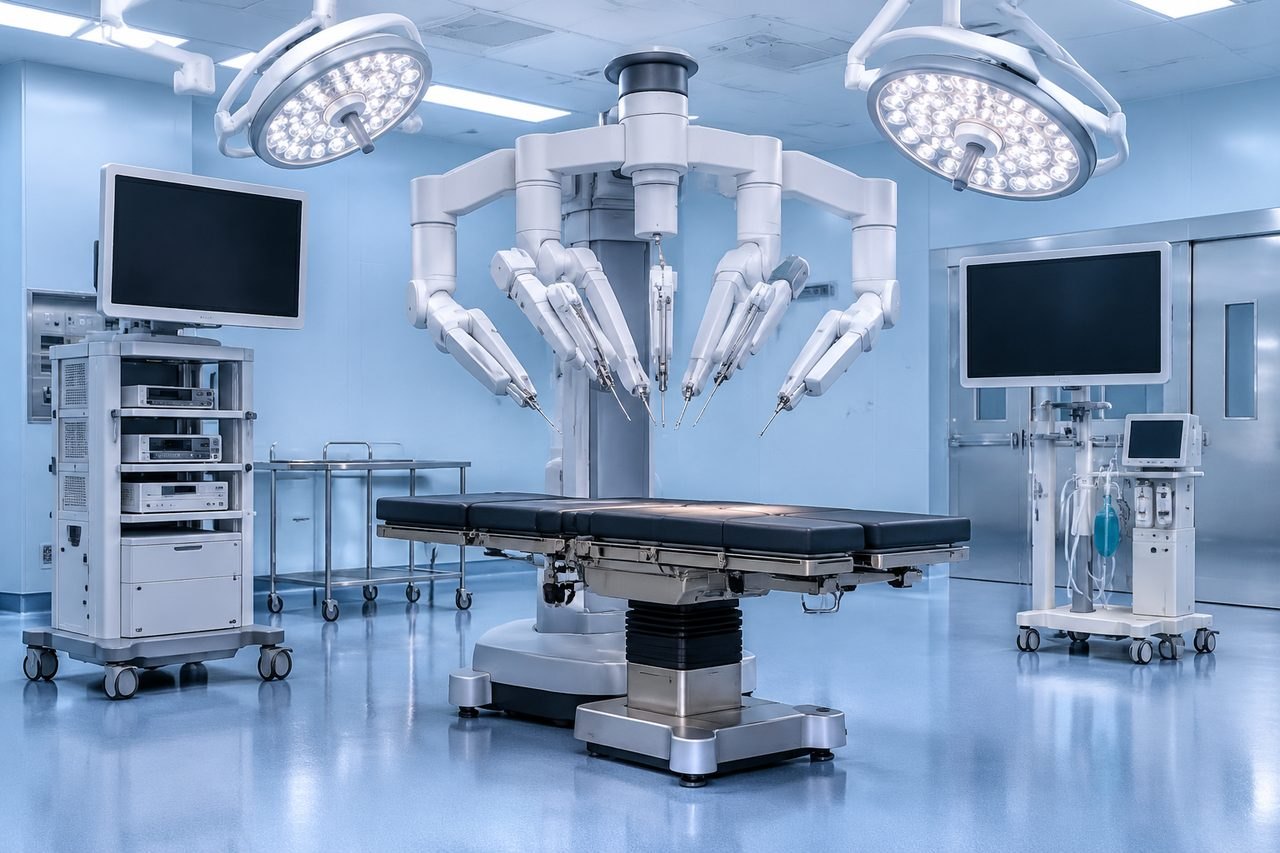
Robotic radical prostatectomy is a operation to remove the whole prostate gland, usually together with the seminal vesicles, in men with prostate cancer that is considered confined to the prostate or suitable for surgery as part of a wider plan. The surgeon sits at a console and controls articulated instruments through small abdominal ports, rather than standing at the operating table with open instruments. The prostate is still removed; the robot changes how the surgeon's hands work inside the pelvis, not the fundamental cancer operation.
That distinction matters when you read hospital descriptions. A centre may offer open, laparoscopic and robot-assisted approaches, and the choice depends on the cancer's risk group, the prostate's size and shape, previous pelvic surgery, your other medical conditions and the surgeon's own experience. The da Vinci system is the best-known robotic platform, but hospitals may use different systems. Ask which platform the team would use for you and why that approach is being proposed for your case.
Two technical questions are worth understanding before any conversation. First, whether the team plans nerve-sparing surgery and on which side; this is a decision about trying to preserve erectile function balanced against clearing cancer, and it depends on imaging and biopsy findings. Second, how the team manages the pelvic lymph nodes, because some men need lymph node removal or sampling as part of staging. Neither answer can be settled from a website, but knowing the terms helps you follow the consultation.
The records that make a remote decision possible
A Chinese urology team cannot judge suitability from a diagnosis alone. The most useful first package is the pathology report from your prostate biopsy, including Gleason score or grade group and the number of cores involved; your PSA values over time; any MRI report and images; a list of treatments so far; and a summary of your general health, especially heart, lung and clotting problems and current medicines. If you have had a previous prostate procedure or pelvic surgery, say so.
Pathology slides and imaging discs are often more valuable than typed summaries, because the receiving team may want to re-read them. Ask your local hospital what it can release and in what format. If some documents are missing, do not assume you must delay everything; send what you have, state clearly what is absent, and let the team tell you which items it needs before it can give a view. That is more efficient than waiting for a perfect file.
Language is a practical issue. Reports in English are easier for many international departments, but a Chinese team may still want a translated summary of the key findings. Keep the original documents and a translated index together. Do not send passport numbers, payment details or your entire medical archive in a first message; a short summary with the key reports is enough to start.
Questions that reveal how the team thinks
The quality of a remote opinion depends heavily on the questions you ask. A useful first question is whether the team agrees the cancer is suitable for surgery at all, and what it would recommend if you chose radiotherapy or active surveillance instead. Prostate cancer treatment involves real trade-offs between cancer control, urinary continence and sexual function, and a team that explains those trade-offs is easier to assess than one that only lists robot features.
Ask who would perform the operation and how the team handles cases like yours, without expecting a guaranteed named surgeon. Ask what pre-operative tests the hospital requires, whether it wants its own PSA or imaging, and how it would confirm the cancer stage before surgery. Ask about the expected hospital stay and what support you would need afterwards, but treat any answer as that hospital's plan for you rather than a fixed national standard.
Continence and erectile function deserve direct questions. Ask what the team does to preserve the nerves and pelvic floor, what rehabilitation or pelvic-floor training it recommends, and when it would review you after surgery. You are not asking for a promise; you are asking whether the team has a structured plan and will discuss realistic ranges rather than guarantees. Write the answers down, because comparing two opinions is much easier with notes.
Hospital route, ward type and who decides acceptance
In China, public tertiary hospitals and private international hospitals are both possible routes for overseas patients, and they differ in booking process, language support, room options and how fees are quoted. Neither route is automatically better. A public hospital may have a high-volume urology department, while a private international hospital may offer easier English communication and a different ward environment. The right choice depends on your cancer risk, your budget and how much support you want around the visit.
The hospital, not a coordinator, decides whether to accept you and which surgeon or team takes the case. A coordinator can help match your records to a suitable department, request an appointment and explain practical arrangements, but cannot promise acceptance, a particular surgeon or an outcome. Ask whether the quoted plan is for a standard ward or an international department, because the two can involve different processes and charges.
It is also reasonable to ask how many robotic prostatectomies the department performs and whether it has a structured pathway for overseas patients. Treat the answer as information to weigh, not proof of quality. If you are comparing hospitals, compare the same things: the proposed operation, the staging work-up, the ward, the language arrangements and what the written quote covers.
Costs: ask for a written scope, not a headline figure
Robotic prostatectomy costs in China are not a single published number. The hospital's charge depends on the procedure, the ward, the devices and materials used, the length of stay, any additional tests and the treating institution. Our coordination fees are separate from hospital fees, and travel, accommodation and interpretation are separate again. A useful estimate therefore starts with your records and a specific proposed plan, not with a generic price list.
When you receive a quote, ask what it includes and what it excludes in writing. Does it cover the surgeon's fee, anaesthesia, the robotic instruments, the hospital stay, pathology and follow-up visits? Are there items that would be billed separately if complications or extra days occur? These questions are not distrust; they are how you compare two hospitals on the same basis. Ask the named provider about its actual quote rather than relying on another patient's figure.
Payment arrangements also need clarifying. Hospital charges are paid to the hospital or the relevant provider, while coordination services are agreed separately. Ask how and when each payment is made, what currency is used and what documentation you receive. If a quote seems unusually low, check its scope before treating it as comparable.
Practical preparation and a realistic next step
Once a hospital has reviewed your records and indicated that surgery may be suitable, preparation becomes practical. Confirm the appointment date and what the hospital wants you to bring, including original pathology slides, imaging discs and a medicine list. Ask whether any tests need to be repeated in China and how long the pre-operative assessment is expected to take, understanding that the hospital will confirm this for your case. Arrange accommodation and an English-speaking companion if you need one, and plan for someone to help you during the first days after discharge.
Travel and recovery timing should come from the treating team, not from a general guide. Ask when it would be safe for you to fly and what follow-up it recommends before you return home. If you develop worsening symptoms before travelling, seek local medical care rather than proceeding with plans.
A sensible next step is a short initial enquiry describing your diagnosis, the main question you want answered and the records you can send. Our team can check what is available, identify missing information and suggest a relevant next step; this is not a diagnosis or a promise of acceptance. A proxy consultation is optional and not a prerequisite for every appointment or operation. The hospital remains responsible for assessing suitability and confirming the plan.
Sources & scope of this guide
References and official service information relevant to this guide.
- Robotic prostatectomy procedure reference
- https://uroweb.org/guidelines/prostate-cancer
- https://www.auanet.org/guidelines-and-quality/guidelines/clinically-localized-prostate-cancer
This is general planning information and has not been individually reviewed by a doctor. Medical decisions and personal treatment advice come from your treating clinicians.