What a records-based review can and cannot settle
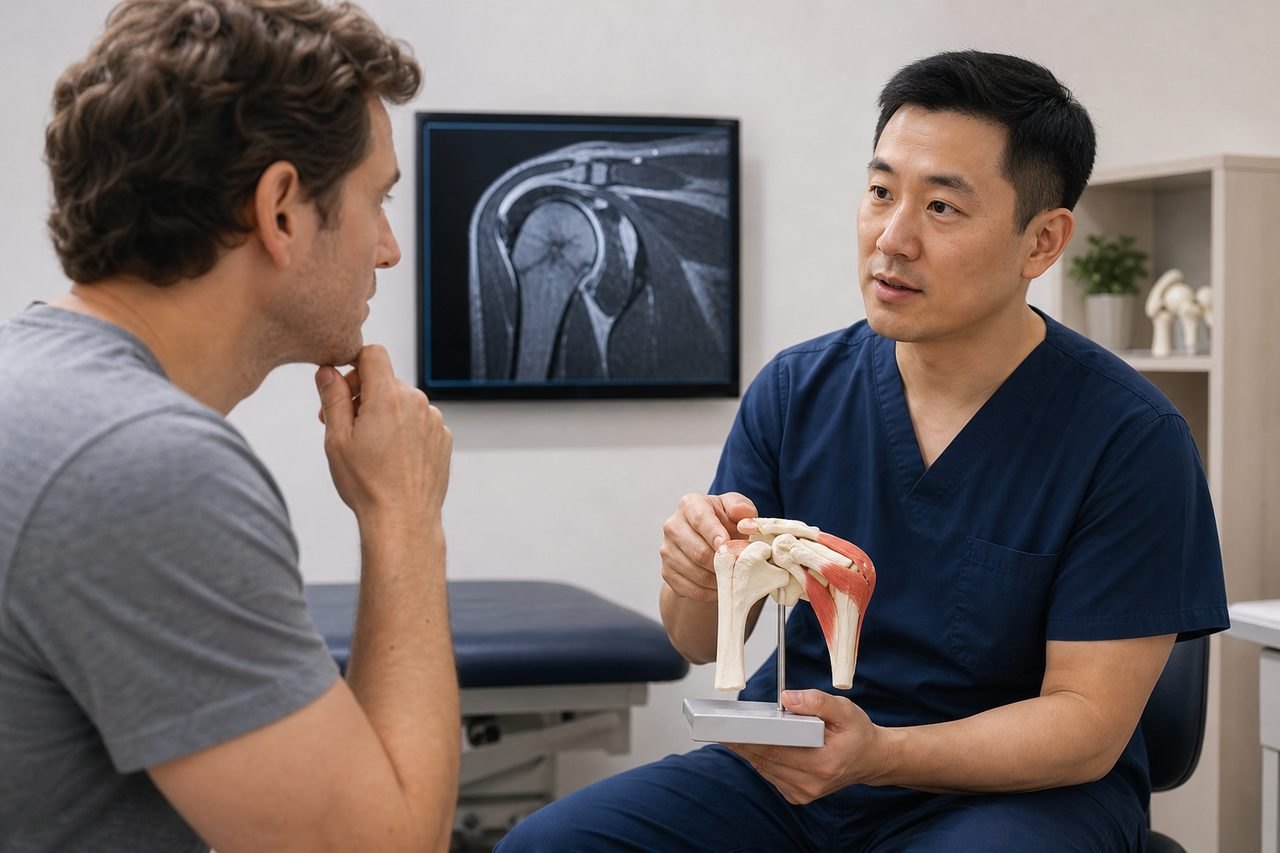
A rotator cuff repair reattaches a torn tendon to bone, and rehabilitation then protects the repair while movement and strength recover. Whether that operation is appropriate for you depends on the tear itself, the tendon quality, your shoulder function and your general health. A records-based review can clarify some of that before you travel, but it is not the same as an in-person assessment.
What records can reasonably clarify: which tendon is torn, how far the tear extends, whether the tendon has retracted, whether there is muscle change on imaging, what previous treatment you have had, and whether your symptoms match the imaging. A specialist can also see whether the file is complete enough to discuss options.
What remains uncertain remotely: how the shoulder actually moves under examination, how strong it is compared with the other side, whether the tear is repairable in the operating room, and which procedure the surgeon would choose. Imaging does not show everything, and a scan report alone does not confirm that surgery is needed or that a repair is possible. Those are clinical decisions for the treating team after they examine you and review the original images.
The imaging that carries the most weight
The single most useful item is usually the MRI of the affected shoulder, and specifically the images themselves rather than only the written report. A report describes what the radiologist saw, but a shoulder surgeon reviewing the actual sequences can assess tear size, tendon retraction, fatty change in the muscle and other features that influence whether a repair is feasible. If you only have the report, ask the imaging centre whether the images can be shared on disc or through a secure link.
If an MRI is not available, an ultrasound report and images can still contribute, particularly for confirming a full-thickness tear. X-rays are useful for a different reason: they show the bony anatomy, the position of the humeral head and any arthritis or other changes that affect planning. Plain films do not show the tendon, so they cannot replace MRI or ultrasound for assessing the tear.
For both MRI and ultrasound, the date matters. An older scan may not reflect the current state of the tendon, especially if your symptoms have changed. If the imaging is more than a few months old, ask the treating team whether they want it repeated in China or whether the existing study is adequate for an initial opinion. Do not arrange new imaging on your own before that question is answered.
- MRI images and report, with the date and the body side clearly labelled
- Ultrasound report and images if MRI is unavailable
- X-rays showing the shoulder joint and any prior hardware
- Any earlier MRI for comparison, if the tear has been followed over time
Clinical notes that change the surgical question
Imaging tells part of the story; the clinical record tells the rest. A specialist reviewing your file remotely will want to know how the shoulder behaves in daily life: what movements cause pain, whether you can raise the arm, whether you have weakness, how long the problem has lasted, and what treatment you have already tried. These details help distinguish a tear that might be managed without surgery from one where repair is being considered.
Previous operation notes are particularly valuable. If you have had shoulder surgery before, the operative report describes what was done, what was found and what hardware, if any, was used. That history changes the assessment of a new tear and the options available. Discharge summaries, injection records and physiotherapy notes also help, because they show the response to non-surgical treatment.
Your general health record matters too. Conditions such as diabetes, and any medication that affects healing or bleeding, are relevant to surgical planning. You do not need to assemble a complete archive before making contact. A short summary of the main problem, the date of the injury or onset, and the key documents is enough for an initial enquiry; the fuller file can follow once the review route is agreed.
- A short timeline: when symptoms started, what made them worse, what has helped
- Previous shoulder surgery or injection reports
- Physiotherapy notes and how the shoulder responded
- Relevant medical history and current medication list
How to organise the gaps without ordering tests yourself
Most files have gaps, and the useful move is to identify them rather than fill them blindly. If the MRI report exists but the images do not, that is a gap to close by requesting the images from the imaging centre. If the scan is old, that is a question for the treating team, not a reason to book a new scan. If the report is in another language, a plain translation of the key findings helps the reviewer, but the original report should travel with it.
It also helps to write down your own main question. Are you trying to find out whether the tear can be repaired, whether surgery is needed at all, or whether a previous repair has failed? The answer changes which records matter most and which specialist should review them. A focused question produces a more useful opinion than a general request to look at the shoulder.
When you send records, keep the file organised: one folder for imaging, one for operation and treatment notes, one for your summary. Label each document with its date and body side. This is practical, not clinical, but it reduces the chance that a key detail is missed. Do not send passport numbers, payment details or a complete medical archive in a first message; a brief summary is enough to start.
What the specialist must decide, not the file
Several decisions cannot be made from records alone. Whether the tendon is repairable depends on its quality and retraction, which the surgeon assesses from the images and confirms during surgery. Whether surgery is the right choice at all depends on your symptoms, your function and your goals, weighed against the risks and the rehabilitation commitment. Not every tear needs an operation, and not every tear can be repaired; some are managed without surgery, and some require a different procedure.
The rehabilitation plan is also a clinical decision. After a repair, protection of the tendon and a gradual return to movement and strength are part of recovery, but the specific restrictions, the timing of each stage and the exercises themselves are set by the treating surgeon and physiotherapist. They depend on the repair performed and on your individual progress. A records review cannot prescribe that plan, and it should not be treated as a substitute for the post-operative instructions you will receive.
This is why a records-based opinion is best understood as a step that clarifies options and prepares questions, not as a final answer. It can tell you whether travelling for an in-person assessment is worth considering and what the specialist will need to see. It cannot confirm that you are a candidate for repair, that a particular technique will be used, or that a specific outcome will follow. Those remain with the treating team after examination and imaging review.
A practical way to prepare the file
Start with a one-page summary: your main shoulder problem, when it began, what treatment you have had, and your main question. Attach the most recent MRI report and note whether the images are available. Add any previous shoulder operation notes and a current medication list. That package is enough for an initial review to identify what is missing.
If you are considering care in China, the next step is a free initial enquiry. The team checks the available diagnosis, records and your main question, identifies missing information and suggests the relevant next step. This is not a diagnosis or a promise of acceptance, and it does not commit you to a proxy consultation or any paid service. Hospital suitability and the treatment decision belong to the treating clinicians.
Keep your expectations aligned with what the records can support. A clear, well-organised file helps a specialist give a more useful opinion, but the examination and the original imaging review remain essential. If your shoulder symptoms are worsening, or you develop new weakness or injury, seek local medical assessment rather than waiting on an overseas review.
Sources & scope of this guide
References and official service information relevant to this guide.
This is general planning information and has not been individually reviewed by a doctor. Medical decisions and personal treatment advice come from your treating clinicians.