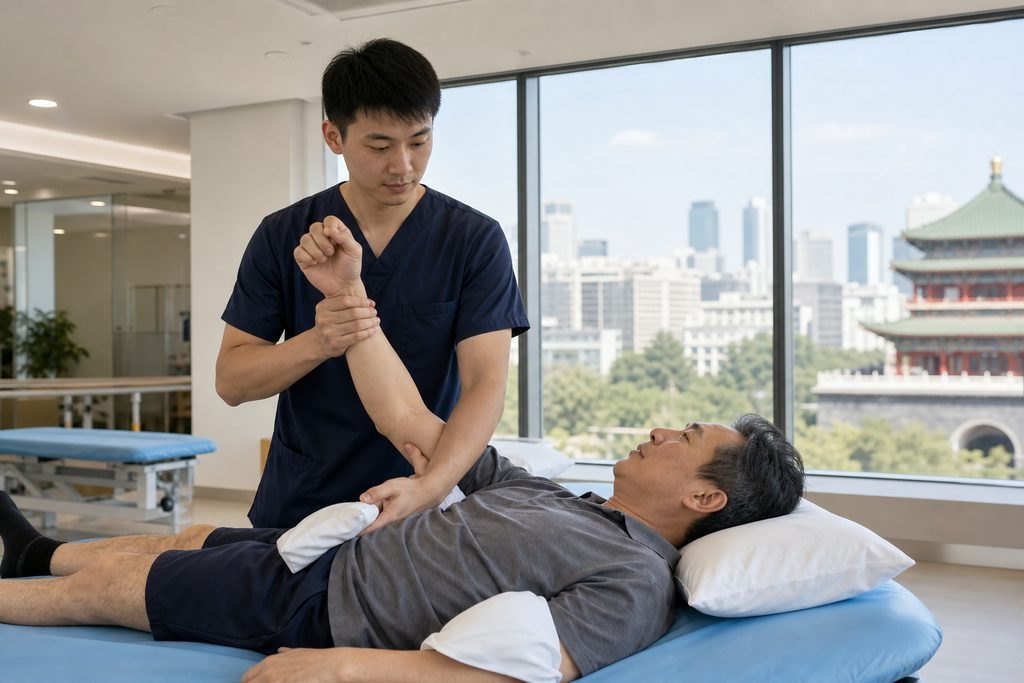
Why tear size and tendon findings decide the next step
A rotator cuff tear is not one condition. A small full-thickness tear in otherwise healthy tendon raises different questions from a large or massive tear with retraction, tendon thinning, fatty change in the muscle, or an earlier failed repair. Rotator cuff repair reattaches torn tendon to bone, and rehabilitation then protects the repair while movement and strength recover. That description is accurate but incomplete for decision-making, because not every tear needs surgery and not every tear is repairable.
This is why a generic records checklist is not enough. The surgeon needs to see the specific findings that determine whether a repair is technically possible, whether a different procedure is more appropriate, and what the postoperative plan would look like. Two patients with the same symptom and the same diagnosis label can have very different options.
If you are gathering records for an enquiry, the goal is to let a shoulder surgeon answer one question: given these tendon findings, what are the realistic options? That question cannot be answered from a symptom description alone.
The findings a shoulder surgeon actually reads
When a surgeon reviews a rotator cuff case, the imaging report is a starting point, not the whole picture. The useful details include the size of the tear, which tendon or tendons are involved, how far the torn edge has retracted, and the condition of the tendon tissue itself. Tendon quality matters because a repair depends on having something to reattach to bone.
Muscle changes also matter. When a cuff muscle has been torn for a long time, the muscle can change in ways that affect whether a repair will function well even if it is technically possible. The imaging report may describe this, or the surgeon may need to look at the images directly rather than rely on the written report.
Your examination findings belong in the same review. Range of motion, strength testing, and how long symptoms have been present all shape the recommendation. A surgeon reading only a radiology report is working with less information than one who also has your clinical examination.
This is also where previous shoulder therapy becomes relevant. If you have already had physiotherapy, injections, or an earlier operation, the response to that treatment is part of the decision. A tear that has not improved with appropriate non-operative care raises different questions from one that has never been treated.
Repairability is a clinical judgement, not a report line
Patients often ask whether their tear is repairable as if it were a yes-or-no fact printed on an MRI report. In practice, repairability is a judgement the treating surgeon makes after reviewing the imaging, the tendon and muscle findings, your examination, your age and activity goals, and your general health. Different surgeons may weigh these factors differently.
That means a remote review can give you a considered opinion about what is likely possible, but it cannot substitute for the assessment that happens when a surgeon examines you and sees the images at full resolution. A records-based opinion is useful for planning and for deciding whether travelling for an in-person assessment makes sense. It does not establish final eligibility for any particular operation.
It also means you should expect the surgeon to discuss alternatives, not only repair. Depending on the findings, options may include continued non-operative management, a different type of procedure, or a discussion about what a repair can and cannot achieve given the state of the tendon. The treating clinician decides suitability, and that decision belongs in a conversation with you, not in an article.
What to prepare before asking a China shoulder surgeon to review your case
The quality of a records-based review depends on what you send. A short summary of your symptoms and history is enough for an initial enquiry. If you then want a clinical opinion, the useful documents are the ones a shoulder surgeon would read in clinic.
Prepare the actual imaging, not only the written report. MRI or ultrasound images on disc or via a secure link let the surgeon assess tear size, retraction, and tendon quality directly. The radiology report is helpful context but is not a substitute. If you have had more than one scan, include the earlier one so the surgeon can see whether findings have changed.
Include your clinical examination findings if you have them, along with a note of previous treatments: physiotherapy, injections, and any earlier shoulder surgery with the operative report if available. A short list of your current medications and relevant medical conditions helps the surgeon consider whether surgery is appropriate for you at all.
You do not need to send a complete medical archive to start. A brief summary by the enquiry form, email, or WhatsApp is enough for an initial review, and the team can explain how to share records afterwards. Avoid sending passport numbers or payment details at this stage.
- Imaging files, not only the written radiology report, including any earlier scan for comparison.
- Examination findings: range of motion, strength, and how long symptoms have been present.
- Previous treatments: physiotherapy, injections, and any earlier shoulder operation with its report.
- A short medication and medical-history summary relevant to surgical suitability.
- Your main question, stated plainly, so the review answers the decision you actually face.
Questions that turn a report into a decision
When you speak with a surgeon, the useful questions are the ones that connect the findings to your options. Ask which tendon is torn and how the surgeon would describe the tear size and retraction. Ask whether the tendon quality and muscle findings support a repair, and what the alternatives would be if a repair is not advisable.
Ask how the recommended approach would affect your rehabilitation and your return to work or sport, and what the surgeon would need to confirm in person before finalising a plan. If you have had previous shoulder treatment, ask how that history changes the recommendation.
For care in China specifically, ask the hospital and surgeon directly about their own arrangements: how the review is conducted, what the written plan and quote include, and what would need to be confirmed at an in-person assessment. These are provider-specific questions, and the answers should come from the named hospital rather than from a general guide.
It is reasonable to ask whether a proxy consultation, in which a doctor takes your records to a hospital specialist while you remain at home, would add useful information in your case. It is optional, not a prerequisite for every appointment or operation, and an initial enquiry does not require it.
Where China fits, and what to confirm next
China has public tertiary hospitals and private international hospitals, and both are possible routes for shoulder assessment and treatment. Which one suits you depends on your case, your preferences, and what the hospital confirms it can offer. No article can promise a particular surgeon, a particular hospital's acceptance, or a clinical outcome.
The practical next step is to start with a free initial case review. The team checks the available diagnosis, records, and your main question, identifies missing information, and suggests a relevant next step. This is not a diagnosis and not a promise of acceptance. If you decide to proceed, specialist matching and appointment coordination can be arranged, with hospital consultation fees separate from any coordination fee.
Keep your own local care in place while you explore options. If your symptoms worsen, or you develop new weakness or injury, seek assessment locally rather than waiting on an overseas enquiry. The decision about whether a rotator cuff tear should be repaired, and how, belongs to you and the treating surgeon who examines you.
Sources & scope of this guide
References and official service information relevant to this guide.
This is general planning information and has not been individually reviewed by a doctor. Medical decisions and personal treatment advice come from your treating clinicians.