
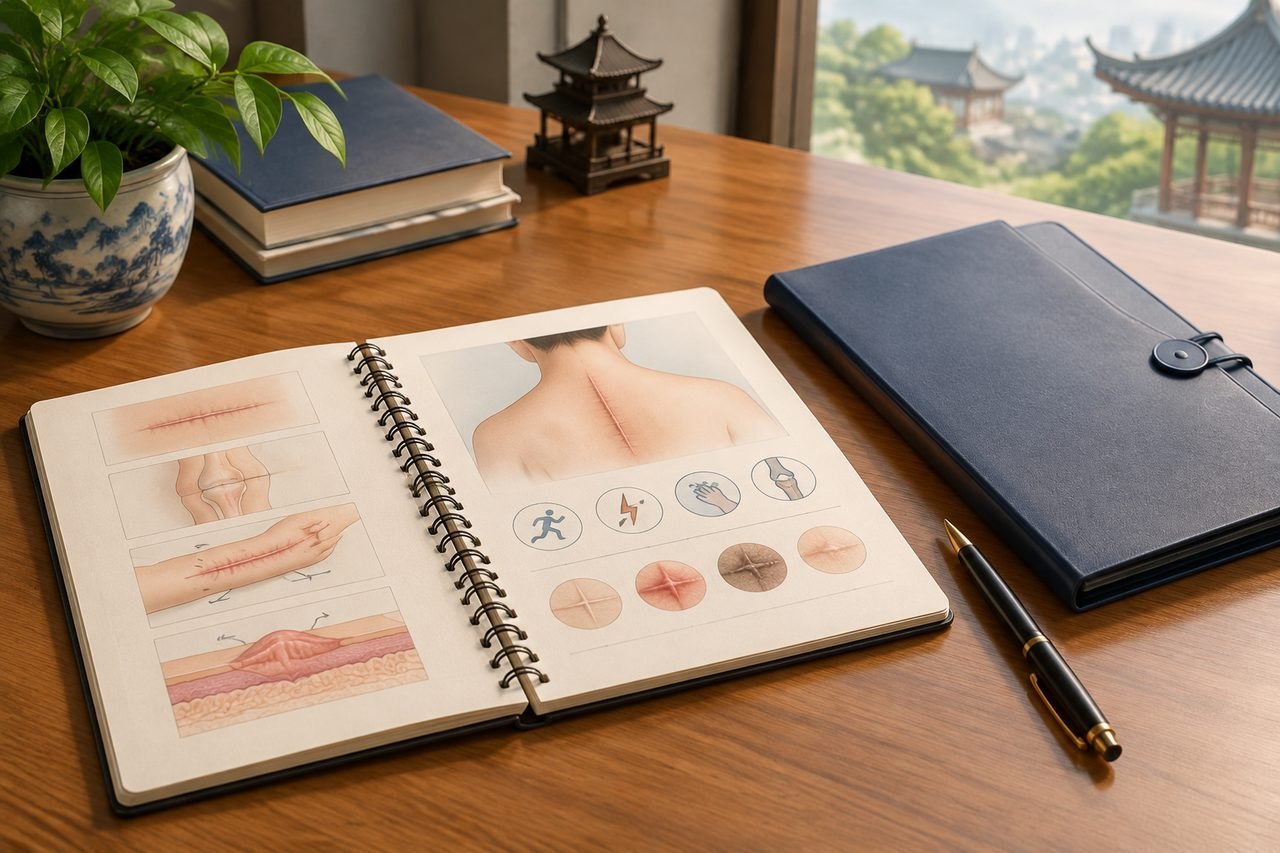
Why your prior treatment history changes the conversation
A scar that has never been treated and a scar that has already had surgery, laser therapy, steroid injections, silicone sheeting, or other interventions are different clinical situations. The same visible scar may call for different questions depending on what has already been tried, how the scar responded, and how much time has passed since the last intervention.
This is not about judging whether earlier care was right or wrong. It is about giving the clinician a clear timeline. A scar that improved after one treatment but then plateaued tells a different story from one that became raised, painful, or wider after a procedure. The pattern matters more than a single photograph.
When you contact a hospital or coordination service, the prior treatment history is often the missing piece. Without it, the clinician may see only the current appearance and cannot tell whether the scar is still maturing, whether a previous technique reached its limit, or whether a different approach might be considered. That gap is why the first practical task is not choosing a technique but assembling an accurate record of what has already happened.
You do not need a complete archive to start. A short summary of each prior treatment, the approximate date, the clinician or facility, and what changed afterwards is enough to begin a useful conversation. More detailed records can follow once the clinical team asks for them.
What to record about each previous scar treatment
For each prior intervention, aim to capture four things: what was done, when it was done, who did it, and what the result was. "What was done" should be as specific as you can make it. "Laser" is less useful than "fractional laser on the left cheek" if you know that detail. "Injection" is less useful than "steroid injection into the scar, three sessions" if that is accurate. If you do not know the exact technique, say so rather than guessing.
The timing matters because scar tissue changes over months. A scar treated six weeks ago is in a different phase from one treated three years ago. If you have had multiple treatments, a simple chronological list is easier for the clinician to read than a paragraph. Include any gaps between treatments and whether the scar was still changing when the next intervention started.
The result is often the hardest part to describe, but it is also the most useful. Did the scar become flatter, softer, lighter, less painful, or more raised? Did it widen? Did it return to its previous appearance after a period of improvement? Did you stop treatment because of the result, the cost, the discomfort, or another reason? These details help the clinician understand what the scar has already been through.
If you have photographs from before and after previous treatments, bring them. Consistent lighting and angle make comparison easier, but even informal photos can help. If you do not have images, a written description is still valuable. The goal is not a perfect file; it is a clear enough picture that the clinician can ask better follow-up questions.
Functional or cosmetic: why the goal changes the plan
Scar revision can be considered for functional reasons, cosmetic reasons, or both. A scar that restricts movement, causes pain, itches persistently, or interferes with daily activity raises different questions from a scar that is primarily a cosmetic concern. The same scar may be assessed differently depending on which problem matters most to you.
This distinction is not about one goal being more valid than the other. It is about what the clinician needs to know to discuss realistic options. If the main concern is tightness or discomfort, the assessment may focus on how the scar behaves during movement and whether release or reconstruction is relevant. If the main concern is appearance, the discussion may centre on colour, texture, width, and how the scar sits in relation to surrounding skin.
Many patients have both concerns, and that is useful to say clearly. A scar that is both raised and itchy, for example, may need a plan that addresses symptoms and appearance together. If you are not sure how to describe your goal, try completing these sentences: "The thing that bothers me most about this scar is..." and "If this scar could change in one way, I would want it to..." Those answers give the clinician a starting point.
It also helps to say what you are not asking for. If you understand that a scar cannot be erased and you are seeking improvement rather than removal, say so. That prevents the conversation from being about an unrealistic expectation and keeps it focused on what may actually be achievable.
Questions about staging, techniques, and what prior treatment rules out
Scar revision is not a single procedure. It may involve surgical excision and re-suturing, laser therapy, steroid or other injections, silicone-based products, pressure therapy, or a combination. Which of these is considered depends on the scar type, its location, how long it has been present, and how it has responded to previous care.
A key question to ask is whether prior treatment affects what can be offered now. In some situations, a scar that has already had multiple interventions may need a period of observation before further treatment is considered. In others, the previous technique may inform which alternative is worth discussing. The clinician is the right person to explain whether earlier treatment changes the current options, and why.
Another question is how many stages are anticipated. Some scars may be addressed in one session; others may involve a planned sequence with intervals for healing and review. The number of stages is not a fixed rule, and it depends on the individual scar and the technique chosen. Ask what the proposed plan looks like, what each stage is intended to achieve, and how the decision to continue or adjust is made.
It is also reasonable to ask what the clinician would need to see before confirming a plan. That might include a recent photograph, a record of prior treatments, or an in-person assessment. If a photograph is not enough to make a decision, that is useful to know before you travel. The hospital decides suitability, and a remote review does not guarantee that a procedure will be offered.
What to confirm about reviews, aftercare, and home instructions
Scar revision often involves care after the procedure, and the details of that care should be confirmed with the treating team rather than assumed. Ask what the review schedule looks like, who provides the reviews, and whether they can be done locally or need to be at the treating hospital. If you are travelling from another country, this is a practical question that affects how you plan your stay.
Aftercare may include wound care, sun protection, silicone products, massage, or activity restrictions. The specific instructions depend on the technique used and the individual scar. Ask for written instructions before you leave the hospital, and ask what changes would prompt you to contact the team. If you are unsure whether a symptom is expected or concerning, that is a question for the clinical team, not something to manage alone.
Home care instructions are not universal. A plan that suits one scar may not suit another. Ask whether the instructions you receive are specific to your procedure and your scar, and whether anything should be adjusted if your healing follows a different course. If you have a local clinician at home, ask whether the treating team is willing to share information with them.
It is also worth asking what happens if the scar does not respond as hoped. Scar revision aims to improve appearance or symptoms, not to erase a scar. Knowing in advance how the team reviews progress and what options might be discussed if the result is not what you expected helps you make a more informed decision.
Preparing your enquiry and the next step
When you are ready to ask about scar revision in China, start with a short summary rather than a full medical archive. Include the scar's location, how long it has been present, what prior treatments you have had, and what you most want to change. Mention whether your main concern is functional, cosmetic, or both. Add any relevant diagnosis or condition that affects healing, such as a history of keloids or a skin condition, if you have been told this.
You can share this summary by the enquiry form, email, or WhatsApp. After first contact, the team can explain how to send photographs or records if they are needed. You do not need to buy a proxy consultation to make an initial enquiry. A free initial case review checks the available information, identifies what is missing, and suggests a relevant next step. It is not a diagnosis or a promise of acceptance.
If your scar is related to a wound that has not healed, or if you have new pain, discharge, fever, or a change in the scar that concerns you, seek local medical assessment before planning travel. An overseas enquiry should not delay necessary care.
The practical next step is to write your prior treatment summary and send it with your main question. That gives the clinical team the information they need to tell you whether an in-person assessment is worth arranging, what records to bring, and what to expect from the first consultation.
Sources & scope of this guide
References and official service information relevant to this guide.
This is general planning information and has not been individually reviewed by a doctor. Medical decisions and personal treatment advice come from your treating clinicians.