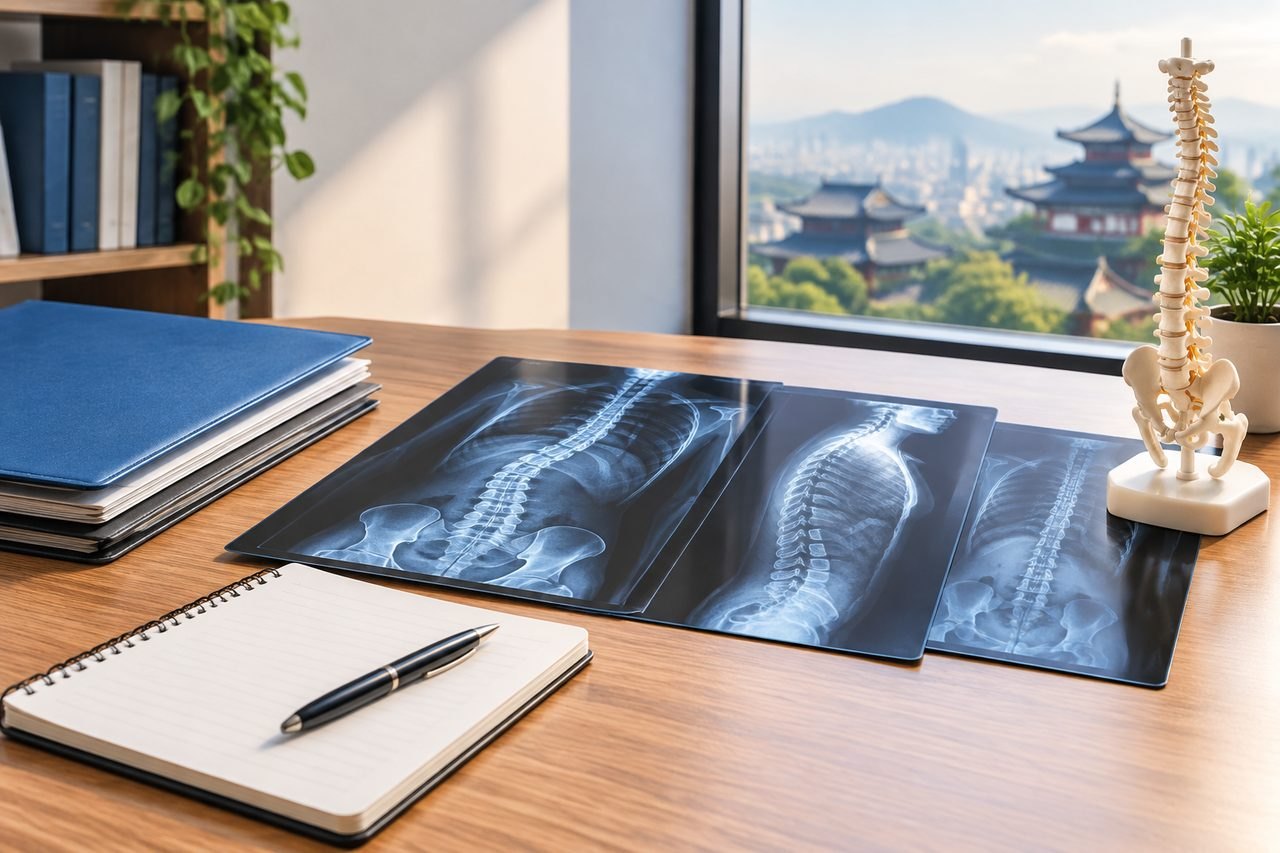
Why curve records come before any surgical discussion
When you ask a hospital in China about scoliosis surgery, the first useful step is not choosing a ward or a date. It is giving the clinical team a clear picture of your curve. Scoliosis is a three-dimensional change in the spine, and the way it is measured and tracked over time shapes every later decision. A single number does not tell the whole story, but a series of measurements does help a specialist understand whether the curve is stable, changing, or already causing problems that might justify an operation.
This matters because many adults with scoliosis do not require surgery at all. The NHS notes that an operation is considered according to symptoms, other options and individual assessment. That sentence is important for overseas patients: surgery is not automatic, and a curve measurement alone does not make you a candidate. The records help the clinician decide whether surgery is even on the table, and if so, what part of the spine might be involved.
For a patient travelling from another country, records also reduce the risk of wasted trips. If the imaging is incomplete or the measurements are unclear, the specialist may only be able to give a provisional view. A well-organised record set lets the conversation move from 'we need more information' to 'here is what we can consider'.
Which curve and balance measurements should you ask about
You do not need to become a radiologist, but you should know which measurements the treating team will want to see. A starting point is the Cobb angle, which estimates how much a curve bends on a standing X-ray. Specialists also look at whether the curve is in the thoracic, lumbar or thoracolumbar region, and whether there is more than one curve. These details change the surgical plan because different regions of the spine carry different risks and different effects on balance.
Balance is another key area. A surgeon will want to know how your head sits over your pelvis, whether your shoulders are level, and how your trunk shifts when you stand. These are not cosmetic details. They affect how a correction is planned and what the patient can expect in terms of posture and function. If your records only include a single X-ray report without standing balance views, the clinical picture is incomplete.
Growth stage matters if the patient is still growing. In a growing child or adolescent, the remaining growth can change how a curve behaves and how a surgeon times an operation. For adults, growth is no longer a factor, but the history of when the curve was first noticed and how it changed over time still helps. Ask the hospital whether they need previous imaging, not just the most recent scan.
A practical question to send with your records is: 'Which curve measurements and balance views do you need for a surgical opinion?' This invites the team to specify their requirements rather than you guessing. It also gives you a clear list to request from your local radiology department.
What the proposed surgical levels tell you about scope
If surgery is considered, the next question is which levels of the spine would be included. This is often described as the fusion or instrumentation levels. The number of levels affects the size of the operation, the amount of movement that may be reduced, and the rehabilitation that follows. A short fusion for a single curve is a different undertaking from a long fusion that crosses the thoracic and lumbar spine.
You should ask the clinical team to explain, in writing if possible, which levels they propose and why. Ask whether the plan is to correct the curve, to stop it progressing, or to address specific symptoms such as pain or breathing difficulty. These are different goals, and they lead to different surgical scopes. The answer also helps you understand what the operation can and cannot achieve. No surgeon can promise a perfectly straight spine or a pain-free future, and any discussion should include the limits of what surgery can do.
For an overseas patient, the level plan also affects practical planning. A longer fusion may mean a longer hospital stay and a different rehabilitation pathway. Ask how the proposed levels would influence your expected mobility after surgery and what support you might need. The treating team is the only source that can answer this for your individual case.
How rehabilitation and longer-term reviews would be coordinated
Scoliosis surgery is not finished when you leave the operating theatre. Rehabilitation and follow-up are part of the overall plan, and they need to be discussed before you travel. Ask the hospital how rehabilitation would be arranged: whether it starts in the hospital, whether you would need to stay in China for a period of therapy, and how your local physiotherapist would be involved after you return home.
The receiving clinician or physiotherapist in your home country makes their own assessment. They are not bound by the original team's plan, and they may adjust exercises or precautions based on your progress. This is normal. What matters is that you leave China with clear written instructions about restrictions, wound care, and when to seek review. Ask for these in a language you and your local clinician can read.
Longer-term reviews are another point to clarify. Some patients are asked to return for imaging or clinical checks at intervals; others are followed up remotely with their local doctor. Ask the hospital what they recommend for your situation and how they would communicate with your local team. Do not assume a fixed schedule. The frequency of reviews depends on your recovery, your symptoms, and the treating team's judgement.
If you are considering care in China, you can review the scoliosis correction procedure page for an overview of what the service involves. That page is a starting point, not a substitute for an individual clinical assessment.
Preparing your records for a China specialist review
A useful record set for a scoliosis surgery enquiry typically includes your most recent standing X-rays, any previous X-rays that show change over time, MRI or CT scans if they have been done, and the written radiology reports. If you have seen a local specialist, a short clinical summary is helpful. You do not need to send a complete archive at the first contact. A brief summary of your diagnosis, main symptoms, and question is enough to start.
When you share records, include the date of each image and the name of the hospital where it was taken. This helps the reviewer understand the timeline. If your records are in a language other than English or Chinese, ask whether a translation is needed. Do not send passport numbers, payment details, or a full medical history through an initial enquiry form.
It is also useful to write down your main question. Are you asking whether surgery is appropriate, what the proposed levels would be, or how rehabilitation would work? A clear question helps the clinical team focus their review. You can send a short summary by the enquiry form, email, or WhatsApp, and the team will explain how to share records after first contact.
What remains to be confirmed by the treating hospital
No article can tell you whether you are a candidate for scoliosis surgery in China. That decision belongs to the treating hospital and licensed clinicians after they review your records and, where relevant, examine you. The hospital decides suitability. An initial enquiry does not establish eligibility, and a remote record review does not replace an in-person assessment.
You should also confirm practical details directly with the hospital: what their written quote includes, what tests they require before surgery, how long they recommend you stay in China, and how follow-up would be arranged. These are provider-specific questions. Do not rely on general assumptions about how Chinese hospitals work. Ask for the answer in writing so you can compare and plan.
If your symptoms are worsening, or if you have new weakness, numbness, or difficulty breathing, seek local medical care first. An overseas enquiry should not delay necessary assessment. Once your local situation is stable, you can explore whether a records-based opinion from a China specialist would be useful.
A free initial case review is available if you want help organising your records and identifying the next step. It is not a diagnosis or a promise of acceptance. You can start with a brief summary and ask which curve and balance measurements the hospital would need for your situation.
Sources & scope of this guide
References and official service information relevant to this guide.
This is general planning information and has not been individually reviewed by a doctor. Medical decisions and personal treatment advice come from your treating clinicians.