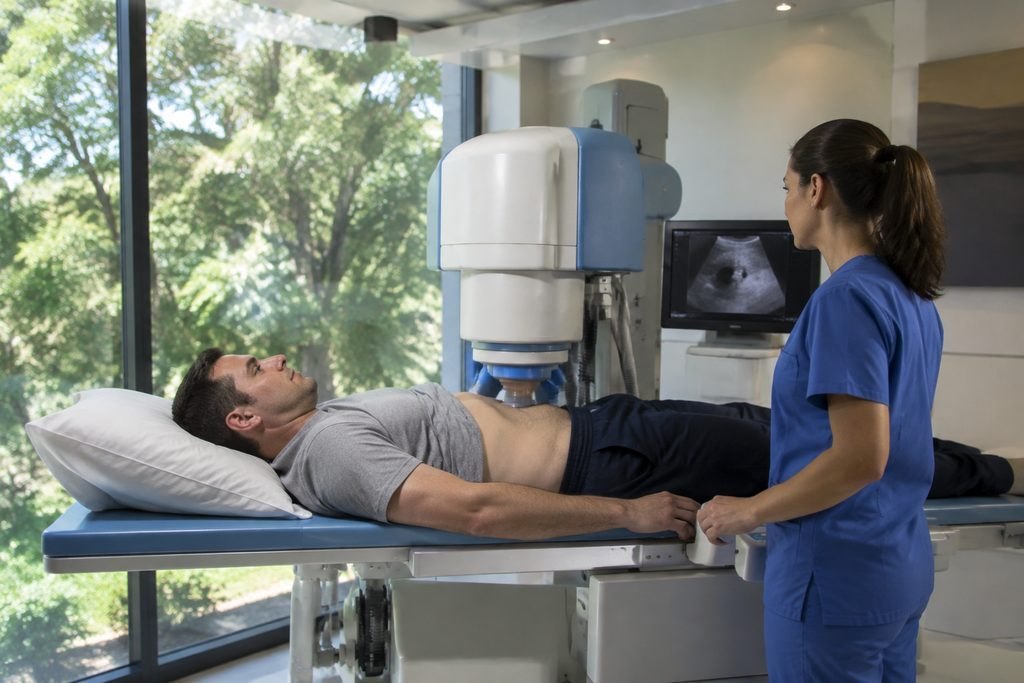
Why the first estimate may not be the final bill
A written estimate is a snapshot based on the information available at that point. For shock wave lithotripsy, the treating team needs to confirm that the stone is suitable for this approach, how many sessions are planned and whether follow-up imaging will be needed. If any of those answers change after you arrive, the scope of the estimate can change too.
This is not a warning about hidden charges. It is a practical point: an estimate built on incomplete records or an unconfirmed treatment plan cannot reliably cover every item. Your task is to find out which items are inside the quoted scope, which are provisional, and how the hospital authorises anything extra before it is provided.
The hospital, not a coordination service, decides suitability and final charges. A coordination team can help you ask the right questions and understand the answer, but it cannot approve clinical scope or guarantee that the estimate will not change.
Items that may sit outside the initial quote
The exact inclusions vary by hospital and by your case. Rather than assume a standard list, ask the named provider to mark each item as included, excluded or provisional in its written estimate. The categories below are the ones most likely to need that clarification.
Repeat treatment sessions. Shock-wave lithotripsy breaks stones into fragments, and more than one session may be needed. If the initial estimate covers one session, ask how a second or third session would be authorised and charged.
Imaging before, during and after treatment. The estimate may include the procedure but not the CT, X-ray or ultrasound used to locate the stone, confirm fragmentation or check for residual fragments. Ask which imaging is included and which is billed separately.
Anaesthesia or sedation. Some centres include anaesthetic support in the procedure fee; others list it separately. Ask who provides it and how it appears on the estimate.
Stents and their removal. If a stent is placed, the removal procedure may be a separate episode with its own charge. Ask whether stent removal is included in the quoted scope or treated as a new event.
Medicines, consumables and room category. Take-home medicines, pain relief and the type of ward or room can each affect the total. Ask the hospital to state the room category assumed in the estimate.
Coordination and interpretation fees. These are separate from hospital charges. If you use a coordination service, its fees are agreed with you directly and are not part of the hospital estimate.
Travel, accommodation and local transport. These are your own costs and are not part of any hospital quote.
Stone imaging, suitability and session scope
Before a hospital can give a meaningful estimate, it needs to know whether the stone is suitable for shock wave lithotripsy at all. Stone size, location, composition and your urinary tract anatomy all influence that decision. The treating urologist makes this call after reviewing your imaging and records.
Ask three specific questions. First: is this stone suitable for shock wave lithotripsy, or would another approach be more appropriate? Second: how many sessions are anticipated, and what would trigger an additional session? Third: who reviews the imaging after treatment to confirm whether fragments remain, and how is that review scheduled?
These questions matter for cost because each answer changes the scope. A single-session plan has a different estimate from a plan that anticipates follow-up imaging and possible repeat treatment. If the hospital cannot yet answer because your records are incomplete, that is useful information: it tells you the estimate is provisional.
Send the imaging you already have. A recent CT or ultrasound report, any previous stone treatment records and a list of your current medicines give the urologist a better basis for the estimate. You do not need to send a complete archive at first contact; a brief summary and the key imaging are enough to start.
What a records-based review can and cannot tell you
A records-based review can help a urologist assess whether your stone appears suitable for shock wave lithotripsy and give a provisional view on session scope. It cannot replace the in-person assessment that happens when you arrive, and it does not guarantee hospital acceptance or a final price.
If you want a specialist opinion before travelling, a proxy consultation is one option. It is optional, not a prerequisite for every appointment or procedure. A free initial case review is a separate, non-clinical step: our team checks the available diagnosis, records and your main question, identifies missing information and suggests the relevant next step. It is not a diagnosis or a promise of acceptance.
Be clear about the limits. A remote review cannot confirm stone composition, cannot perform the procedure and cannot authorise charges. It can help you decide whether to pursue treatment in China and what to ask the hospital next.
Your next step
Start with a short summary of your case and the imaging you already have. Ask the hospital, through its international office or a coordination service, for a line-item estimate that states which items are included, excluded or provisional. Ask specifically about repeat sessions, imaging, anaesthesia, stent removal, medicines and room category.
The reason to ask for line items rather than a single total is that a total hides the structure of the quote. If imaging appears as one line, you can ask whether it covers the scan used to locate the stone, the imaging used to confirm fragmentation, and any follow-up check. If anaesthesia appears as one line, you can ask who provides it and whether it is bundled into the procedure fee. A total that reads as one number gives you nothing to compare against a later version of the estimate.
Ask what triggers a revised estimate. A change in the number of planned sessions, a decision to place or remove a stent, a change of room category, or an extra imaging check can each move the scope. You do not need to predict these events. You need to know how the hospital tells you about them and what authorisation it requires before the extra item proceeds.
Put the authorisation question in writing. Ask: if the treating team recommends an additional session or an extra scan after I arrive, who informs me, how much notice do I get, and what do I need to sign or pay before that item goes ahead? A hospital that answers this clearly is giving you a process, not a promise that nothing will change. A vague answer is itself useful information about how the estimate will be managed.
Confirm who your billing point of contact is during your stay, and whether interpretation is available for financial discussions as well as clinical ones. This is a coordination question, not a clinical one, and it is reasonable to settle it before travel. If you do not speak Chinese, ask whether the same interpreter who helps with appointments can also help with the bill.
Keep a written record of what was agreed. If the hospital sends an updated estimate, compare it with the previous version and ask about any new line items. Store the estimate, the authorisation process and the contact details together, so that if a question arises during your stay you are not reconstructing the agreement from memory.
If you would like help preparing those questions or understanding the hospital's response, you can send a brief enquiry. An initial enquiry is free and does not commit you to a proxy consultation or any paid service. The hospital decides suitability and final charges; your job is to make sure you understand the scope before you authorise anything.
Sources & scope of this guide
References and official service information relevant to this guide.
This is general planning information and has not been individually reviewed by a doctor. Medical decisions and personal treatment advice come from your treating clinicians.