Home / Urology / Shock Wave Lithotripsy
Urology patient guide · 体外冲击波碎石术

Shock Wave Lithotripsy in China

Considering shock wave lithotripsy in China? Start with stone imaging, suitability and treatment-session scope. This guide helps you identify the relevant records, questions for the receiving team and the scope of an individual estimate before a visit is agreed.

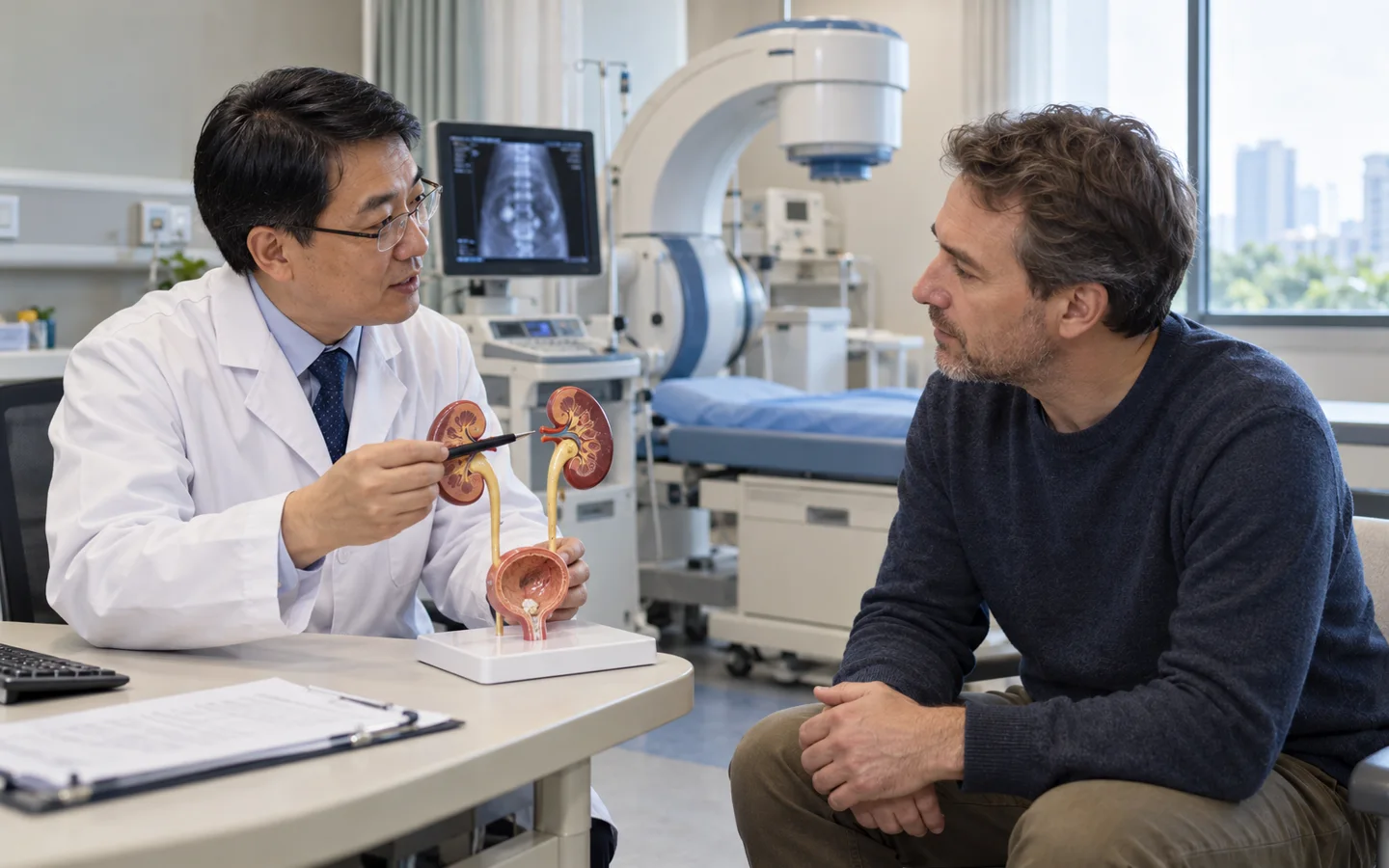
Chinese urologist explaining external shock wave kidney stone treatment to an international adult patient using a urinary tract model

Medical records & cost enquiry

Shock Wave Lithotripsy: assessment and cost questions

For Shock Wave Lithotripsy, the budget depends on the proposed care and the hospital. A useful estimate needs to distinguish:

  • Stone location, size and number
  • Number of proposed treatment sessions
  • Imaging and subsequent stone follow-up

Hospital medical fees, travel and our coordination services are separate. Any paid specialist review or coordination service is explained and agreed before you proceed.

Your next step

Start with your question

Tell us your diagnosis and what you need. Our free initial review checks the information and helps identify a suitable next step; it is not a specialist opinion or a hospital quotation.

Request a case-based estimate

Not ready to send records? Ask us first. Where hospital review is appropriate, we can help request an estimate. No travel commitment or mandatory proxy consultation.

Planning shock wave lithotripsy in ChinaHospital review · individual costs · visit and follow-up

Plan the visit around stone imaging, suitability and treatment-session scope. Agree the assessment route before travel.

Records for the shock wave lithotripsy review

Tell us what you already have: Noncontrast urinary CT in DICOM; Ultrasound or X-ray showing the stone; Urine culture and urinalysis. Start with a short summary; after first contact we explain which records the receiving team needs and how to share them.

Confirm the proposed scope and costs

Before asking for a personal estimate, clarify: Stone location, size and number; Number of proposed treatment sessions; Imaging and subsequent stone follow-up. The receiving team confirms the proposed scope and hospital charges; coordination is agreed separately.

Visits and care after returning home

Ask whether the stone is suitable for this approach, how sessions are planned and who reviews residual stone findings. Tell us if you need interpretation or English-language documents, and confirm the relevant arrangements with the receiving team.

Shock waves fragment selected stones from outside the body

Focused shock waves are directed at a visible urinary stone so smaller pieces may pass in urine. Imaging guidance and the ability to target the stone are essential.

The treatment is not automatically the least burdensome option. Dense, large or poorly positioned stones may fragment incompletely and require repeat treatment, ureteroscopy or drainage.

Success means clearance, not only fragmentation

Ask how the team will check residual fragments and what size or location would make another approach more reliable.

Who may be considered?

Specialist review may help when the diagnosis, symptoms and previous treatment create a focused question about shock wave lithotripsy.

  • A kidney or upper ureter stone visible on the planned imaging method.
  • Stone size and density associated with a reasonable fragmentation rate.
  • No untreated urinary infection or uncorrected bleeding risk.
  • A patient able to pass fragments or receive temporary drainage when needed.

What the specialist team must confirm

Review noncontrast CT or ultrasound, stone size and Hounsfield density, skin-to-stone distance, obstruction, infection, kidney function, pregnancy possibility, anticoagulants and previous stone treatment.

Key points for this treatment

Accessno urinary tract incision
Best fitselected kidney or upper ureter stones
Depends onstone density and skin distance
Aftercarepass fragments and confirm clearance
Chinese stone treatment team reviewing CT stone density targeting and urine culture before shock wave lithotripsy
Target visibility and stone properties drive selectionCT density, location, body habitus and drainage determine whether shock waves are likely to create passable fragments.

From stone mapping to confirmed clearance

A good plan includes what happens if fragments obstruct the ureter or imaging shows meaningful residual stone.

MapConfirm stone size density and location
ProtectExclude infection and bleeding risk
FragmentDeliver image guided shock waves
ClearMonitor passage and residual stone burden

Fragment passage can take time

Blood-tinged urine, bruising and colicky discomfort may occur while fragments pass. Pain relief, hydration advice and sometimes an alpha blocker or stent plan are individualized.

Follow-up imaging should confirm whether the kidney is unobstructed and whether remaining fragments need prevention, observation or another procedure.

International adult patient walking and hydrating during follow up after kidney stone fragmentation treatment
Follow-up imaging closes the treatment loopSymptoms alone cannot prove that all clinically important fragments have cleared.
ClearBegin recurrence prevention
Residual fragmentsObserve or retreat by size
ObstructionDrain or remove promptly
InfectionCulture and treat urgently

Risks, limits and realistic expectations

Risks include pain, bleeding around the kidney, infection, ureteral blockage by fragments, incomplete fragmentation, repeated procedures and rare kidney injury.

Do not delay urgent local care

Fever, chills, inability to pass urine, uncontrolled flank pain, persistent vomiting or faintness after treatment requires urgent local assessment.

Before hospital review

Records for shock wave lithotripsy assessment

A safe international review depends on dated source reports, original imaging and a complete treatment timeline—not a diagnosis label alone.

Noncontrast urinary CT in DICOM
Ultrasound or X-ray showing the stone
Urine culture and urinalysis
Kidney function and blood count
Stone analysis from prior passage
Previous stone procedure notes
Current medicines and anticoagulants
Pregnancy status when relevant

Tell us what you need

Ask about your care,
your hospital and your budget.

You can ask about suitability, an expert opinion, an appointment or the likely medical cost. If you are unsure, choose “Not sure — please advise”.

This enquiry is aboutShock Wave LithotripsyNot sure — please advise

How a personal estimate is prepared

  1. Tell us about your case.Describe your diagnosis, main question and preferred city, if any.
  2. Share the relevant records.We explain what is needed and how to send it by WhatsApp or email.
  3. Request a hospital estimate.Where appropriate, we help request hospital review and a cost estimate. Any paid review is agreed first.

This is an enquiry, not an order or payment. Proxy consultation is not mandatory. Any service scope is agreed separately before you proceed.

Ask about Shock Wave Lithotripsy

A first enquiry is free. Email and permission to respond are required; the other details are optional. Any paid clinical review or coordination is discussed separately.

Included automatically so we know which procedure you are asking about.
A preference, not a confirmed appointment.
Please do not send passport numbers, card details or full medical files in this first enquiry. We will explain which records are needed next.

Send a short summary first. This is an enquiry, not an order, payment or confirmed appointment.

No booking or payment is made by sending this enquiry.
Editorial transparency

Medical sources

Patient information is based on established government and professional guidance. Content updated 5 October 2026. This is patient information, not an individual clinical assessment.