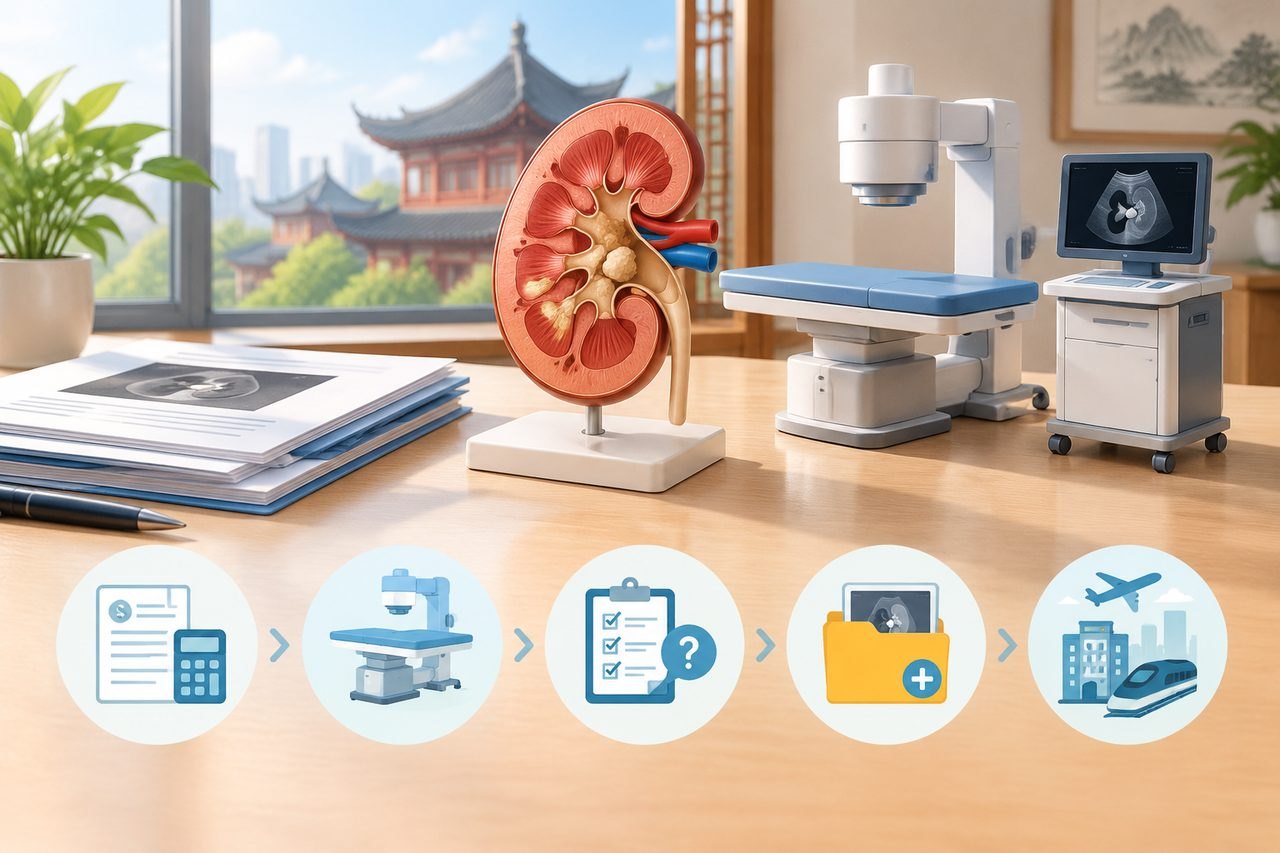
Why the total price alone cannot tell you what you are comparing
Shock wave lithotripsy is a treatment that uses shock waves to break kidney stones into smaller fragments. The same procedure name can sit inside very different quotes because hospitals may bundle different services into one figure, or leave parts of the pathway out. One estimate may cover only the treatment session. Another may include the imaging used to plan it, a follow-up appointment and a possible repeat session. Reading only the bottom line hides those differences.
The practical question is not which hospital is cheapest. It is which written quote describes the same clinical scope as the alternative. If one quote includes a follow-up check and another does not, the totals are not comparable. If one names the type of imaging used to confirm stone position and another does not, you cannot tell whether the same planning step is covered. The itemisation is the comparison tool, not the total.
This matters because lithotripsy is not always a single event. More than one treatment session may be needed, and follow-up checks assess the result. A quote that covers one session without stating how further sessions are handled leaves a real gap in your planning. Ask each hospital to state, in writing, what happens if the first session does not clear the stone.
The scope items that decide whether two quotes are comparable
Before comparing figures, list the scope items each quote must address. The first is stone imaging: what scan or X-ray is used to confirm the stone's size, position and suitability for this approach, and whether that imaging is inside the estimate. The second is the treatment session itself: how many sessions the estimate covers and what triggers a further session.
The third is anaesthesia or sedation, if the treating team plans to use it, and who provides it. The fourth is medicines and consumables connected to the session. The fifth is follow-up: which checks assess whether fragments have passed or remain, and whether those checks are included. The sixth is the review of residual stone findings: who looks at the follow-up imaging and decides whether another session, a different procedure or observation is appropriate.
A quote that answers all six items can be compared with another quote that answers all six. A quote that answers three cannot. When a hospital's estimate is silent on an item, that is not proof it is excluded. It is an open question you need answered in writing before you treat the totals as equivalent.
Questions that turn a vague estimate into a comparable one
Send the same short list of questions to each hospital or coordination route you are considering. Keeping the questions identical is what makes the replies comparable. Ask for the answers in writing, and keep the replies side by side.
Ask whether the stone has been assessed as suitable for shock wave lithotripsy rather than another stone treatment, and which imaging supports that assessment. Ask how many treatment sessions the estimate covers and what the plan is if fragments remain after the first session. Ask who reviews the follow-up findings and how that review is arranged.
Ask what the written estimate includes, what it excludes and what remains undecided until the treating team sees you. Ask whether the estimate is based on your existing imaging and reports or on new tests in China. Ask whether the quoted figure is the hospital's charge alone or includes any coordination service. These are scope questions, not price negotiations, and they are the fastest way to expose a mismatch.
- Which imaging confirms the stone is suitable for this approach, and is it in the estimate?
- How many treatment sessions does the estimate cover?
- What is planned if fragments remain after the first session?
- Who reviews the follow-up findings, and how is that arranged?
- What does the written estimate include, exclude or leave undecided?
- Is the figure the hospital charge alone or does it include coordination?
Records that let a hospital quote against your actual stone
A hospital cannot quote meaningfully against an unknown stone. The records that usually matter are the imaging that shows the stone or stones, the report that describes size and position, and any note on kidney function or previous stone treatment. If you have had lithotripsy before, the earlier report and outcome help the treating team judge whether this approach still fits.
You do not need to send a complete medical archive at first contact. A short summary with the main question and the key imaging report is enough to start. The hospital or coordination team can then tell you which additional documents it needs. Ask explicitly which records are missing from your file and whether the estimate is provisional until they arrive.
If a quote arrives before your imaging has been reviewed, treat it as preliminary. A preliminary reply can still be useful for budgeting, but it cannot confirm suitability, session count or final scope. Ask what would change the figure once the records are seen.
Separating hospital charges, coordination fees and travel costs
An itemised comparison works only if you keep three cost layers apart. The first is the hospital's own charges for assessment, imaging, the treatment session, medicines and follow-up. The second is any coordination or interpretation service you choose to use. The third is travel, accommodation and daily costs, which no hospital quote covers.
Ask each hospital whether its written estimate is the hospital charge alone. If you use a coordination service, ask for its fee separately and in writing, so it is not folded into a clinical figure you are trying to compare. Do not assume that a single total from one route and a broken-down total from another describe the same thing.
When a hospital's estimate leaves an item undecided, note it as an open line rather than guessing a number. An honest comparison can include open lines. A comparison that fills gaps with assumptions is the one that misleads you later.
What to do with the quotes once you have them
Put the quotes into a simple table with one row per scope item and one column per hospital. Mark each cell as included, excluded, undecided or not stated. The hospital with the fewest undecided and not-stated cells is the one whose total you can actually interpret. A lower total with many open lines is not yet a lower price for the same care.
Then ask the remaining questions in writing before you decide. Confirm who reviews the follow-up findings, how a repeat session would be handled and whether the estimate changes if the stone requires a different approach. Suitability for shock wave lithotripsy, the number of sessions and the follow-up plan are clinical decisions for the treating team, not something a quote can settle.
If you want help requesting itemised estimates from suitable hospitals, sharing your stone imaging and reports, or arranging a specialist appointment, ChinaSpecialistCare can coordinate that process. We do not decide suitability, prescribe treatment or guarantee availability. An initial enquiry is free and needs only a brief summary, not a full medical archive. You can also review the shock wave lithotripsy procedure reference before you write to hospitals.
Do not delay urgent local care while you compare overseas quotes. Worsening pain, fever or inability to pass urine needs prompt local assessment, not an overseas enquiry.
Sources & scope of this guide
References and official service information relevant to this guide.
This is general planning information and has not been individually reviewed by a doctor. Medical decisions and personal treatment advice come from your treating clinicians.