What shock wave lithotripsy can and cannot address
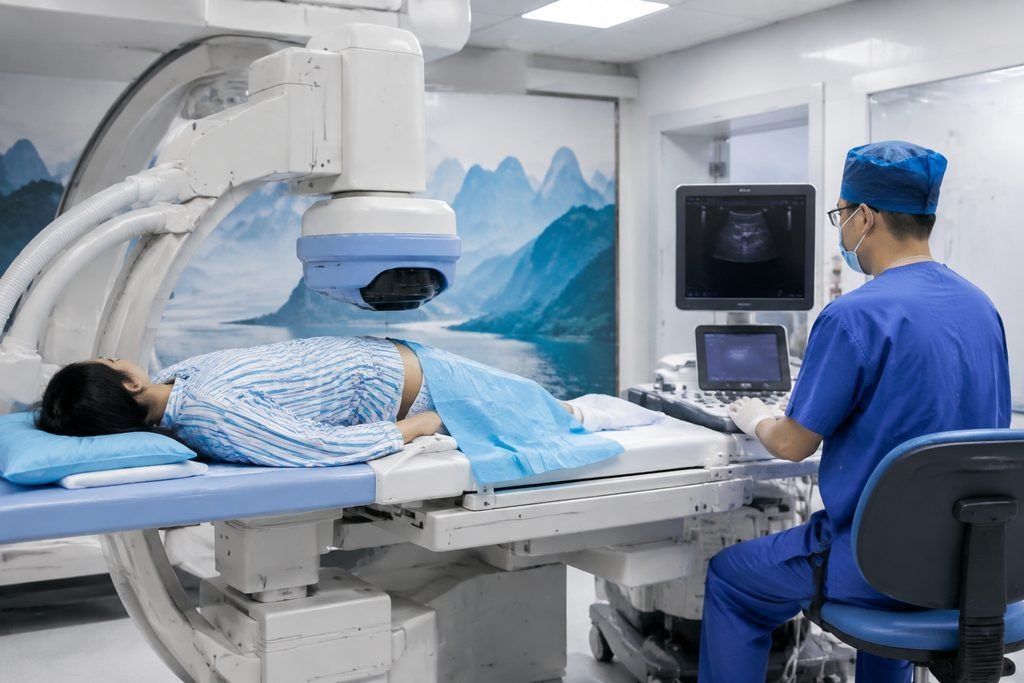
Shock wave lithotripsy is a non-surgical option that aims to break a stone into fragments small enough to pass. The treatment does not remove the stone directly; it changes the stone into pieces, and the body then clears them. That distinction matters when you are deciding whether to travel for this approach. A stone that fragments well may still leave residual pieces that need review, and a stone that does not fragment as expected may need a different plan.
The treatment cannot address every clinical problem that looks like a kidney stone. Stone size, position, composition and the condition of the kidney and urinary tract all influence whether shock waves are a reasonable option. The treating urologist decides this after reviewing imaging and the patient's history. A remote enquiry can help organise records and questions, but it cannot confirm that you are suitable for shock wave lithotripsy or that you should travel.
It also cannot promise a single session. More than one treatment session may be needed, and follow-up checks assess the result. That means your planning should include the possibility of repeat sessions and a review of whether fragments have cleared. Ask the team how they define a completed course for your stone, and what happens if fragments remain.
Why stone imaging and suitability review come before any plan
The first practical question is not how to book shock wave lithotripsy, but whether the stone is suitable for it. Imaging helps the urology team see the stone's size, location and effect on the urinary tract. The team also needs to know about any infection, obstruction, bleeding risk, pregnancy, aneurysm or other condition that could change the recommendation. These are clinical judgements, not administrative preferences.
For an overseas enquiry, the useful step is to gather the imaging and reports you already have and ask what the receiving team needs. Do not assume that a scan from another country will be accepted without review, and do not assume that a new scan will be ordered in a particular way. Ask the hospital which images and reports it wants, in what format, and whether a repeat study is likely to be requested.
A suitability review is not the same as hospital acceptance. A clinician may say that shock wave lithotripsy is a possible option while the hospital still needs its own assessment before confirming a treatment date. Keep those two stages separate in your planning. The hospital decides suitability and acceptance; an enquiry service can help you prepare records and questions but cannot make that decision.
How treatment sessions are planned and why the number varies
Session planning is individual. The number of sessions, the interval between them and the decision to continue or change approach depend on how the stone responds and how the patient tolerates treatment. More than one session may be needed, but no fixed number applies to every stone. Be cautious of any plan that promises a single session before the stone has been assessed.
Ask the urology team how they will decide whether another session is appropriate. Useful questions include: what result would they expect after the first session, how will they assess fragment clearance, and what alternatives exist if shock wave lithotripsy is not working. These questions help you understand the decision points rather than treating the first session as the whole treatment.
Practical arrangements also depend on the clinical plan. If repeat sessions are possible, you may need to ask how follow-up is scheduled and whether it can be coordinated around your travel. Do not assume that all sessions can be completed in one visit, and do not assume that a particular interval between sessions applies in every hospital. Ask the named provider to explain its own process in writing.
Who reviews residual stone findings and what that means for you
After treatment, follow-up checks assess whether fragments have passed or whether residual stone remains. This review is a clinical assessment, not a formality. If residual fragments are present, the team may recommend observation, another session, or a different procedure. The right next step depends on the size and position of the fragments and on the patient's symptoms.
Ask who will review the follow-up imaging and how the result will be communicated to you. If you are planning to return home after treatment, ask how the receiving team expects follow-up to be handled and what information it will send to your local clinician. This is a coordination question, but the clinical decision remains with the treating team. Do not stop or change any prescribed care based on an overseas plan without speaking to your own clinician.
Residual stone review also affects what you should ask before travelling. If the plan includes a follow-up appointment, confirm whether it is provisional or confirmed, what imaging it involves, and how the result will be shared. If you cannot stay for follow-up, ask the hospital what it recommends and what limits exist. These are questions to confirm with the provider, not assumptions to make from a general guide.
What to prepare for a shock wave lithotripsy enquiry in China
A useful enquiry starts with a short summary and the main question. You do not need to send a complete medical archive at first contact. After the initial reply, the team can explain how to share relevant records securely. For a stone case, the records that usually matter include imaging reports and images, laboratory results, a list of current medicines, and any previous stone treatments or procedures.
Prepare a concise timeline of your stone history: when symptoms started, what imaging has been done, what treatment you have already had, and what your current symptoms are. If you have a written question about whether shock wave lithotripsy is suitable for your stone, include it. This helps the team identify missing information and suggest the relevant next step.
Do not send passport numbers, card details or a full medical archive in the first message. If you are using a coordination service, ask what it can and cannot do. ChinaSpecialistCare provides information and non-clinical coordination; diagnosis, suitability, hospital acceptance and treatment decisions belong to the treating hospital and licensed clinicians. An initial enquiry is free and does not require buying a proxy consultation.
- A short summary of the stone problem and your main question.
- Imaging reports and, if available, the images themselves.
- Laboratory results relevant to kidney function, infection or bleeding risk.
- A current medicine list, including blood thinners or supplements.
- A brief history of previous stone treatments or urological procedures.
Questions that change the decision, and the next step
The answers that matter most are specific to your stone and your hospital. Ask whether the stone is suitable for shock wave lithotripsy, how many sessions the team anticipates and on what basis, how residual fragments will be reviewed, and what alternatives exist if the treatment does not work. Also ask what the written plan includes and excludes, so you understand which parts are hospital fees, which are coordination fees and which are travel costs. Without an individual assessment, no public guide can give you a reliable estimate or a fixed schedule.
If you have current severe pain, fever, vomiting, blood in the urine or difficulty passing urine, seek urgent local medical care rather than delaying for an overseas enquiry. For non-urgent planning, start with a brief summary and your main question. The team can then explain what records are useful and whether a specialist appointment or a records-based opinion is the appropriate next step. You can review the shock wave lithotripsy reference page for procedure context before you send your enquiry.
Sources & scope of this guide
References and official service information relevant to this guide.
This is general planning information and has not been individually reviewed by a doctor. Medical decisions and personal treatment advice come from your treating clinicians.