Why the replacement type changes every other answer
Shoulder replacement is not one operation. The surgeon may be considering a conventional design, where the ball and socket are replaced in their normal positions, or a reverse design, where the ball and socket are swapped. The two are used for different shoulder problems, and the choice depends on the condition of your shoulder, not on preference alone. That single decision shapes the risks you should ask about, the implant you will live with, and the rehabilitation that follows.
This is why a general question such as 'what are the risks of shoulder replacement?' rarely produces a useful answer. A surgeon can only explain risks in relation to a specific plan. If you do not yet know which design is proposed, ask that first. If the surgeon says the decision will be made during surgery, ask what findings would change the plan and whether you will be told beforehand.
For an overseas patient, the type also affects what you need to arrange. A reverse design and a conventional design may differ in how soon you can use the arm for daily tasks and what movements to avoid. You do not need to memorise the biomechanics. You need the name of the proposed procedure, the reason it fits your shoulder, and the alternative design the surgeon considered and rejected.
Questions that separate real risks from generic warnings
Every operation has risks, and shoulder replacement is no exception. The useful conversation is not whether risks exist but which ones matter for your shoulder, your age, your other conditions and your previous surgery. Ask the surgeon to list the risks that would change the plan, not the full textbook list. Infection, nerve injury, instability, loosening and the need for further surgery are the kind of topics a shoulder surgeon can discuss in relation to your case. Ask which of these are more relevant for you and why.
Ask also what the team does to reduce each risk. For infection, that may include screening, antibiotics and wound care. For instability, it may include the implant design and the repair of surrounding soft tissue. You are not asking the surgeon to guarantee an outcome. You are asking what is being done differently because of your specific shoulder.
A second set of questions concerns what happens if something goes wrong. Ask who would manage a complication, whether the hospital has the relevant specialists, and what follow-up would be expected. If you plan to return home after surgery, ask how a problem would be handled from a distance and what records you would need to bring back. These are practical questions, not signs of distrust.
Alternatives: what has been tried and what remains
Before agreeing to replacement, ask what non-surgical and surgical alternatives remain. Non-surgical options may include physiotherapy, activity modification, pain management and injections. Surgical alternatives may include arthroscopy, a different type of replacement, or procedures that address the specific problem without replacing the joint. The right question is not 'can I avoid surgery?' but 'what would you recommend I try first, and what would make you reconsider replacement?'
Ask the surgeon to explain what happens if you delay. Some shoulder conditions worsen slowly, and a delay may not change the eventual operation. Others may become harder to treat. You need the surgeon's view on your shoulder, not a general rule. If the surgeon says replacement is the only option, ask what evidence supports that for your condition and whether a second opinion would be reasonable.
For an overseas patient, alternatives also include having the operation closer to home. Ask what the surgeon would recommend if you could not travel, and what the trade-offs would be. This is not a negotiating tactic. It helps you understand how urgent and how specialised the operation really is.
Implant choice and what the estimate includes
Shoulder replacement uses artificial components, and the implant is a central part of the plan. Ask which implant system is proposed, why it suits your shoulder, and what the alternatives are. Ask whether the implant is available at the hospital and whether the quoted plan includes it. If the plan does not include the implant, ask how it is priced and whether the cost changes if a different component is used.
Cost questions should be specific. Ask what the written estimate covers: the surgeon's fee, the hospital stay, the implant, imaging, laboratory tests, medication, physiotherapy and follow-up visits. Ask what is not included and what would trigger an additional charge. Ask whether the estimate is fixed or an approximation, and what would change it. Do not assume that a low estimate is complete or that a high estimate is wasteful. Ask for the scope in writing.
If you are comparing hospitals, compare the same scope. A quote that includes rehabilitation and follow-up is not the same as one that covers only the operation. Ask each provider to state what happens if you need a longer stay, a further procedure or a different implant. These are the variables that affect the final bill, and they are better discussed before you travel than after.
Rehabilitation and daily activities after surgery
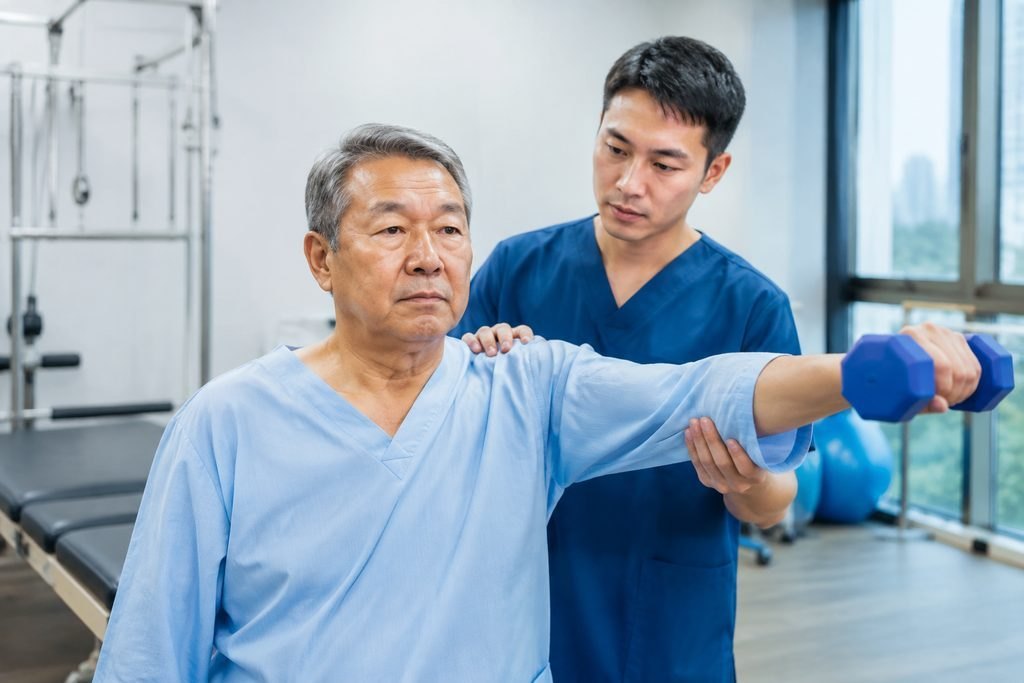
Shoulder rehabilitation is not a hip or knee protocol. The shoulder depends on a balance of movement and stability, and the exercises, restrictions and timeline differ by procedure and by surgeon. Ask who will supervise rehabilitation, how often you will be seen, and what you are expected to do between visits. Ask what movements to avoid and for how long, and what you can do for yourself in the first weeks.
For an overseas patient, ask how rehabilitation would continue after you return home. Will you receive a written plan, exercise instructions and imaging or operative records? Will the surgeon communicate with a physiotherapist in your country? These arrangements are not automatic, and they need to be confirmed with the treating team. Ask what happens if you cannot attend in-person sessions and whether remote guidance is available.
Daily activities matter as much as exercises. Ask how you will manage dressing, washing, cooking and sleeping, and whether you will need help. Ask about sling use, driving and returning to work. The answers depend on your procedure and your home situation, so ask the surgeon and the rehabilitation team to be specific about your case rather than giving general advice.
How to get clear answers before you commit
You do not need to decide everything at once. Start by asking the surgeon to confirm the proposed replacement type, the main risks for your shoulder, the alternatives that remain, the implant plan, what the estimate includes, and how rehabilitation and daily help will be arranged. Ask for these answers in writing, in English, so you can review them with your local doctor or family.
If you are considering care in China, an initial enquiry is free. You can share a brief summary of your diagnosis, imaging and main question, and the team can identify what information is missing and suggest the relevant next step. This is not a diagnosis or a promise of acceptance, and it does not replace a consultation with the treating surgeon. The hospital decides whether shoulder replacement is suitable for you.
Use the shoulder replacement reference to understand the procedure, and the orthopedics specialty page to see how care is organised. Then prepare your questions and ask for written answers. A clear plan is more useful than a quick decision.
Sources & scope of this guide
References and official service information relevant to this guide.
This is general planning information and has not been individually reviewed by a doctor. Medical decisions and personal treatment advice come from your treating clinicians.