What Your Existing Hearing Tests Already Answer
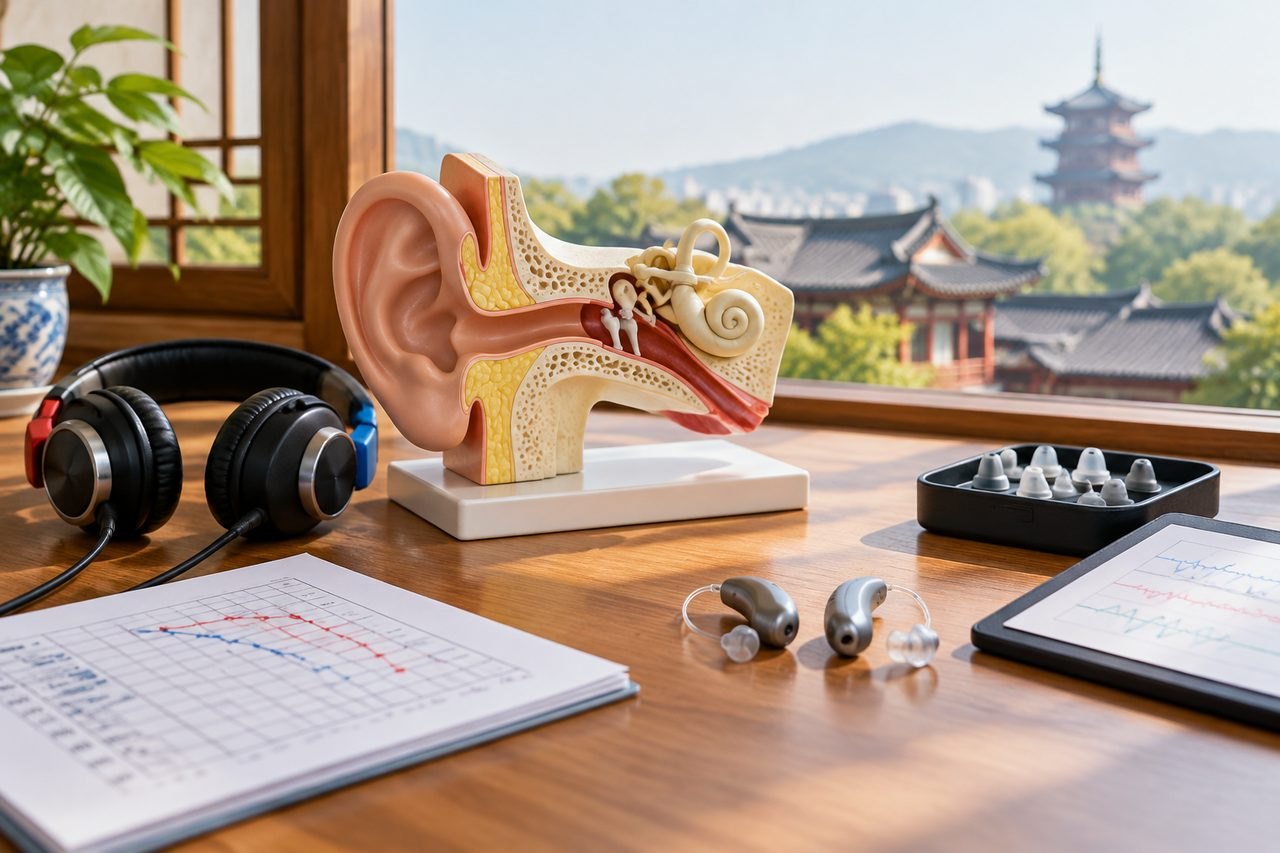
Audiograms, tympanometry and speech testing performed months or years ago are not wasted paperwork. They establish a baseline: the type and degree of hearing loss, whether the air-bone gap is present, and how the results have changed over time. For a suspected problem with the stapes, that pattern is central to the assessment. Stapedotomy uses a small prosthesis to bypass an immobile stapes mechanism, and hearing tests inform both the assessment and later review.
The limitation is timing. An old test describes your hearing on the day it was performed. It cannot show whether the pattern has shifted since, whether the other ear has changed, or whether a new factor such as noise exposure, infection or another middle-ear condition now affects the picture. That is why a fresh assessment is not simply a repeat for its own sake; it answers a different question.
When you send records for an initial review, include the actual test reports with dates, not only a summary letter. If you have several audiograms from different years, send them all. The trend across them is often more useful to the reviewing clinician than any single result.
What a New Assessment Is Actually Trying to Establish
A current assessment addresses whether the stapes mechanism is still the best explanation for your hearing loss, whether the degree of loss and the air-bone gap support surgery, and whether anything in the ear canal, eardrum or middle ear would change that plan. It also considers your general health, your other ear, and what you need hearing to do in daily life.
This is a clinical judgement, and it belongs to the ear specialist who examines you. No article, coordinator or records summary can make that decision. What you can do is arrive with the information that makes the consultation efficient: dated hearing tests, any imaging or operative notes from previous ear surgery, a list of current medicines and allergies, and a clear description of how your hearing affects work, conversation and safety.
It also helps to separate two questions you may be holding at once. The first is whether surgery is suitable for you at all. The second is whether it is suitable now, in China, given your travel plans and follow-up arrangements. These are related but not identical, and the second depends on practical factors the specialist will want to discuss.
Which Hearing Tests Support the Assessment
The specific test battery is a clinical decision, not a fixed list you can assemble in advance. Pure-tone audiometry, tympanometry and speech discrimination testing are commonly part of evaluating a conductive hearing problem, but the specialist may add or omit tests depending on your history and examination findings. Ask the treating team which tests they require and whether any of your existing results can be used instead of repeating them.
There is a practical reason to ask this before you travel. Some tests need specific equipment, a quiet booth or a particular specialist, and the timing of your visit may need to accommodate that. If you have recent tests from your own country, ask whether they will be accepted as a baseline or whether the team prefers its own measurements. Neither answer is a red flag; it simply tells you what to prepare.
Do not stop using hearing aids or change any treatment on your own before an assessment. Whether hearing aids remain appropriate, and for how long, is a question for the clinician who examines you.
How Postoperative Hearing Reviews Are Arranged
Hearing after stapes surgery is reviewed with repeat testing, but the schedule and the number of reviews are set by the treating team and depend on your individual recovery. Ask, before surgery, what the planned review points are, what each one is checking, and which of them must happen in China rather than at home.
This matters for overseas patients because the follow-up plan shapes the trip. If the surgeon wants to see you at a specific point after the operation, that affects how long you stay and when you can fly. The source material for stapedotomy does not provide a flight clearance date or a fixed review timetable, and no article should invent one. Ask the surgeon directly: when can I travel, when is the first hearing review, and what should my local ear specialist check if I am back home by then?
Before you leave China, request a written summary of the operation and the recommended follow-up, including which tests should be repeated and when. A clear handover document makes it far easier for a clinician in your home country to continue the review without guessing.
Questions That Change the Plan Before You Commit
The most useful preparation is a short list of questions you can ask the treating team, in writing if possible, so the answers are clear and can be shared with your family or local doctor. These are not challenges to the clinician; they are the practical details that determine whether travelling for surgery makes sense for you.
Ask which hearing tests are required for the assessment and which of your existing results can be used. Ask what the assessment can and cannot determine, and what would make surgery unsuitable in your case. Ask what the alternatives are, including non-surgical options, and what the risks and expected benefits are for someone with your hearing pattern. Ask how postoperative reviews would be arranged if you return home, and who would be responsible for each part of that follow-up.
It is reasonable to ask a clinician about evidence-based risk estimates and the uncertainty around them. No estimate guarantees an individual result, and a responsible clinician should be able to discuss both the likely range and the factors that could change it.
Practical Preparation and a Sensible Next Step
Gather your records in a form that travels well: dated audiograms and tympanometry, speech testing if available, any imaging reports, operative notes from previous ear surgery, a current medicine and allergy list, and a short written summary of your main hearing concern. Keep the originals and send clear copies or scans. You do not need to send a complete medical archive at first contact; a brief summary is enough to identify what is missing.
If you want to understand whether a records-based review is worthwhile before committing to travel, you can start with a free initial enquiry. Our team checks the available diagnosis, records and your main question, identifies missing information and suggests a relevant next step. This is not a diagnosis and does not confirm hospital acceptance or surgical suitability; the treating hospital and its ear specialists decide that.
A proxy consultation, where a doctor takes your records to a hospital specialist while you remain at home, is optional and not a prerequisite for every appointment. If you later proceed, hospital consultation fees, tests, treatment and rooms are paid to the hospital or relevant provider, while any agreed coordination or interpretation fees are separate. Ask the named provider how its written estimate works and what it includes, excludes or leaves undecided.
The practical next step is simple: collect your dated hearing tests and a short summary of your question, then ask the treating team which tests they need for a current assessment and how postoperative hearing reviews would be arranged if you return home. That answer, not a general timeline, tells you whether and when travelling for stapes surgery in China is realistic for you.
Sources & scope of this guide
References and official service information relevant to this guide.
This is general planning information and has not been individually reviewed by a doctor. Medical decisions and personal treatment advice come from your treating clinicians.