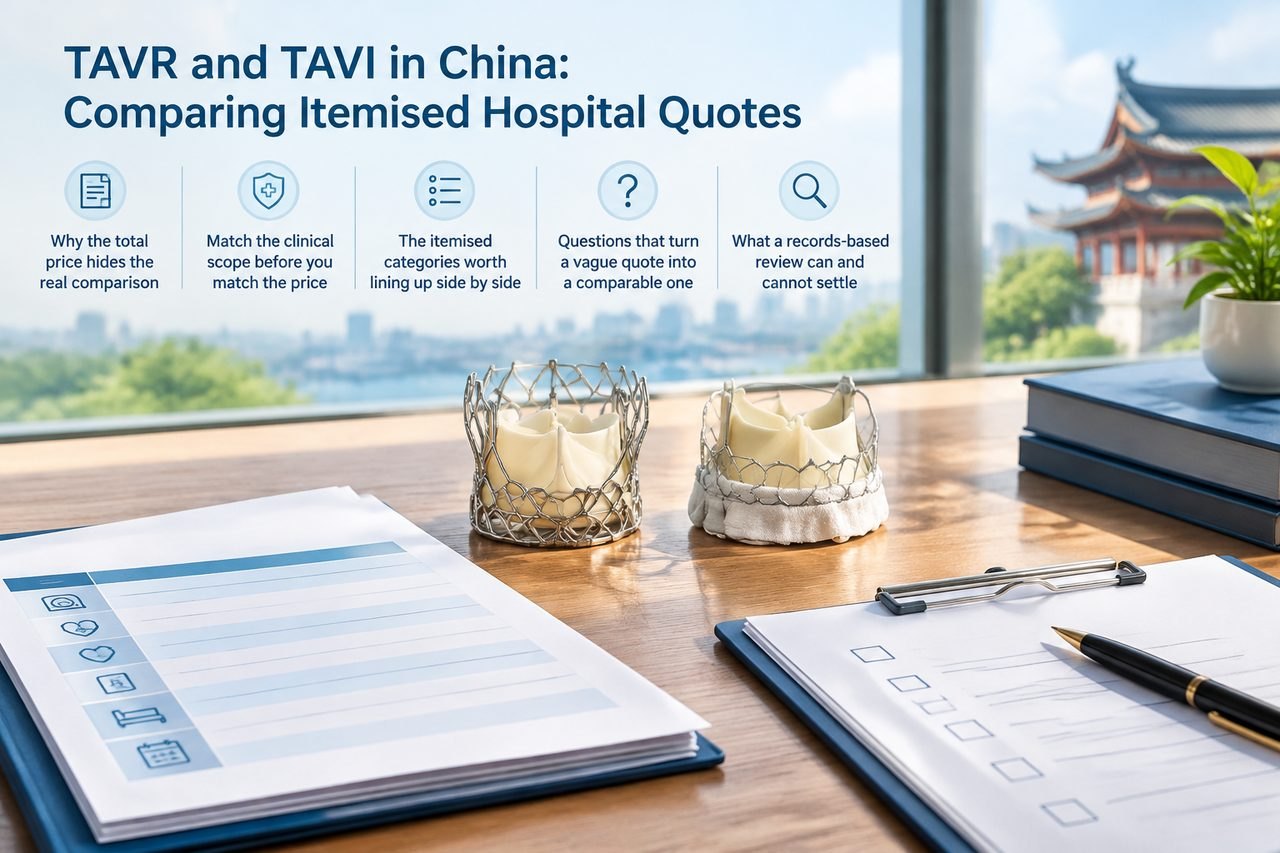
Why the total price hides the real comparison
TAVI, also called TAVR, replaces the aortic valve using a catheter-based procedure. Because the procedure combines imaging, a heart team decision, a device and a hospital stay, a single total figure can describe very different packages. One quote may include the valve prosthesis and the planning CT; another may list the device separately or exclude certain imaging. Comparing the bottom line without matching those items can make one hospital look cheaper when it is simply quoting a narrower scope.
The practical move is to stop treating the quote as one number and start treating it as a list. Ask each hospital to send its written estimate in the same structure, then compare line by line. Where a line is blank or marked 'to be confirmed', that is not automatically a problem, but it is a question you need answered before you can judge value.
Match the clinical scope before you match the price
The heart team decides whether TAVI is suitable, which device is proposed and how the valve is assessed. That clinical scope drives the cost, so the first comparison is not financial. Ask each hospital how its heart team reviews your valve imaging, what device it proposes for your anatomy and whether it plans additional tests before a final decision. If one hospital is quoting for a straightforward aortic valve case and another is allowing for extra imaging or a more complex device plan, the two totals are not describing the same thing.
This is also where a preliminary reply can mislead. A quick email figure may be an indicative range based on limited records, not a firm estimate. Ask whether the number is provisional or based on a completed review, and what records would change it. A quote that shifts after the heart team sees your imaging is not necessarily unreliable; it may simply reflect a more complete assessment.
The itemised categories worth lining up side by side
You do not need to become a billing expert, but you do need the same categories from each hospital so the comparison is fair. Ask each provider to break its estimate into the following groups, and to state clearly what is included, excluded or still undecided.
Pre-procedure assessment: heart team review, echocardiography, CT or other valve imaging, and any coronary or vascular assessment the team requires.
The device and procedure: the proposed valve prosthesis, catheter and related consumables, and the professional or procedure fee. Ask how the device is identified in the quote, because device choice affects both suitability and cost.
Admission and hospital stay: ward or intensive-care days, monitoring, and the room category. Ask what happens to the estimate if the stay is longer than planned.
Medicines, blood products and complications: ask what the estimate assumes and how additional treatment would be handled.
Follow-up: the first review after discharge, later heart reviews, and any imaging or medication the team plans.
Coordination and travel: keep these separate from the hospital's clinical estimate so you can see what each party is charging for.
Questions that turn a vague quote into a comparable one
A written estimate becomes useful when it answers specific questions. Send the same short list to each hospital and compare the replies rather than the totals.
Ask: is this figure provisional or final, and what records would change it? Which valve imaging and heart team reviews are included? Which device is proposed, and is it named in the quote? How many ward and intensive-care days are assumed? What is excluded? How are complications or a longer stay handled? What follow-up is included, and what would be charged later? Are coordination or interpretation fees separate from the hospital's estimate?
If a hospital cannot answer a question yet, note it as an open item rather than assuming the worst or the best. An unanswered line is a gap in the comparison, not evidence about quality.
What a records-based review can and cannot settle
A records-based opinion obtained while you remain at home can serve a specific purpose in this comparison: it tells you what the heart team would need to see before it can price anything. Ask the reviewing clinician how your valve anatomy is assessed, which imaging the team would request, and whether the proposed device depends on measurements you do not yet have. That answer changes what you put in your quote request. If the review says a CT is needed before sizing, then a hospital quoting without that scan is quoting an incomplete scope, and you can say so when you ask for a revised estimate.
The limits matter just as much. A records-based opinion does not establish final eligibility, confirm that a particular device is available, or guarantee that a hospital will accept the case. Those decisions sit with the treating heart team after it reviews your actual imaging and clinical picture. Treat any pre-travel opinion as preparation for the conversation, not as a booking confirmation, and do not read a favourable preliminary reply as a scheduling commitment. If your symptoms worsen while you are still gathering quotes, seek local medical care rather than waiting on an overseas enquiry.
There is a practical sequence that keeps the comparison honest. First, collect the imaging and reports you already have and ask what is missing. Second, send the same summary and the same question list to each hospital so the replies are comparable. Third, when a hospital returns a figure, check whether it was produced after a heart team review or before one. A number issued before review is a placeholder; a number issued after review reflects a defined scope. Only the second kind belongs in a side-by-side comparison.
If you want help assembling records, requesting specialist appointments or having itemised estimates explained line by line, ChinaSpecialistCare can coordinate that. The hospital and its heart team decide suitability, device choice and admission; no outcome is guaranteed. A free initial enquiry is enough to begin: share a brief summary of your diagnosis and your main question, and the team can outline which records and questions to prepare before you request comparable quotes.
Turning the comparison into a decision and a next step
Once you have itemised estimates in the same format, compare them on scope first and price second. A higher total that includes the device, imaging and follow-up may represent better value than a lower figure that leaves those items open. Ask each hospital to confirm, in writing, what its estimate includes, what it excludes and what remains undecided for your case.
A worked comparison makes the method concrete. Suppose Hospital A quotes a figure that names the valve prosthesis, the planning CT and the heart team review, and states how many ward and intensive-care days it assumes. Hospital B quotes a lower figure but lists the device as 'to be confirmed', omits the planning CT and leaves follow-up blank. The two totals are not comparable yet. The right next move is not to pick the cheaper one but to send Hospital B the same question list you sent Hospital A and ask for a revised estimate that covers the same items. Only when both quotes describe the same clinical scope does the price difference mean anything.
It also helps to decide in advance how you will weigh the non-price differences. Two hospitals may return similar totals but differ in how clearly they explain the device plan, how promptly they answer follow-up questions, and whether they will put the scope in writing. Those differences affect how confidently you can plan, even though they do not appear on the estimate. Write down which items are non-negotiable for your case, such as a named device plan or a stated follow-up schedule, and treat a quote that leaves them open as incomplete rather than cheap.
If you would like help gathering records, requesting specialist appointments or having itemised estimates explained, ChinaSpecialistCare can assist with that coordination. The hospital and its heart team decide suitability, device choice and admission; no outcome is guaranteed.
A free initial enquiry is enough to start. Share a brief summary of your diagnosis and main question, and the team can outline which records and questions to prepare before you request comparable quotes.
Sources & scope of this guide
References and official service information relevant to this guide.
This is general planning information and has not been individually reviewed by a doctor. Medical decisions and personal treatment advice come from your treating clinicians.