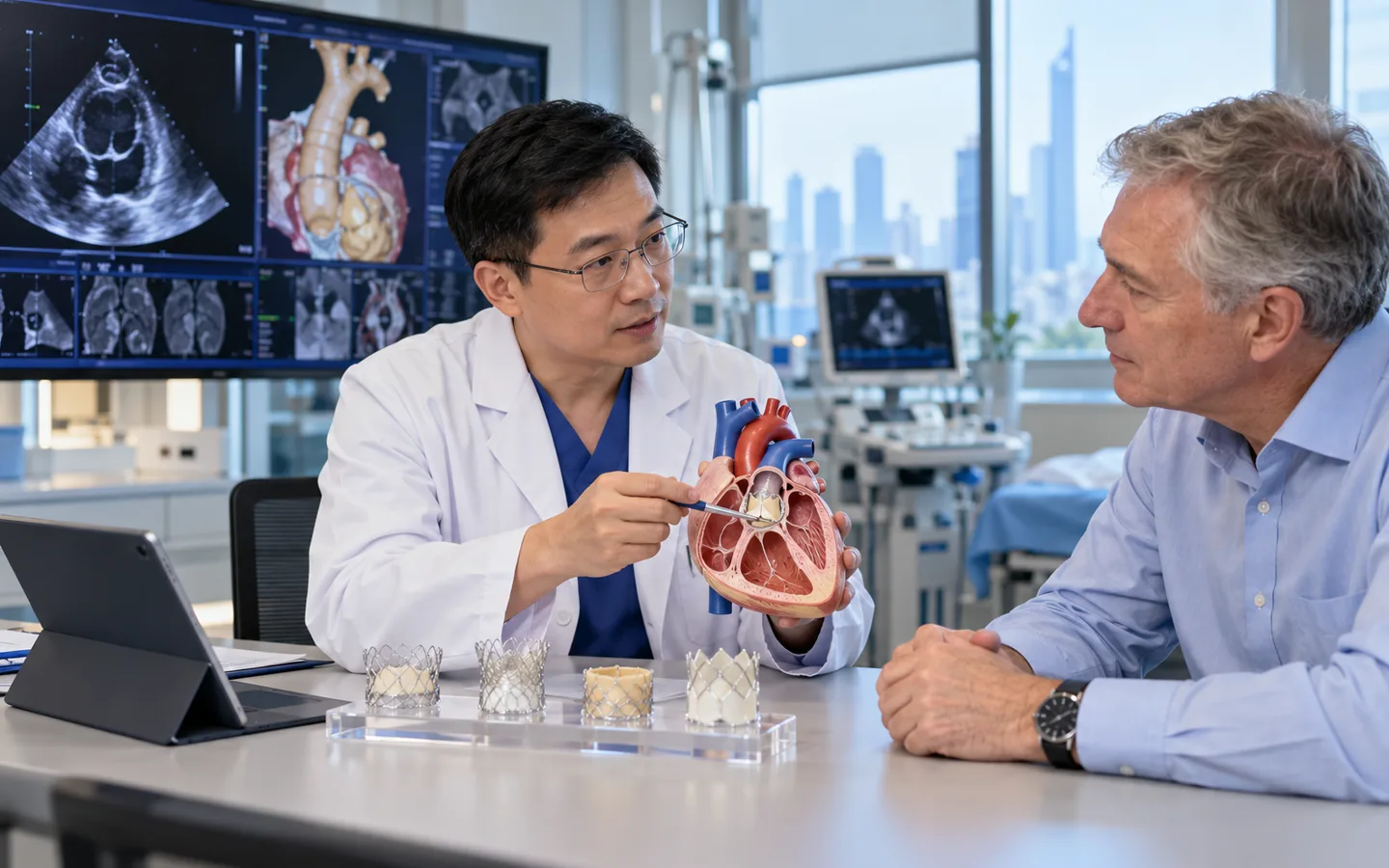
TAVR places a new valve inside the diseased aortic valve
A collapsible biological valve is delivered through a catheter and expanded within the native valve, most often through an artery in the groin.
Suitability depends on symptoms, stenosis severity, life expectancy, surgical risk, coronary and aortic anatomy, access vessels, valve durability and options for future coronary or valve procedures.
Younger or lower-risk patients should discuss durability, future valve-in-valve treatment and coronary access—not only the shorter initial recovery.
Who may be considered?
Specialist review may help when the diagnosis, symptoms and previous treatment create a focused question about transcatheter aortic valve replacement.
- Severe symptomatic aortic stenosis.
- Selected asymptomatic severe disease meeting intervention criteria.
- A patient suitable for either surgery or TAVR after heart-team comparison.
- Degeneration of a surgical tissue valve considered for valve-in-valve treatment.
What the specialist team must confirm
Review includes expert echocardiography, gated TAVR CT, coronary anatomy, annulus and access vessels, frailty, kidney and lung function, conduction system, bleeding risk and patient goals.
Key points for this treatment
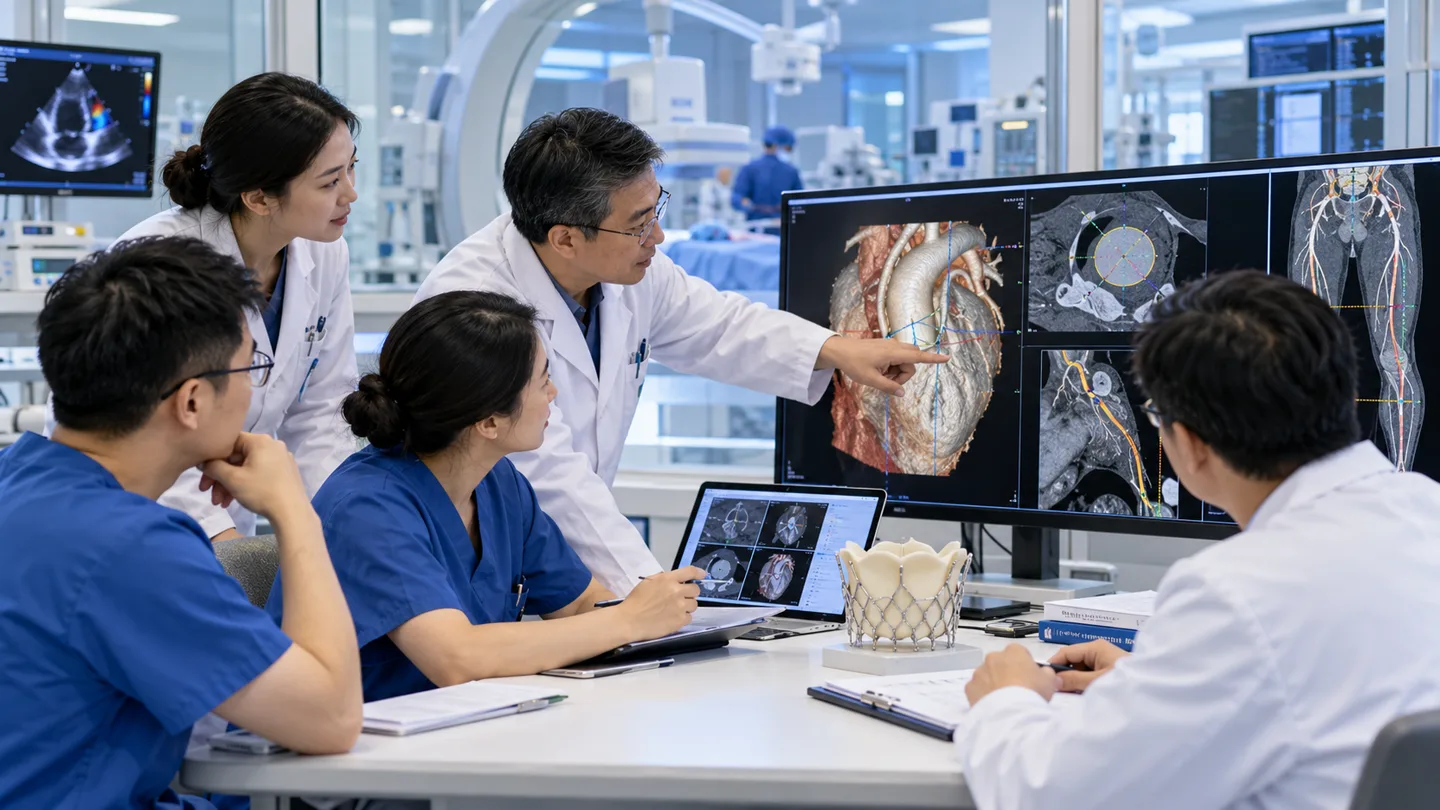
From valve-team assessment to transcatheter implantation
Clinical benefit depends on both technical success and whether symptoms are truly caused by the valve.
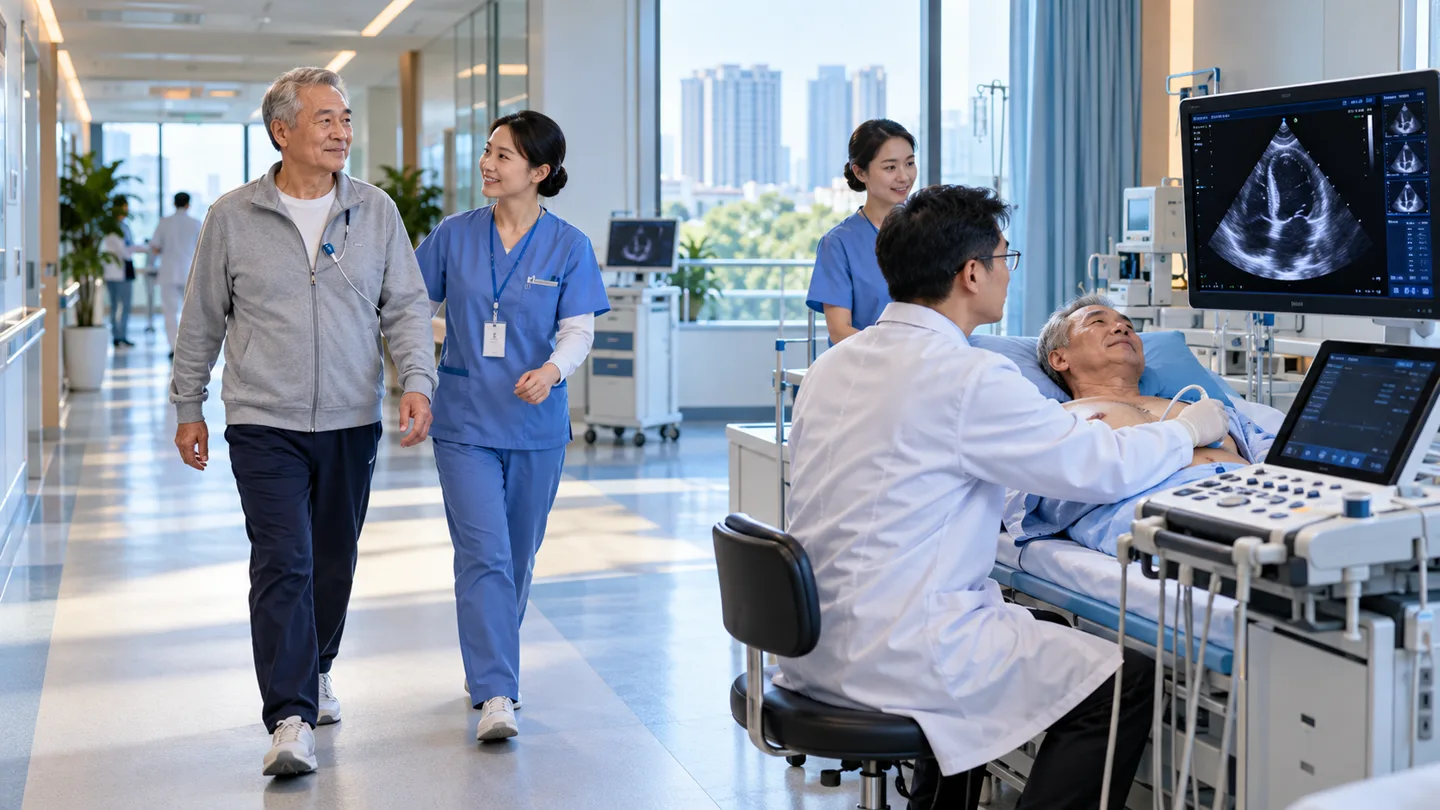
Recovery is faster, but surveillance remains lifelong
Early monitoring focuses on access bleeding, heart block, stroke, kidney function and valve leakage. Some patients need a pacemaker.
Follow-up echocardiography tracks gradients and leakage, while antithrombotic treatment and dental or infection advice are individualized.
Risks, limits and realistic expectations
Risks include bleeding, vascular injury, stroke, death, kidney injury, valve leakage, coronary obstruction, annular injury, heart block and pacemaker implantation. Long-term durability may be uncertain for some younger patients.
Severe breathlessness, chest pain, fainting, stroke symptoms or sudden weakness requires emergency local care.