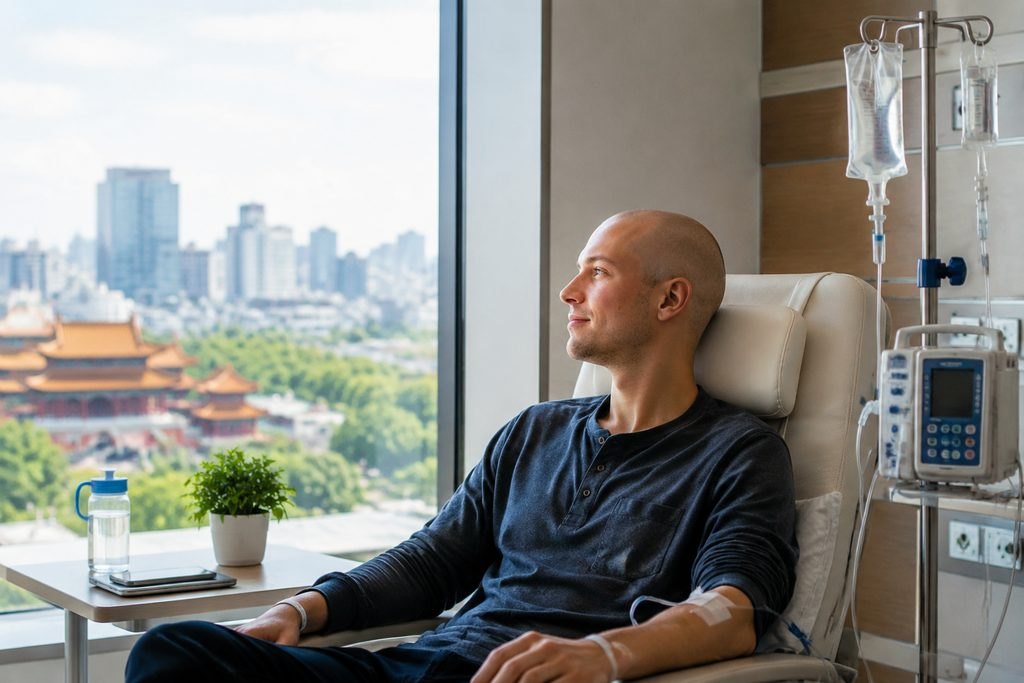
Why a Records-Based Opinion Has Limits for Testicular Cancer
A records-based opinion can be useful before you travel. It lets a specialist review your pathology report, marker results and imaging, and it can help you understand what information is missing. But it cannot confirm what a physical examination would show, and it cannot replace the treating clinician's assessment of your individual situation.
For testicular cancer, the first operation is usually surgery to remove the affected testicle. What happens after that depends on the individual findings. A pathologist examines the removed tissue, and the treating team uses that report together with marker results and scans to decide whether more treatment is needed. A remote reviewer can read those documents, but the decision about further care belongs to the clinician who examines you and reviews the full picture.
This distinction matters when you are planning care in China. You may be able to send records ahead, and a hospital may be able to give a preliminary view. That preliminary view is not the same as a confirmed plan. Ask the hospital what it can and cannot decide before you arrive, so you know which questions will wait for the in-person visit.
Questions That Usually Need an In-Person Examination
Some questions depend on physical findings, direct discussion or tests that are best performed in person. These are the questions to hold for the treating clinician rather than trying to settle them by email.
Whether further treatment is needed after surgery is one example. The answer depends on the pathology of the removed testicle, marker levels over time, and imaging. A clinician needs to see you, review the original slides and reports, and decide whether observation or additional treatment is appropriate. A records review can flag that this question exists, but it cannot answer it for you.
Fertility and hormone function are other areas that need direct assessment. Treatment for testicular cancer can affect sperm production and testosterone levels, and the treating team should discuss fertility preservation before any treatment that might affect it. This discussion involves your baseline fertility, your preferences and the timing of treatment. A remote reviewer can note that the topic needs attention, but the counselling and any decisions belong with the clinician who is responsible for your care.
How previous cancer care affects the current plan is also an in-person question. If you have had treatment before, the new team needs to understand what was done, when, and with what result. Some of that can be gathered from records, but the treating clinician will want to examine you and may need to repeat or add tests. Ask the hospital what it needs from your previous team and what it will decide at the visit.
What Records Help the Team Prepare
Good records do not replace the in-person assessment, but they help the team prepare and can reduce repeated tests. For testicular cancer, the most useful documents are usually the pathology report from any surgery, marker results with dates, and imaging reports. If you have had treatment before, include the treatment summary and follow-up notes.
Send copies rather than originals, and keep a set with you. If a report is in another language, ask whether the hospital needs a translation and who should provide it. Do not send passport numbers, card details or a complete medical archive in your first message. A short summary of your diagnosis, your main question and the records you have is enough to start.
Ask the hospital which specific documents it wants before the visit. The answer can vary by hospital and by your situation. If a report is missing, the team may ask you to obtain it or may decide to repeat a test in China. That decision belongs to the treating clinician, so treat a missing record as a question to clarify rather than a reason to delay necessary local care.
What a Remote Review Can and Cannot Do
A remote review can help you understand your records, identify gaps and prepare questions. It can also give you a sense of whether travelling to China for assessment is reasonable. It cannot confirm a diagnosis, decide treatment, or guarantee that a hospital will accept you.
If you are considering a records-based opinion, ask what the reviewer will see and what they will not be able to assess. For testicular cancer, a reviewer who has not examined you cannot confirm whether further treatment is needed or how your fertility should be managed. They can explain the options and the questions to ask, but the treating clinician makes the plan.
A proxy consultation is optional. It is not a prerequisite for every appointment or operation, and an initial enquiry does not require buying one. If you do request a records-based opinion, ask for a written summary of what was reviewed and what remains uncertain. That summary can help you prepare for the in-person visit.
How to Prepare for the In-Person Visit in China
Before you travel, confirm the appointment and ask what the visit will include. Ask whether the hospital needs records in advance, whether an interpreter is available, and who will be responsible for explaining the plan. If you have had treatment before, ask how your previous team's records should be transferred.
Bring your imaging and pathology materials if the hospital asks for them. Keep a list of your medicines and allergies, and a short summary of your cancer history. If fertility is a concern, raise it before any treatment that might affect it. If you have symptoms that are worsening, seek local care rather than waiting for an overseas appointment.
At the visit, ask which questions can be answered now and which need more tests. Ask what the next step is, who will coordinate it, and when you should expect to hear back. If you do not understand an answer, ask for it in writing or ask for an interpreter. You are entitled to a clear explanation before you decide on treatment.
Next Step: A Short Enquiry and a Clear Question List
Start with a short enquiry. Describe your diagnosis, the treatment you have had, and the main question you want answered. Mention the records you have and the ones you are missing. The team can then tell you what a remote review can address and what will need an in-person assessment.
Write your question list before you contact anyone. Group it into three parts: questions about the records you already hold, questions about what the pathology and marker results mean for further treatment, and questions about fertility and hormone function. A written list stops the most important question from being lost in a long email thread, and it gives the hospital something concrete to respond to.
For each question, note what would count as an answer. If you want to know whether further treatment is needed, the answer depends on the pathology report, marker trends and imaging, so ask which of those the hospital still needs. If you want to know how fertility should be protected, ask who provides that counselling and when it happens relative to any treatment. If you have had cancer care before, ask how your previous records will be obtained and who reviews them.
Keep the first message short. A brief summary of your diagnosis, the treatment you have had and your main question is enough to begin. The team can then explain how to share records after contact, and which documents the hospital wants before a visit. Do not send passport numbers, card details or a complete medical archive in the first message.
ChinaSpecialistCare can help with specialist appointment requests, interpretation and practical arrangements for care in China. We do not diagnose, prescribe or decide suitability. The hospital and its clinicians decide whether to accept you and what treatment is appropriate. An initial enquiry is free, and you do not need to buy a proxy consultation to ask a question.
If you are ready, send a brief summary through the enquiry form, email or WhatsApp. Keep it short at first. The team will explain how to share records after contact. If your symptoms are urgent or getting worse, contact a local clinician first.
Sources & scope of this guide
References and official service information relevant to this guide.
This is general planning information and has not been individually reviewed by a doctor. Medical decisions and personal treatment advice come from your treating clinicians.