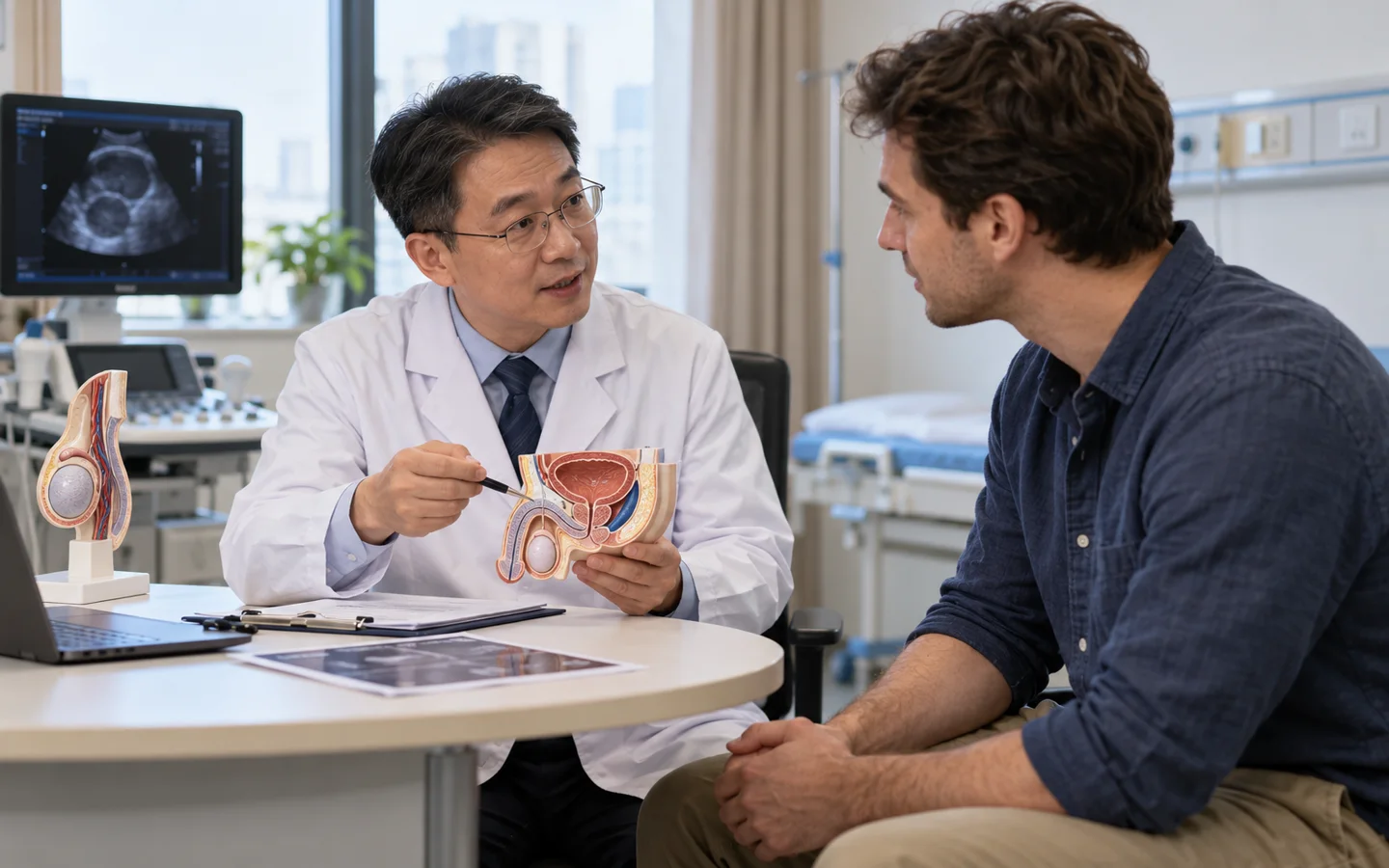
Inguinal orchiectomy provides diagnosis and initial treatment for a suspected testicular cancer
The testicle and spermatic cord are removed through a groin incision so tissue can be examined without violating scrotal pathways.
Ultrasound, tumor markers and staging scans are combined with pathology to decide surveillance, chemotherapy, radiotherapy or selected retroperitoneal lymph-node surgery.
Sperm banking and baseline reproductive hormones may need discussion before orchiectomy or systemic therapy, without delaying urgent cancer care.
Who may be considered?
Specialist review may help when the diagnosis, symptoms and previous treatment create a focused question about testicular cancer surgery.
- A solid intratesticular mass suspicious for cancer.
- A confirmed germ-cell tumor requiring definitive local surgery.
- Selected residual retroperitoneal disease requiring specialist lymph-node dissection.
- A patient needing coordinated fertility and oncology planning.
What the specialist team must confirm
Review scrotal ultrasound, AFP beta-hCG and LDH before surgery, CT staging, contralateral testicle, fertility goals, testosterone symptoms and previous scrotal or groin surgery.
Key points for this treatment

From a testicular mass to risk-adapted oncology follow-up
Many patients need no further surgery, but all require reliable staging and surveillance or timely systemic treatment.
Pathology determines surveillance intensity
The incision, pain and prosthesis are reviewed early. Tumor markers are repeated according to the cancer type and expected half-life.
Long-term follow-up includes imaging, markers, fertility, testosterone, cardiovascular health after therapy and awareness of the remaining testicle.

Risks, limits and realistic expectations
Risks include bleeding, infection, numbness, cosmetic dissatisfaction, fertility or hormone effects, recurrence and complications of later chemotherapy or lymph-node surgery.
Rapidly increasing wound swelling, fever, severe pain, breathlessness or new symptoms during surveillance requires prompt local medical review.